
How to Design a Coastal Living Room in 5 Simple Steps
(Updated 6/30/26)
This post may contain affiliate links. If you make a purchase through one of my links, I may receive a small commission at no cost to you.

Do you ever wish you could bottle that feeling of the first day of vacation? That moment you step into a sunny beach house and instantly feel your shoulders relax? You don’t need a zip code near the shore to bring that effortless, salt-air vibe into your daily life.
Whether you are looking to do a full nautical overhaul or simply want to sprinkle in a few organic textures and sea-glass hues, creating a coastal calm space is all about balance.
In this guide, we’ve curated 44 coastal living room ideas (ranging from "Coastal Grandmother" elegance to rugged, weathered cottage charm) to help you design a space in 5 easy steps that feels as fresh as a morning tide.
Quick Start: Change One Thing Today
Before we dive into the full guide, here's your express option: Swap your throw pillows.
Replace dark or busy patterns with light linen or cotton covers in sandy beige, soft blue, or crisp white with subtle stripes.
This single change (under $30 for a set of two) instantly shifts the mood toward coastal. Now, let's build from there.
Step 1: Classic Coastal Color Palettes
Your color palette is the foundation. Get this right, and even the simplest decor will feel breezy and cohesive. Get it wrong, and no amount of seashells can save you.
How to recreate it:
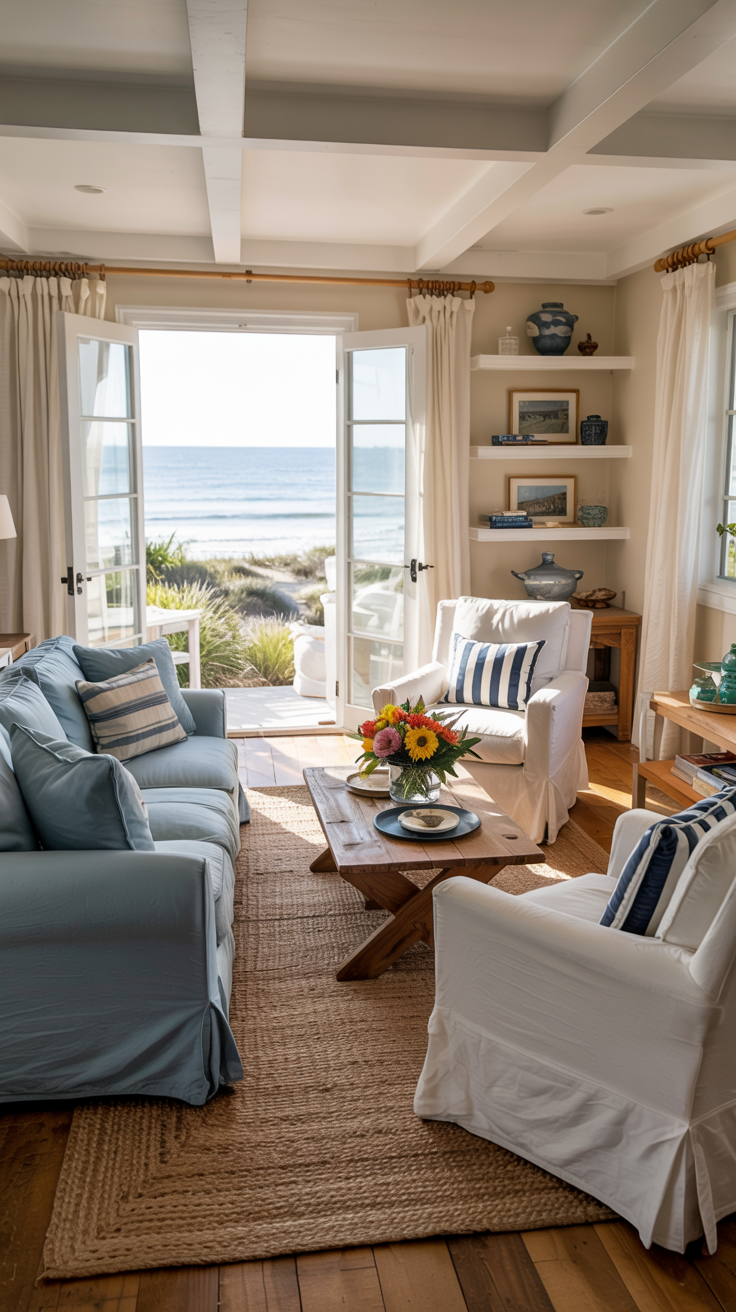
Stick to soft, sun-washed hues like sandy beige, crisp white, driftwood gray, sky blue, or sea glass green. Use the lightest shade for walls, add depth with darker blues or aquas in rugs or accent chairs.


What to buy:
Under $10: Paint samples to test (try Benjamin Moore White Dove, Sea Salt by Sherwin Williams)
$50-150: Neutral slipcovers or light linen curtains
$100-300:Area rug with subtle coastal tones
Beginner tip:
Test paint colors at different times of day. Coastal colors can look dull or too warm under artificial light. Natural light is your best friend.
Lastly, take into consideration the direction the windows in your room face. If the room’s window faces North, you will want to go with a warmer tone. If it’s South facing, you can go for cooler tones.


Mistake to avoid:
Don't overload on stark navy. One navy accent chair? Great. Navy walls? Too risky as they can look dark and swallow light.
Go the extra mile:
Add unexpected pops like a hint of coral or sunny yellow in pillows or art. Try pairing soft white walls with a single coral throw pillow and a piece of abstract art featuring warm sunset tones. This layering keeps your palette fresh, not flat, and prevents the room from feeling too cold or sterile.
Step 2: Anchor with Nautical Statement Pieces
Big, character-driven pieces instantly tell the story: Yes, this is a coastal room. They’re conversation starters, and they save you from cluttering every shelf with tiny “beach” trinkets.
How to recreate it:
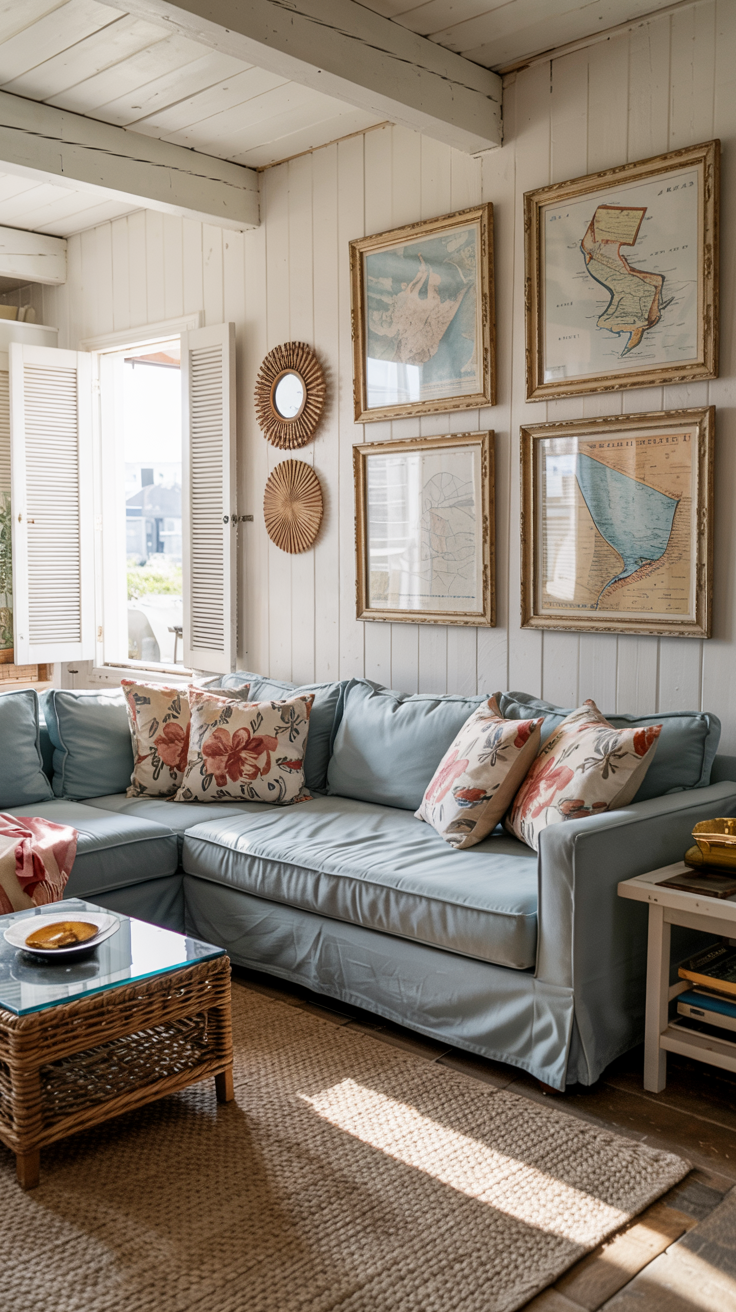
Pick one or two bold pieces; like a weathered oar above the sofa, a vintage ship’s wheel on the wall, or a rope-framed mirror. These do the heavy lifting.


What to buy:
$80-100:Rope Mirror
$75-200: Authentic (or reproduction) maritime antiques from Etsy or local vintage shops
$40-120: Driftwood wall art or a salvaged window frame
Beginner tip:
One big statement is stronger than five small ones. Place it where your eye naturally lands when you enter the room.
Mistake to avoid:
Don't theme every single item. A giant anchor and lighthouse pillows and a ship's wheel and boat prints = theme park, not tastefully nautical.
Go the extra mile:
Hunt salvage yards for real boat parts. When shopping salvage, look for pieces with genuine weathering—sun-bleached wood, oxidized metal hardware, or rope with natural fraying.
Fair pricing is typically $50-150 for smaller items like cleats or porthole mirrors, $200-500 for larger pieces like ship wheels or cabin doors.
Authentic weathering beats mass-produced "distressed" decor every time because the texture and patina can't be faked.
Step 3: Layer Natural Textures and Materials
Texture is what makes a coastal room feel cozy not cold. Think barefoot-friendly rugs, breezy fabrics, and organic baskets.
How to recreate it:
Combine at least three natural textures: wicker or rattan furniture, chunky knit throws, linen or cotton pillows, jute rugs, seagrass baskets.


What to buy:
$40-100:Woven poufs or ottomans
$80-250: Jute or sisal area rug
$25-60: Soft linen or cotton blankets and pillow covers
Beginner tip:
Stick to light or medium tones. Dark wicker can look too tropical or heavy. Coastal = light, airy, natural.


Mistake to avoid:
Avoid plastic "wicker". It looks shiny and cheap up close.
Go the extra mile:
Add a textured focal point like a hanging wicker egg chair, a driftwood coffee table, or a seagrass pendant light. For renters, the egg chair works beautifully since it hangs from a ceiling hook (easily patchable) and makes a dramatic impact. Expect to spend $150-300 for a quality option that will last for years.
Ready to bring the same vibe into your bedroom? Check out our boho coastal bedroom guide.
Step 4: Bring the Outdoors In
A coastal living room should breathe as it’s about sunlight, fresh air, and the feeling that nature is never far away. This step is what stops your space from feeling staged and makes it feel alive.
How to recreate it:
Use sheer, light-filtering curtains to flood the room with daylight. Add potted greenery (palms, ferns, or hardy snake plants). Decorate shelves with driftwood, coral, or a big glass vase full of hand-picked shells or beach pebbles. Want to learn more about the best coastal indoor plants? Check out this post.


What to buy:
$30-80: Floor-length white linen curtains
$25-100: Large indoor planters (woven baskets double as planters)
$20-75: Authentic driftwood accent pieces or coral replicas
DIY (under $10):Glass hurricanes filled with shells, sand, or candles
Beginner tip:
If you have brown thumbs, go faux for plants but pick realistic ones. A sad fake palm looks worse than no palm at all.


Mistake to avoid:
Avoid cheap shell trinkets. They often look plastic and kitschy. If you want shells, collect them yourself or buy genuine, polished ones. Less is more.
Go the extra mile:
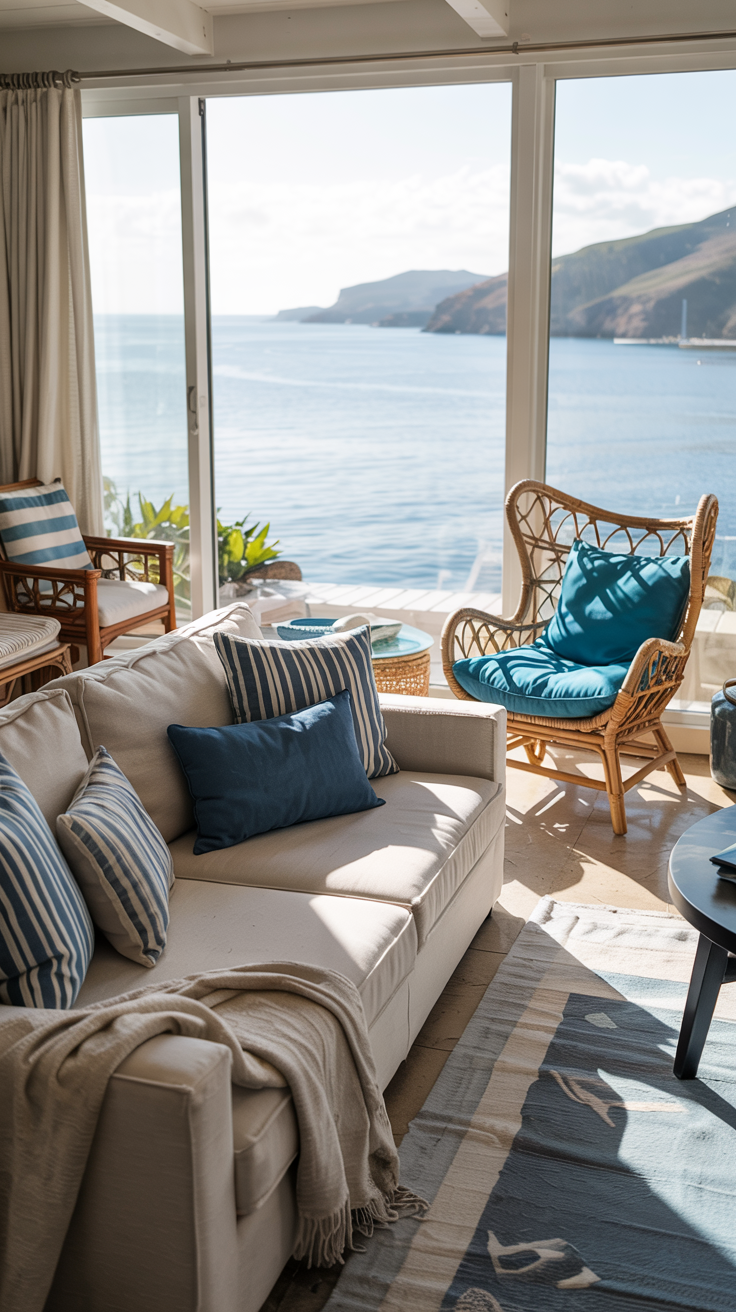
Install indoor-outdoor elements like a bi-fold door or big sliding window if you're renovating. Or add a big indoor tree (like a fiddle leaf fig in a $50-80 woven basket planter) for serious wow factor. If you're in a rental, focus on maximizing natural light: remove heavy drapes, clean windows thoroughly, and position mirrors opposite windows to bounce light throughout the room.
Step 5: Finish with Coastal Patterns and Small Decor
Patterns and finishing touches give your room personality and make the space feel designed, not accidental. The key here is restraint: done well, it’s charming and breezy. Done poorly, it’s kitsch city.
How to recreate it:
Mix classic coastal motifs like wide navy or light blue stripes, subtle chevrons, maybe a single piece with coral or starfish print. Limit patterns to pillows, throws, and maybe an accent rug. Then sprinkle in small decor: rope-wrapped candleholders, ceramic bowls, seascape art, or nautical-inspired lanterns.


What to buy:
$20-50: Striped throw pillows or blankets
$30-150:Coastal art prints (seascapes, watercolors of boats)
$15-60: Rope, jute, or driftwood accents
$25-80: Small glass floats or coastal lanterns
Beginner tip:
Stick to one or two patterns and repeat them in different ways for example, stripes on a pillow and a rug. Too many patterns = busy, not breezy.


Mistake to avoid:
Don't overdo the "beach signs" or cutesy word art ("Life's a Beach"). One is enough, or skip it altogether if your larger pieces tell the story.
Go the extra mile:
Swap out seasonal pieces. In summer, add coastal botanicals like palm leaf prints ($30-60 for quality prints). In winter, switch to cozy knits in sand and cream tones. The coastal vibe stays, but the mood shifts with the season like a true year-round retreat. Keep a storage bin with your off-season pieces so swapping takes just 15 minutes twice a year.
Troubleshooting Common Challenges
Small Spaces:
Stick to light colors exclusively—white walls, pale furniture, minimal dark accents. Use mirrors strategically to double your visual space. Choose furniture with exposed legs (not skirted sofas) to create an airy feel.
Rental Restrictions:
Focus on removable elements: rugs, pillows, curtains, and freestanding furniture. Use Command hooks for lightweight coastal art. Invest in quality pieces you can take with you rather than permanent changes.


Pet-Friendly Options:
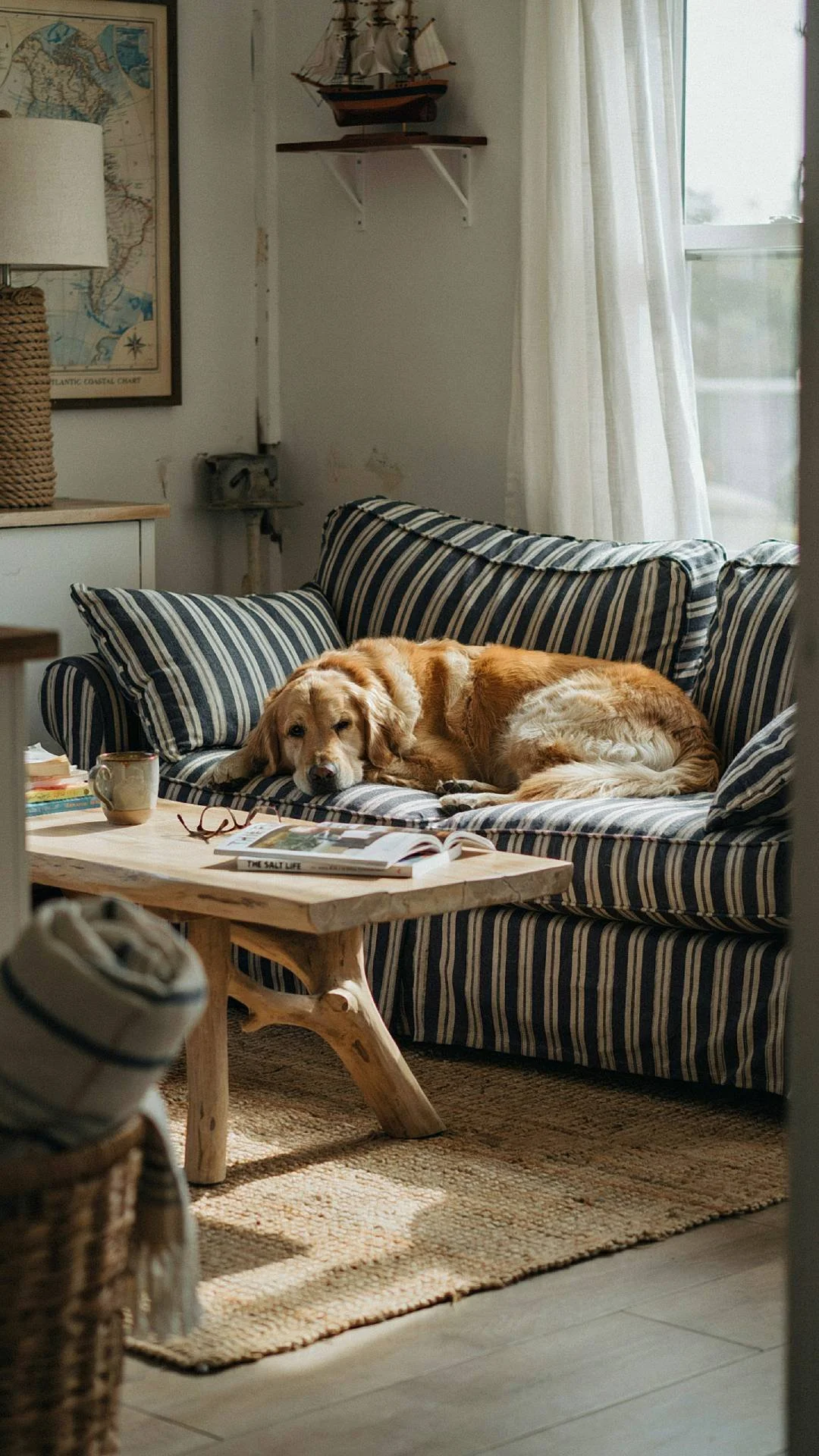
Choose performance fabrics in light colors (yes, they exist; look for indoor/outdoor fabrics). Opt for jute rugs with a tight weave that won't snag claws. Avoid white slipcovers unless they're machine washable. Keep decorative shells and coral on high shelves.
Dark Rooms:
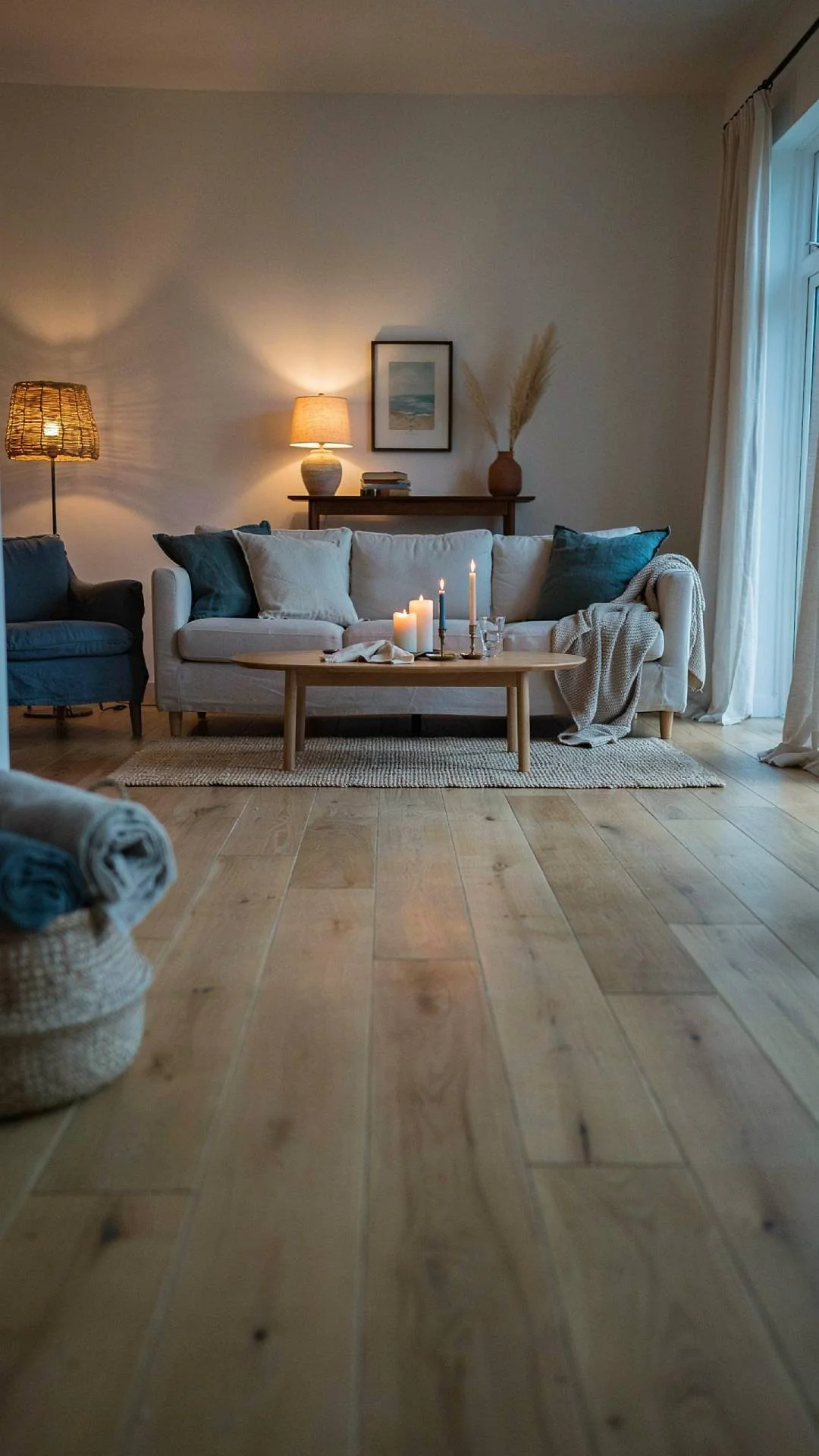
If natural light is limited, maximize what you have: use sheer curtains instead of heavy drapes, add multiple light sources (floor lamps, table lamps, candles), and incorporate reflective surfaces like glass, mirrors, and light-colored glossy ceramics. If you'd rather embrace a moodier look, see our dark cottagecore design guide.
Your Complete Shopping List
Here's everything mentioned above in one place, organized by priority:
Must-Haves (Under $200 total):
Paint samples and rollers
White or cream throw pillows (2-4)
One natural texture piece (jute rug or woven basket)
Sheer white curtains
One statement piece (rope mirror, driftwood art, or nautical item)
Level Up ($200-500):
Larger area rug
Linen or cotton slipcovers
Coastal artwork
Indoor plants and planters
Additional textural elements (poufs, throws)
Dream List ($500+):
Vintage maritime antique
Rattan or wicker furniture piece
Large indoor tree
Custom window treatments
Pendant lighting
Wrap-Up
And that's it! 5 simple steps, 44 ways to make them your own, and a complete roadmap from first purchase to finished room.
Pick one idea from each step, mix and match what works for your space and budget, and you'll have a living room that feels like your own private beach cottage. Love the blue or green coastal color palette? It works just as well in a coastal kitchen too.
One final skeptical but honest truth? Your living room will never truly feel coastal if you don't keep it light, clutter-free, and fresh. So edit often, stick to your palette, and only add what you really love.
Coastal Living Room Decor Frequently Asked Questions (FAQs)
Q: How much does it cost to create a coastal living room?
A: You can start with as little as $100-200 for a basic refresh (pillows, curtains, and small decor). A moderate makeover runs $500-1,000, while a complete transformation with furniture might be $2,000-5,000+. The beauty of coastal design is that it works at any budget. The style emphasizes simplicity and natural materials rather than expensive pieces.
Q: Can I do coastal style if I don't live near the beach?
A: Absolutely! Coastal design is about evoking a feeling, not your actual location. Focus on light, airy spaces with natural textures and a calming color palette. Some of the best coastal rooms are hundreds of miles from the ocean. The key is creating that vacation-home atmosphere wherever you are.
Q: What's the difference between coastal and nautical style?
A: Nautical is a subset of coastal that's more literal. Think anchors, ship wheels, navy and white stripes, and sailing motifs. Coastal is broader and more subtle, emphasizing natural materials, soft colors, and beachy elements without being "themed." Coastal can incorporate some nautical touches, but it's generally more sophisticated and less literal.
Q: Is coastal style going out of fashion?
A: The coastal aesthetic has evolved but remains timeless because it's based on natural materials and calming colors that never truly go out of style. Modern coastal design has moved away from the heavy nautical themes of the 2000s toward a more refined, organic look. If you focus on quality natural textures and avoid trendy "beach signs," your coastal room will stay current for years.
Q: How do I make coastal style work in a small apartment?
A: Small spaces actually benefit from coastal design! Use white or very light paint, keep furniture minimal and low-profile, stick to 2-3 main colors, and use mirrors to reflect light. Avoid large statement pieces. Instead, focus on small textural elements like pillows, a jute rug, and sheer curtains. One medium-sized plant is better than several small ones.
Q: Can coastal style work with my existing furniture?
A: Yes! You don't need to replace everything. Start by working with what you have: add white or cream slipcovers to darken furniture, swap out pillows and throws, change your wall art, and add coastal accents. Most furniture styles can be "coastalized" with the right accessories. Even a traditional leather sofa works with light linen pillows and a jute rug.
Q: What colors should I avoid in a coastal living room?
A: Avoid heavy, dark colors as large elements like dark brown, burgundy, deep purple, or black walls and large furniture pieces can feel too heavy. Also steer clear of overly warm oranges and reds (unless used very sparingly as coral accents). Jewel tones can work as small accents but avoid them as dominant colors.
Q: How do I prevent my coastal room from looking like a beach souvenir shop?
A: The key is restraint. Choose one or two statement pieces rather than covering every surface with shells and starfish. Avoid decorative signs with beach puns. Stick to authentic materials like real driftwood, genuine shells, natural rope rather than plastic versions. If you wouldn't find it in an actual beach house, don't put it in yours.
Q: What if I'm renting and can't paint the walls?
A: No problem! Focus on large textiles to set the tone: a cream or white area rug, light curtains, white or neutral slipcovers, and plenty of pillows. Add a large piece of coastal art to anchor the space. Use removable wallpaper or wall decals if you want to make a bigger impact. The good news is that coastal style relies heavily on accessories rather than permanent changes.
Q: Are there any materials I should avoid?
A: Skip anything that looks cheap or plastic like fake wicker, synthetic rope, plastic shells, and glossy "beachy" signs. Also avoid heavy, dark woods (except as small accent pieces), plush velvet fabrics, and ornate gold finishes, which all feel too formal for coastal style. Stick with natural materials in their authentic forms.
Q: How do I keep a coastal room from feeling cold or sterile?
A: Layer in warm neutrals like sandy beige, warm taupe, and cream alongside the cool blues and whites. Add plenty of texture through natural materials like chunky knit throws, nubby linen, rough jute. Include warm wood tones in small doses. Most importantly, incorporate lived-in touches: books, throws casually draped, fresh flowers, and items that show you actually use the space.
Q: Can I mix coastal style with other design styles?
A: Definitely! Coastal pairs beautifully with:
Farmhouse: Both emphasize natural materials and casual comfort
Scandinavian: Shared love of white, light woods, and minimalism
Bohemian: Natural textures and relaxed vibe complement each other
Modern: Clean lines work well with coastal's uncluttered aesthetic
The key is choosing one style as your base (60-70%) and adding elements from the other (30-40%).
Q: What's the best way to display shells and beach finds?
A: Keep them contained and curated. Use a large glass hurricane or apothecary jar to display a collection of similar shells, rather than scattering individual shells around. Create a shadow box with your favorite finds. Or place one stunning piece like a large conch shell or piece of coral on a stack of coffee table books. Group items in odd numbers (3 or 5) for visual appeal.
Q: How often should I update my coastal decor?
A: The base elements (paint color, large furniture, rugs) can last 5-10 years or more if you choose quality pieces in timeless styles. Seasonal updates twice a year keep things fresh. Swap pillows, throws, and small decor between summer and winter. Replace trendy items every 2-3 years, but invest in classic pieces that will last.