
How to Blend English Cottage Style into Your Coastal Kitchen (Without Looking Landlocked)
This post may contain affiliate links. If you make a purchase through one of my links, I may receive a small commission at no cost to you.
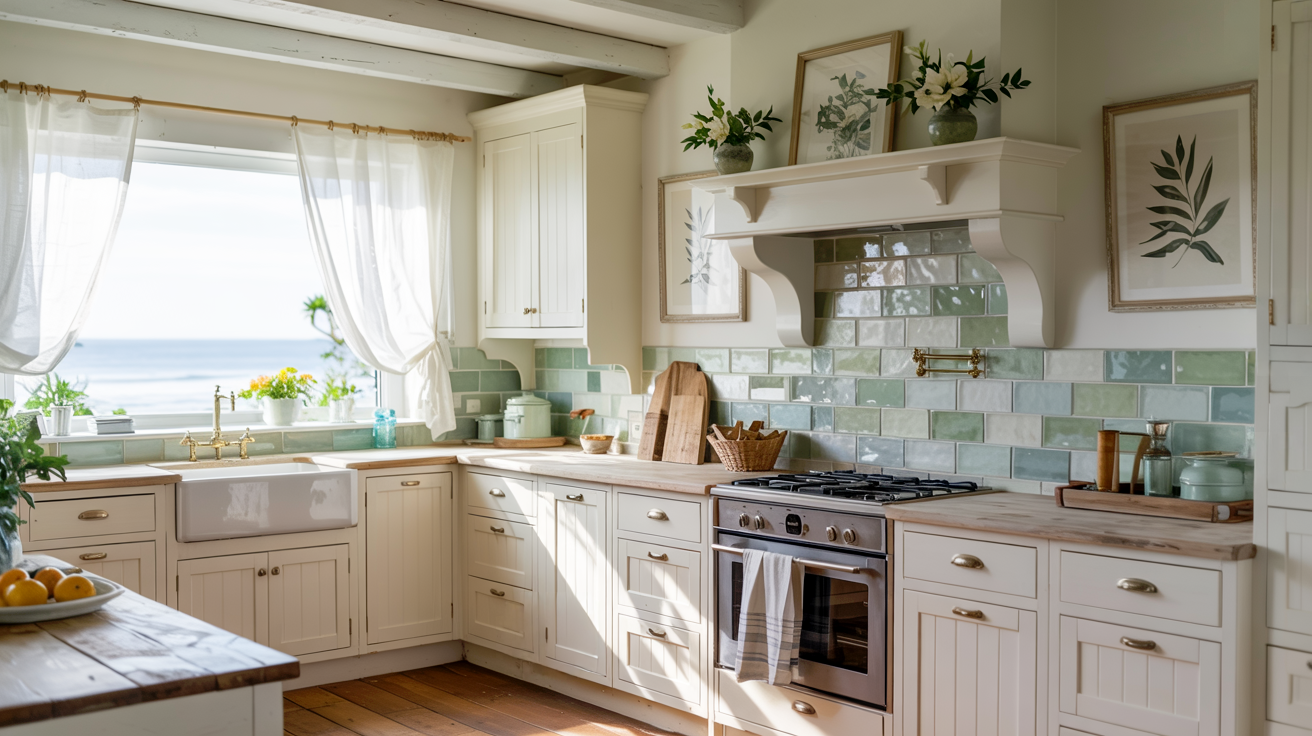
Credit: Claire Bentz with Sunset Beach Images LLC
Living by the coast but love the cozy, romantic feel of English cottage kitchens? You're not alone. Many coastal homeowners are drawn to the warmth and character of country cottage design but worry it'll look out of place in a beach setting.
The good news: English cottage style and coastal living are more compatible than you think. Both celebrate natural materials, light-filled spaces, and a relaxed approach to elegance. The key is adapting cottage elements to feel at home by the sea rather than transplanting a countryside kitchen to the shore.
Key Takeaways:
How to adapt cottage colors, materials, and textures for a coastal setting
Ways to balance cottage coziness with the openness coastal homes need
Smart strategies for decorating so neither style overwhelms the other
Here's how to bridge these two beloved styles in your kitchen.
Understanding the Challenge: Cottage vs. Coast
English cottage kitchens typically feature deeper, richer colors (think forest green, burgundy, dark wood), heavier fabrics, and a more enclosed, cozy atmosphere. Traditional coastal design leans lighter, breezier, and more open.
The solution: Keep cottage's soul (warmth, character, handcrafted details) while adapting its expression (lighter woods, airier colors, more natural light).
Think of it as translating the cottage aesthetic into a coastal dialect - same language, different accent.
1. Lighten Traditional Cottage Colors for Your Seaside Setting
English cottage kitchens often use deep, moody colors. For coastal settings, choose the lighter relatives of these traditional hues.
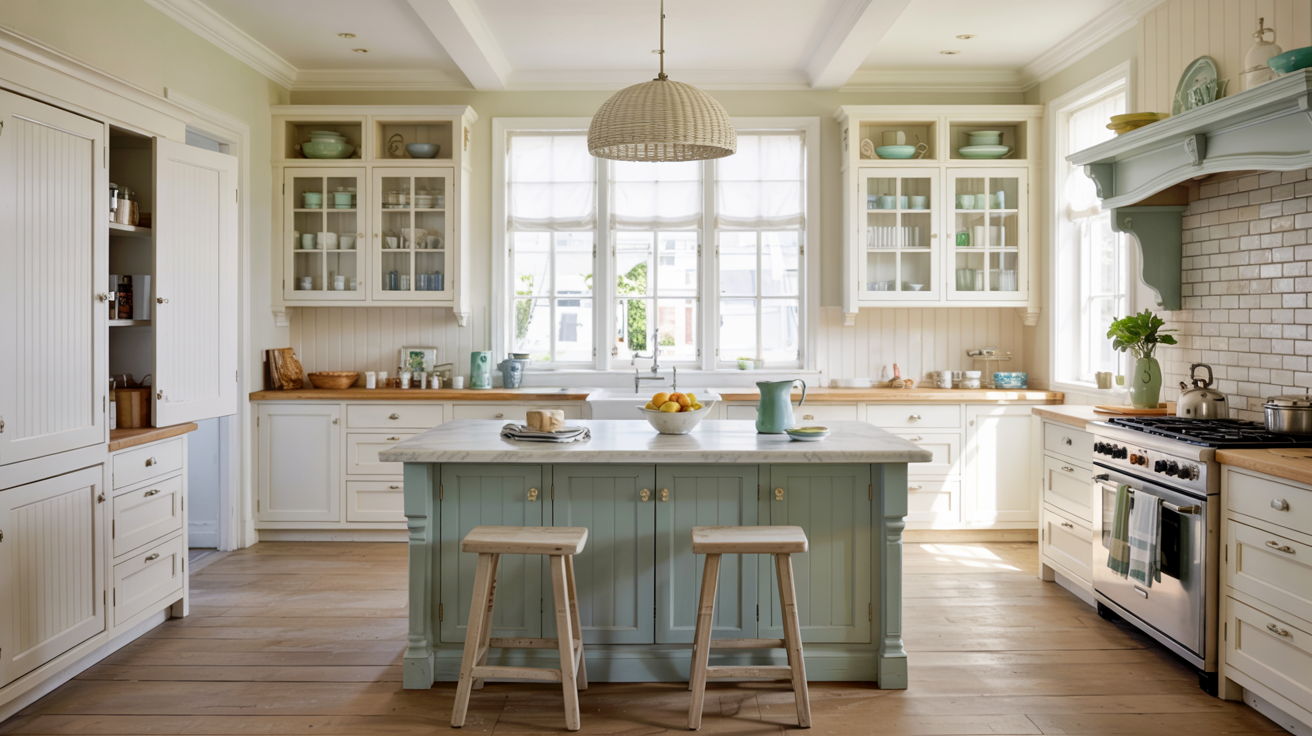
Credit: Claire Bentz with Sunset Beach Images LLC
Coastal-cottage color swaps:
Instead of forest green → soft sage or seafoam
Instead of burgundy or brick red → dusty coral or soft terracotta
Instead of navy → powder blue or periwinkle
Instead of chocolate brown → warm sand or driftwood gray
Instead of cream → brighter white or pale yellow
How to use them: Paint your Shaker cabinets in whites or soft grays (cottage structure, coastal brightness). Add your adapted cottage colors through an island painted in muted blue-green, open shelving backing, or interior cabinet color that peeks through glass doors.
The lighter palette lets in the coastal light while maintaining cottage coziness through warm undertones - choose whites with cream or yellow bases rather than stark cool whites.
2. Choose Weathered Wood Over Dark Stained Wood
English cottages love rich, dark wood beams and cabinetry. For coastal settings, embrace wood's texture and age while keeping the tone light.
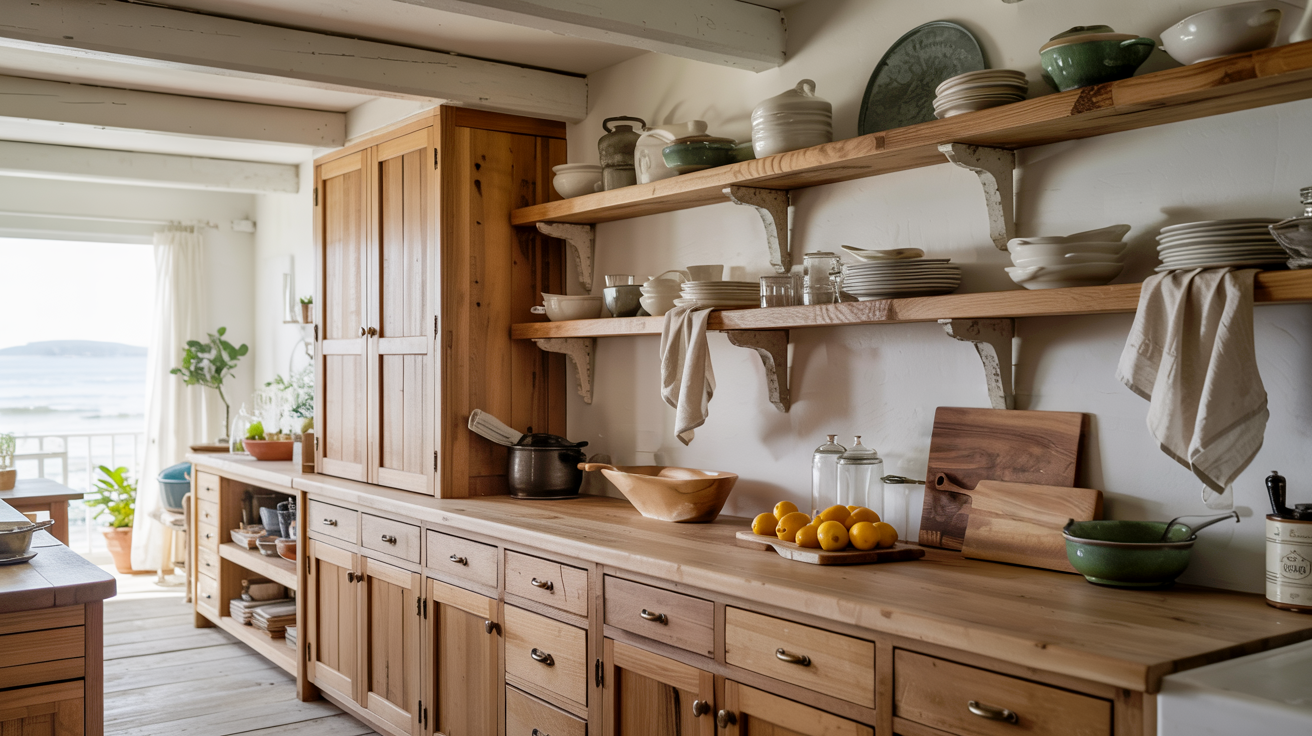
Credit: Claire Bentz with Sunset Beach Images LLC
Cottage-to-coast wood translations:
Replace dark oak with whitewashed or natural light oak
Swap mahogany for driftwood-toned reclaimed wood
Use pine left natural or lightly stained instead of walnut
Choose worn and weathered finishes over glossy, polished ones
Where to add wood:
Exposed ceiling beams in blonde or whitewashed tones
Butcher block countertops in lighter maple rather than walnut
Open shelving in reclaimed wood with visible grain
A rustic wood range hood painted or left natural
The weathering and age give you cottage authenticity, while the lighter tone keeps your coastal home feeling bright and airy.
3. Adapt Cottage Textiles for Beach Climate
English cottage kitchens feature heavy linens, thick curtains, and layered fabrics. Coastal versions need to feel lighter and more breathable.
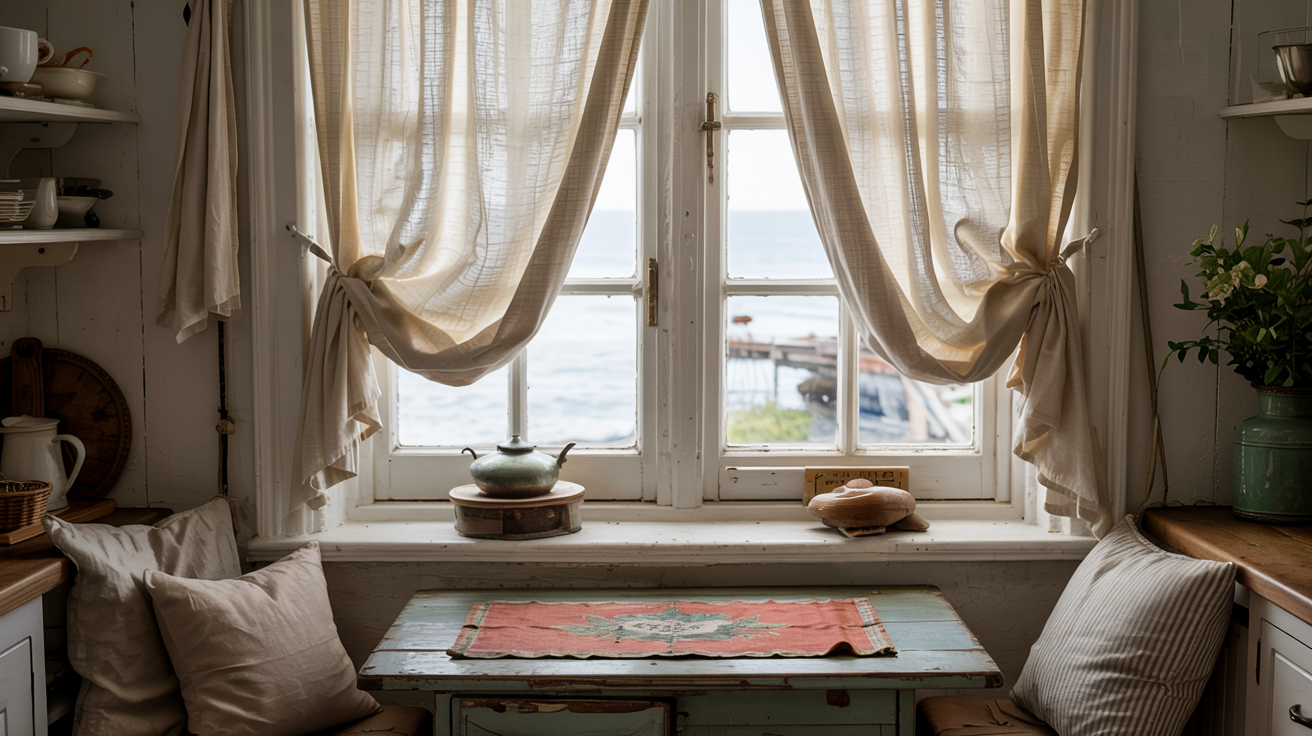
Credit: Claire Bentz with Sunset Beach Images LLC
Fabric modifications:
Choose lightweight linen curtains instead of heavy drapes - same cottage texture, more coastal airflow
Use cotton rather than wool for chair cushions
Select lighter-weight dish towels with cottage patterns (checks, stripes, florals) in faded rather than saturated colors
Add a vintage cotton runner instead of a heavy table covering
Keep cottage patterns (gingham, ticking stripes, small florals) but in sun-bleached colors. Think faded rather than fresh-from-the-garden vibrant.
4. Balance Cottage Coziness with Coastal Openness
Traditional English cottage kitchens feel enclosed and intimate. Coastal homes need to capture views and maximize natural light.
Credit: Claire Bentz with Sunset Beach Images LLC
Design bridges:
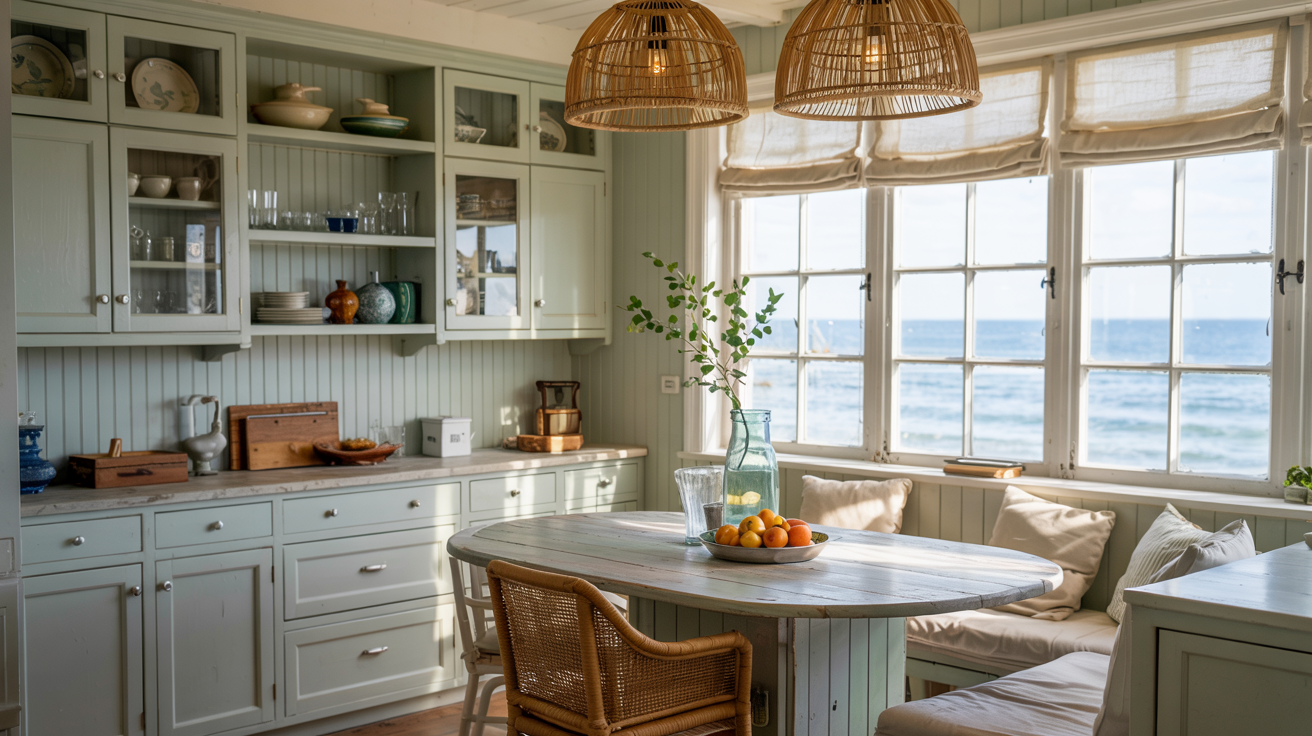
Install cottage-style Shaker cabinets but use 30-40% glass-front uppers or open shelving to maintain openness
Add cottage warmth through a single cozy corner (breakfast nook with cushions) while keeping the main kitchen airy
Use cottage-style pendant lights, but choose materials that feel light - woven rattan, white ceramic, or clear seeded glass rather than heavy wrought iron
Frame your ocean views with simple cottage-style trim rather than heavy window treatments
Your cottage elements become anchoring details in an otherwise open, light-filled space rather than competing with your coastal setting.
5. Bring in English Garden Touches That Work at the Beach
Cottage kitchens celebrate the garden. Coastal versions should reference both garden and shore.
Credit: Claire Bentz with Sunset Beach Images LLC
What to display:
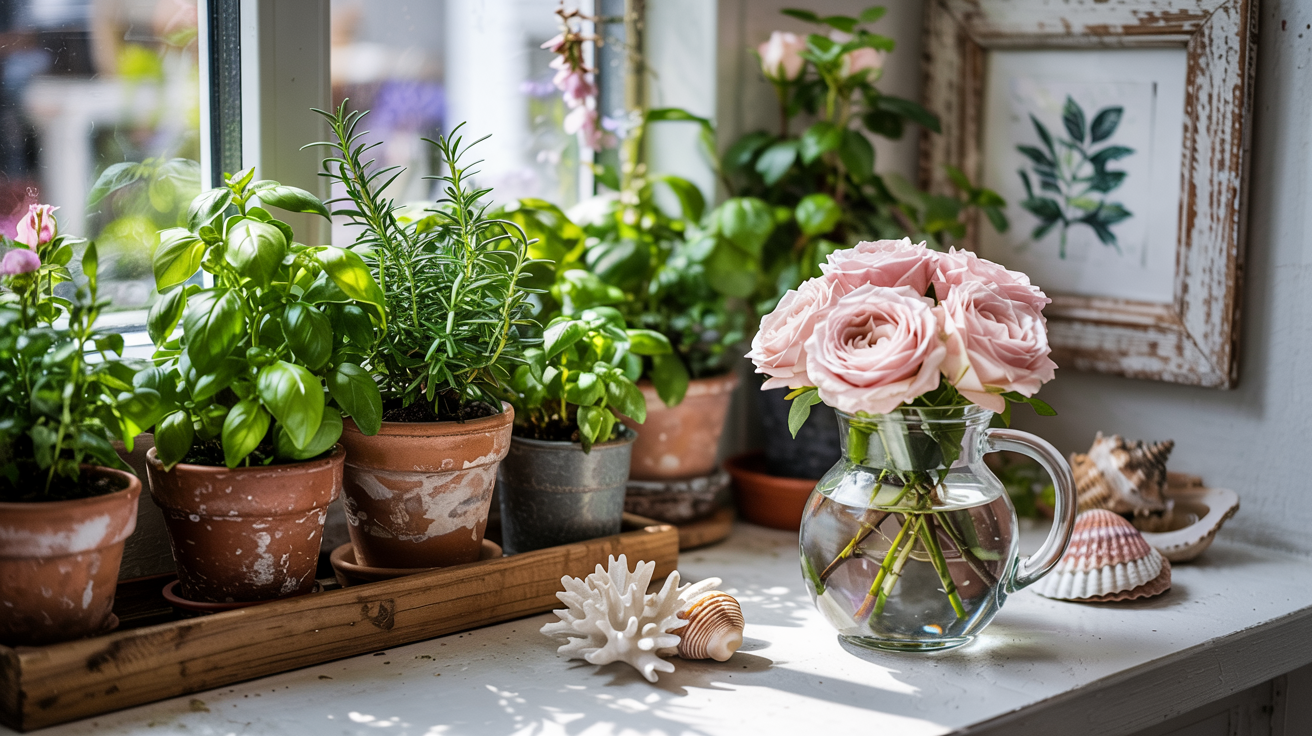
Fresh herbs in vintage ceramic pots on windowsills (cottage) mixed with a few beach finds like white coral or shells (coastal)
Botanical prints or vintage seed packets (cottage heritage) in driftwood frames (coastal material)
Garden roses (cottage classic) in clear glass or ceramic pitchers rather than heavy pottery
Woven baskets (both cottage and coastal) for storage
Pro tip: Limit heavily landlocked cottage motifs (roosters, farm animals, wheat bundles) in favor of elements that could believably appear in a coastal cottage garden - lavender, rosemary, wildflowers, and maritime plants.
6. Choose Your Metals Strategically
English cottages often feature aged brass, copper, and oil-rubbed bronze. These can work coastally if you're selective.
Credit: Claire Bentz with Sunset Beach Images LLC
Best approach:
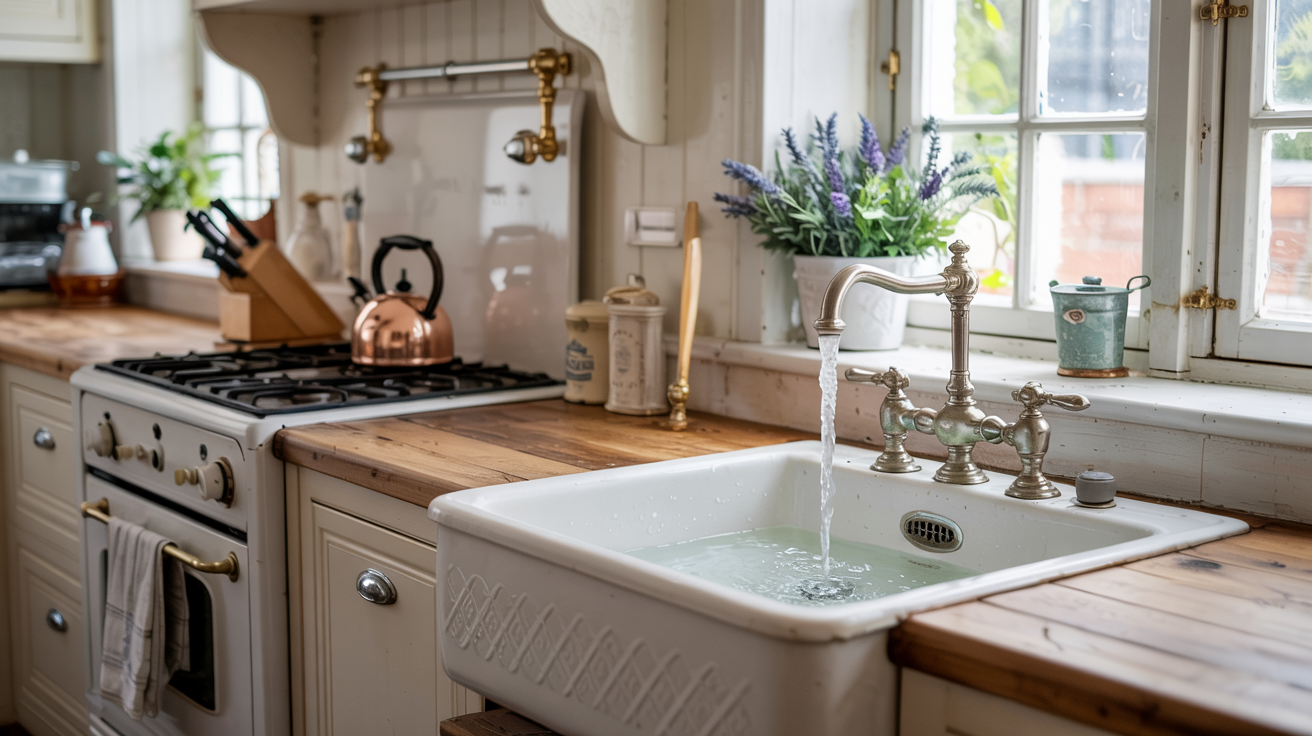
Use aged brass hardware on cabinets - it provides cottage warmth without the darkness of oil-rubbed bronze
Choose brushed nickel or champagne bronze for faucets - more water-friendly than copper
Display a few vintage copper pieces (like a kettle) as accents rather than making copper your primary metal
Mix metals: aged brass hardware + nickel faucet keeps things from feeling too rustic
Avoid heavy wrought iron or very dark bronze which can feel too landlocked and heavy in a bright coastal space.
7. Adapt Cottage Architectural Details
Classic English cottage features like exposed beams, plank walls, and farmhouse sinks translate beautifully to coastal settings with small adjustments.
Credit: Claire Bentz with Sunset Beach Images LLC
How to adapt these elements:
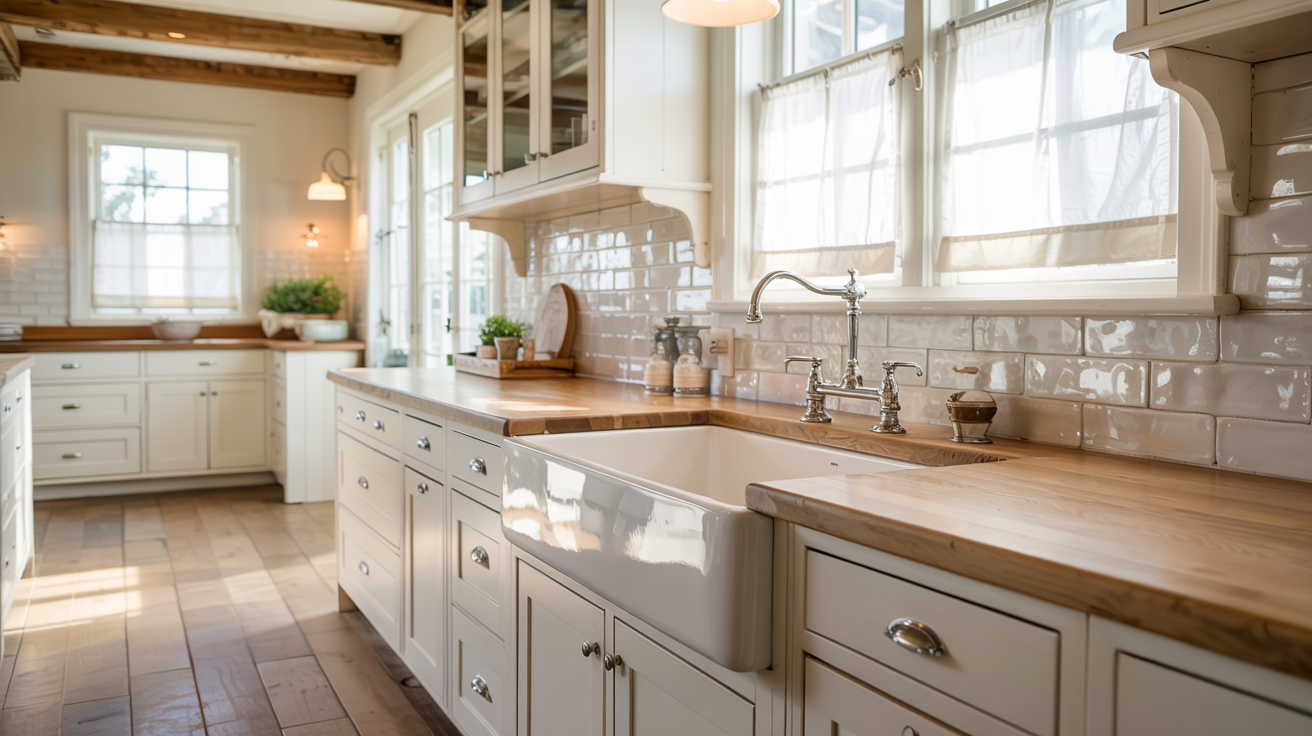
Beams: Paint or whitewash ceiling beams rather than leaving them dark - you get cottage character with coastal brightness
Farmhouse sink: Choose white porcelain (cottage classic that's naturally coastal) over darker materials
Backsplash: Use handmade white or pale ceramic tiles (cottage craftsmanship) in simple subway or small-scale patterns rather than heavy stone
Flooring: Wide-plank wood in natural or whitewashed finish gives you cottage authenticity with beach-appropriate lightness
These architectural bones give your kitchen cottage credibility while the lighter finishes keep it coastal.
8. Curate Your Displays Thoughtfully
Many people struggle with how to decorate without your cottage aesthetic clashing with your coastal reality.
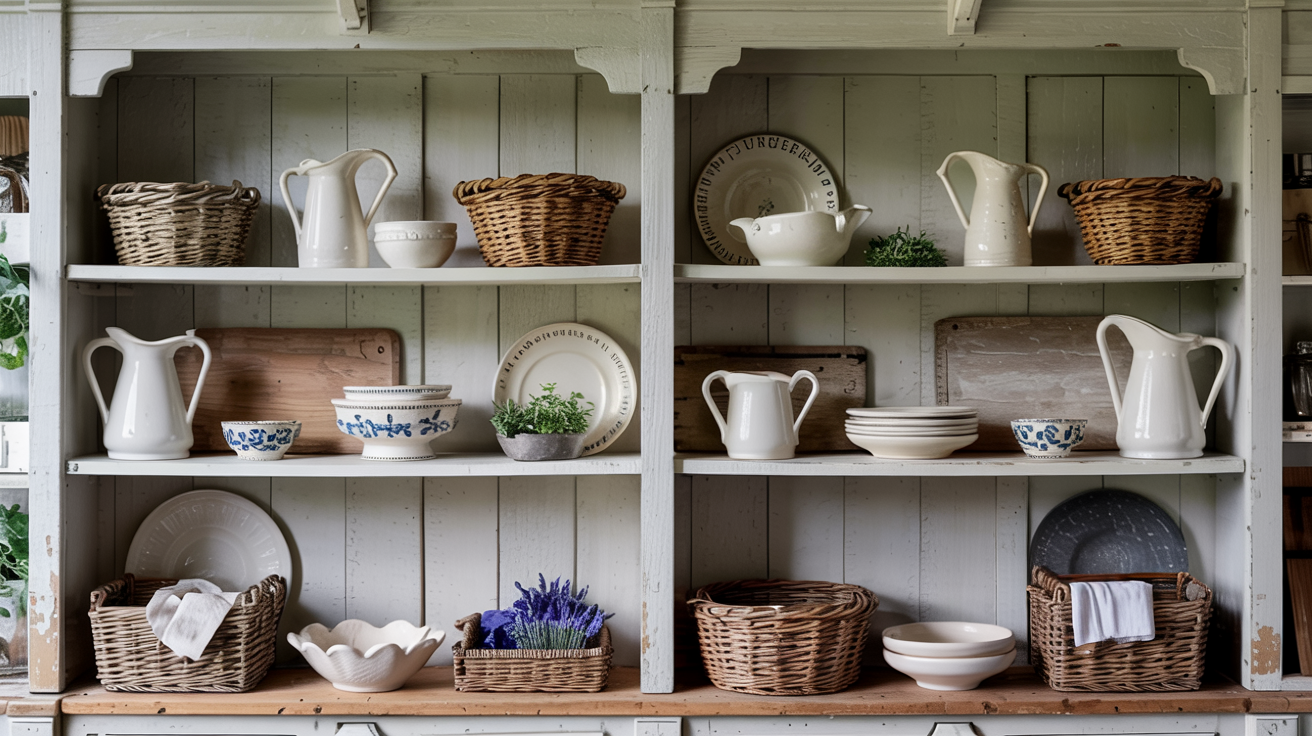
Credit: Claire Bentz with Sunset Beach Images LLC
Display strategy:
70% neutral/shared elements that work in both styles: white ironstone, wooden cutting boards, glass jars, woven baskets, fresh greenery, simple ceramic pieces
20% gentle cottage pieces: vintage botanical prints, blue and white transferware, small floral touches, copper tea kettle, English pottery
10% coastal nods: a few shells, driftwood piece, coral, or blue glass that acknowledges your location
Avoid: Don't create a heavy-handed cottage theme (every surface covered in roosters and gingham) or an aggressive coastal theme (anchors and "BEACH" signs everywhere). Subtlety is your friend.
Making It Work: The Big Picture
The secret to successfully blending English cottage style into your coastal kitchen is respecting both the cottage aesthetic you love and the coastal environment where you live.
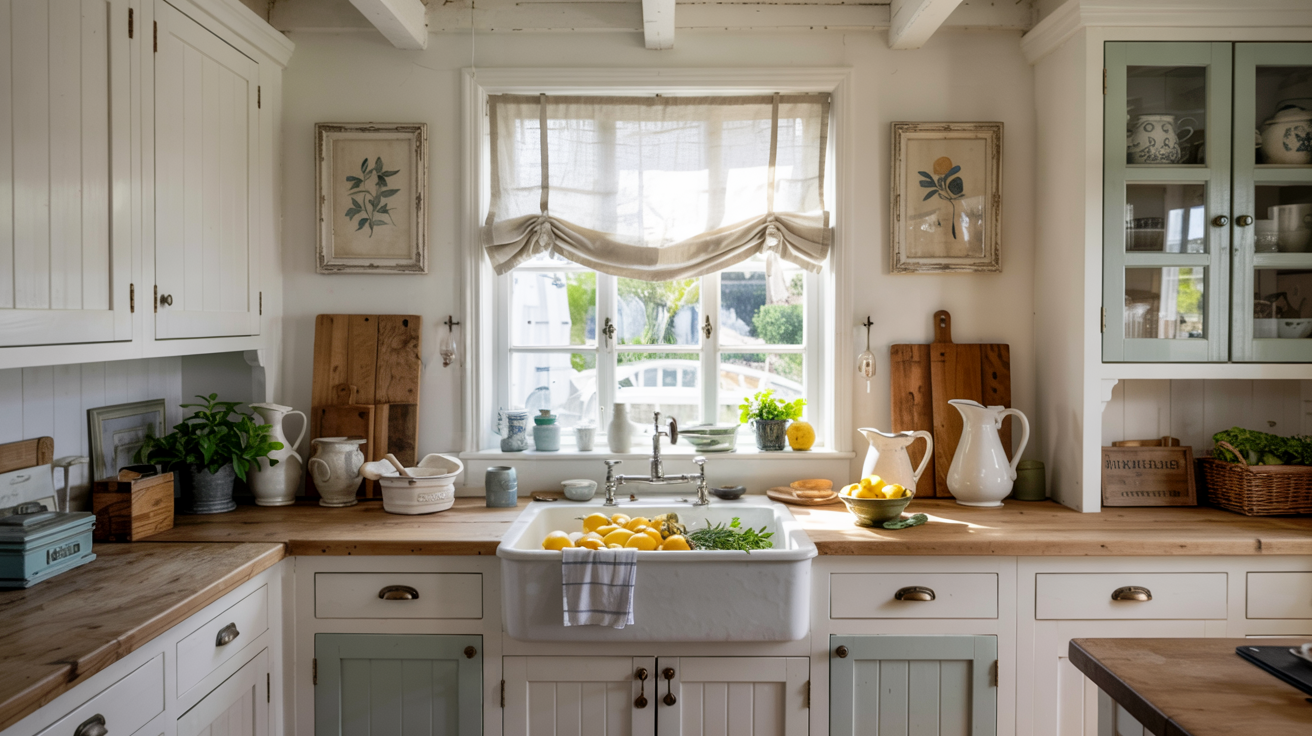
Credit: Claire Bentz with Sunset Beach Images LLC
Your cottage elements should feel like they've always belonged by the sea - as if an English cottage was built on the shore rather than in the countryside. This means:
Embrace cottage craftsmanship and warmth
Adapt cottage colors to work with coastal light
Choose materials that feel authentic to both styles
Keep the overall space light and open
Let cottage details provide character without overwhelming
The result? A kitchen that feels collected over time, deeply personal, and perfectly suited to coastal cottage living; neither too landlocked nor too beachy, but beautifully balanced between the two.
Your kitchen can absolutely honor your love of English cottage charm while celebrating your coastal location. It just takes thoughtful translation rather than direct copying.
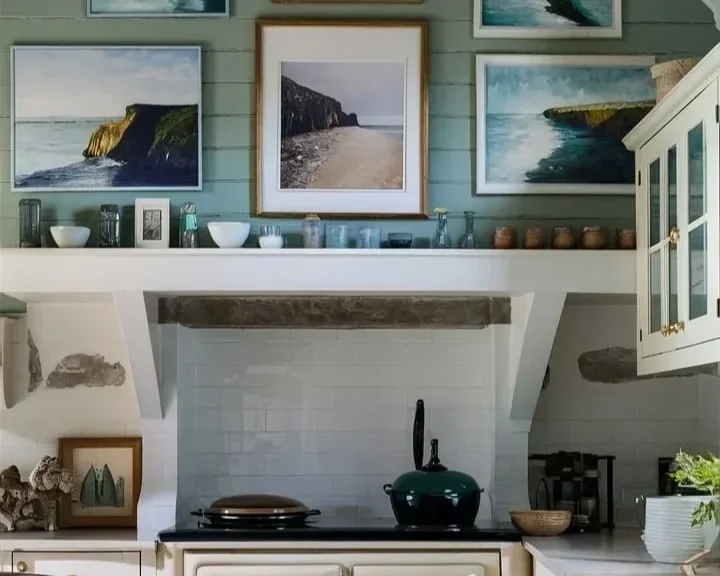
Top 10 Must-Have Items for an English Coastal Cottage Kitchen
FAQs
Can English cottage style really work in a coastal home?
Yes. Both styles emphasize natural materials, comfort, and relaxed beauty. The key is adjusting the richer, moodier cottage elements so they feel fresh and light enough for a seaside setting.
What colors work best for a coastal-cottage kitchen?
Soft, sunwashed versions of classic cottage colors work beautifully; sage instead of forest green, dusty coral instead of burgundy, powder blue instead of navy, driftwood gray instead of dark brown, and warm whites over cool whites.
How do I keep my kitchen feeling cozy without losing coastal openness?
Pair solid Shaker cabinetry with glass-front uppers or open shelving, keep window coverings light, and limit the “cozy moments” to intentional spots like a breakfast nook.
Which woods fit both cottage and coastal styles?
Lighter wood tones look most natural near the water. Whitewashed oak, natural pine, driftwood-toned reclaimed wood, and lightly stained maple give you cottage texture without adding heaviness.
What fabrics work best in a coastal-cottage kitchen?
Choose breathable materials: lightweight linen curtains, cotton seat cushions, and soft, faded versions of cottage patterns like gingham, floral, or ticking stripe.
Can I still use copper, brass, and other cottage metals?
Absolutely. Just use them selectively. Aged brass hardware and a few copper accent pieces blend well with water-friendly metals like brushed nickel or champagne bronze.
What cottage decor items should I avoid in a coastal home?
Skip motifs that feel strongly landlocked, like roosters, farm animals, and heavy country pottery. Instead, focus on botanicals, herbs, simple ceramics, and pieces that could fit naturally in a seaside garden.
How do I mix coastal and cottage décor without making it cluttered?
Aim for a balance: mostly neutral pieces, a sprinkle of gentle cottage accents, and just a few subtle coastal references. Think 70% shared elements, 20% cottage, 10% coastal.
What architectural elements help bridge both styles?
Whitewashed beams, wide-plank floors, farmhouse sinks, and handmade tile backsplashes give you cottage character in a lighter, beach-friendly way.
What’s the biggest mistake people make when blending these styles?
Going too heavy in either direction like overloading with rustic cottage decor or filling the space with overt beach-themed items. The sweet spot is understated, airy, and intentional.