
5 Small Space Landscaping Ideas for Coastal Cottage Exteriors
(Updated 6/30/26)
This post may contain affiliate links. If you make a purchase through one of my links, I may receive a small commission at no cost to you.

When I first bought my tiny beach cottage three years ago, I nearly cried looking at the barren, postage stamp yard.
My dreams of garden parties and lush coastal landscaping felt impossible in such a limited space. But it turns out small space landscaping just needs a different approach than a big yard does.
After countless weekends of trial and error (and yes, a few plant casualties), I found that small coastal gardens can end up even more charming than sprawling ones.
My neighbor Elaine actually stopped by one afternoon and asked how I made the place look twice as big. That is when I knew these ideas were working.
Whether you have a compact vacation home or a full time beach bungalow with barely any outdoor space, these 5 small space landscaping ideas will help you create that breezy coastal magic without needing acres of land.
Key Takeaways
Vertical gardens and window boxes add charm without using any ground space
Multi level container groupings can be built for under $150 using found and repurposed materials
Defined pathways using shells or gravel create the illusion of a larger yard
Most projects in this list cost under $50 and can be finished in a weekend
1. Vertical Garden with Coastal Flair
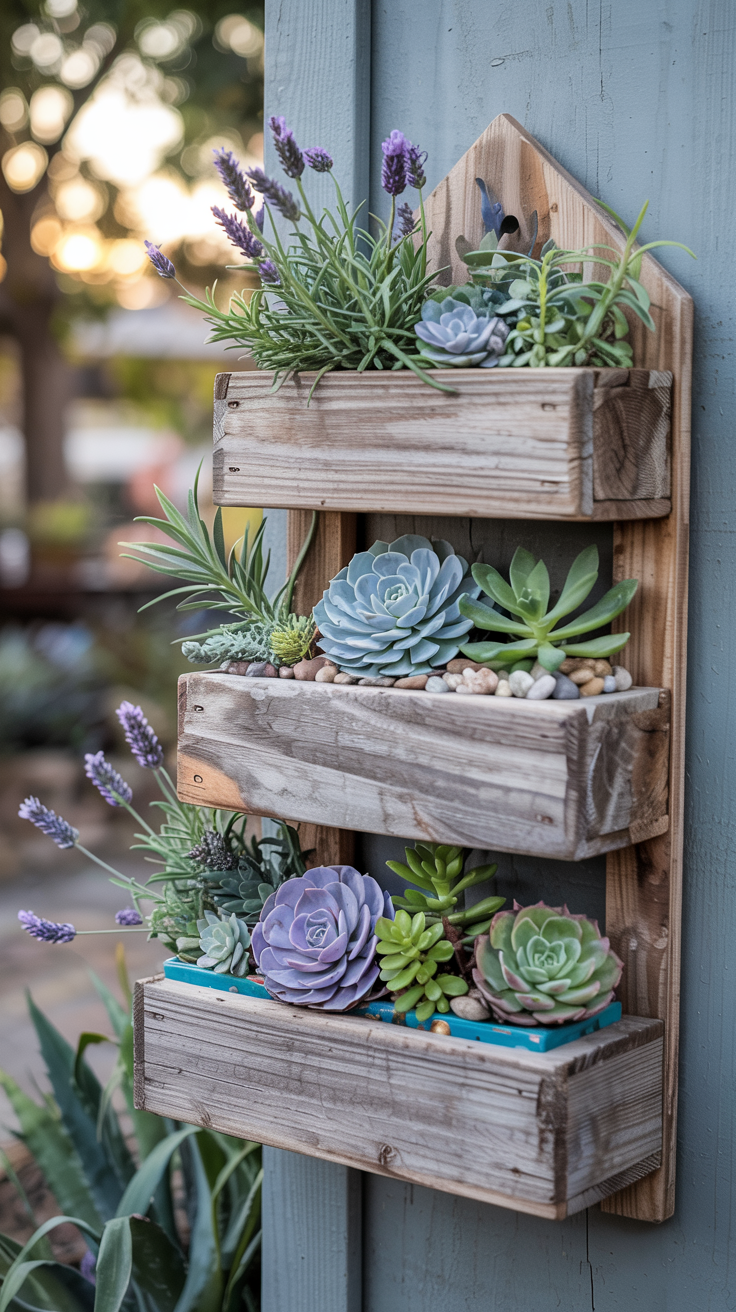
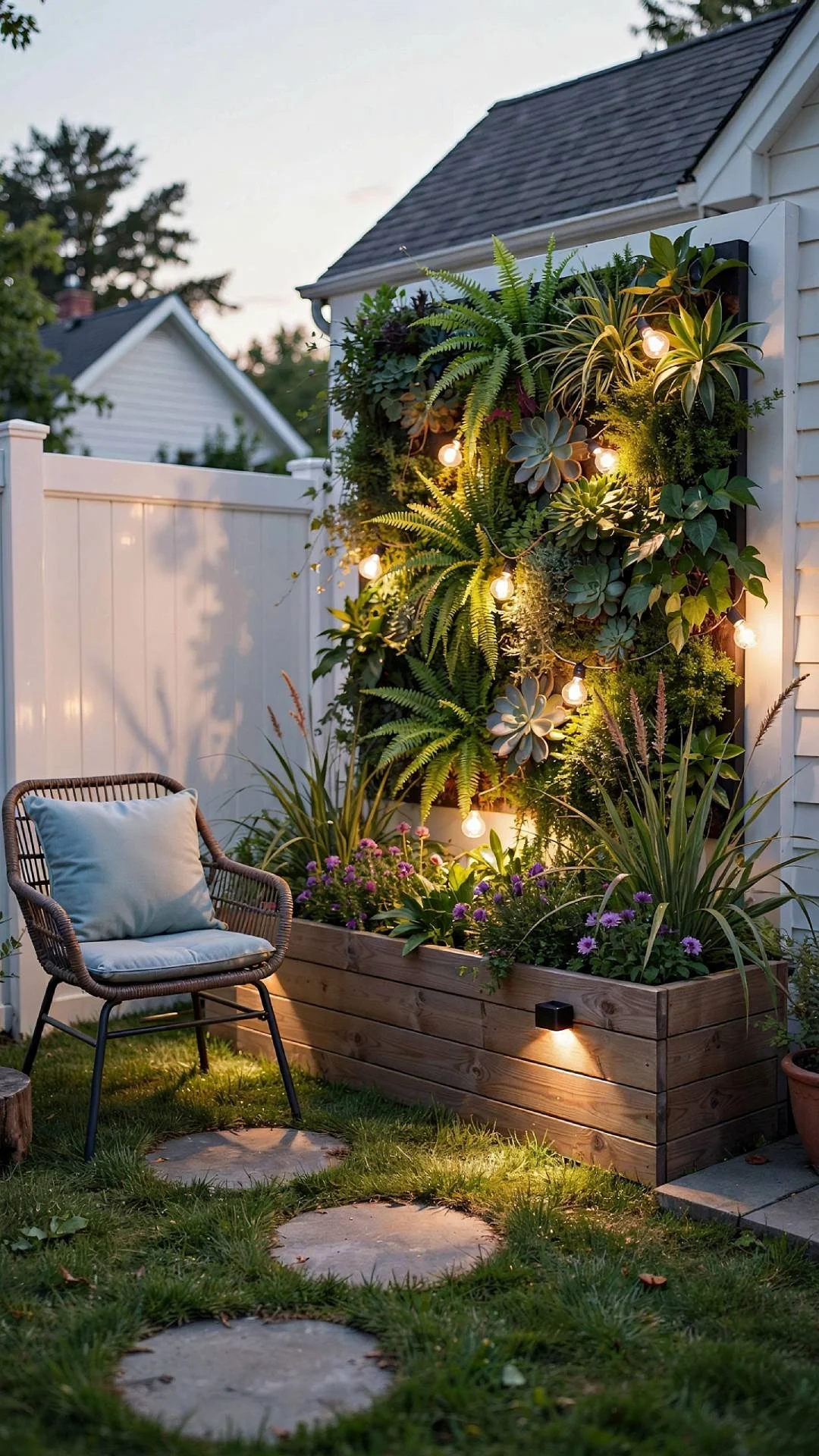
A vertical garden was honestly my first move when I realized my yard had almost no usable ground space. Instead of fighting the limitation, I leaned into it and let the wall do the work.
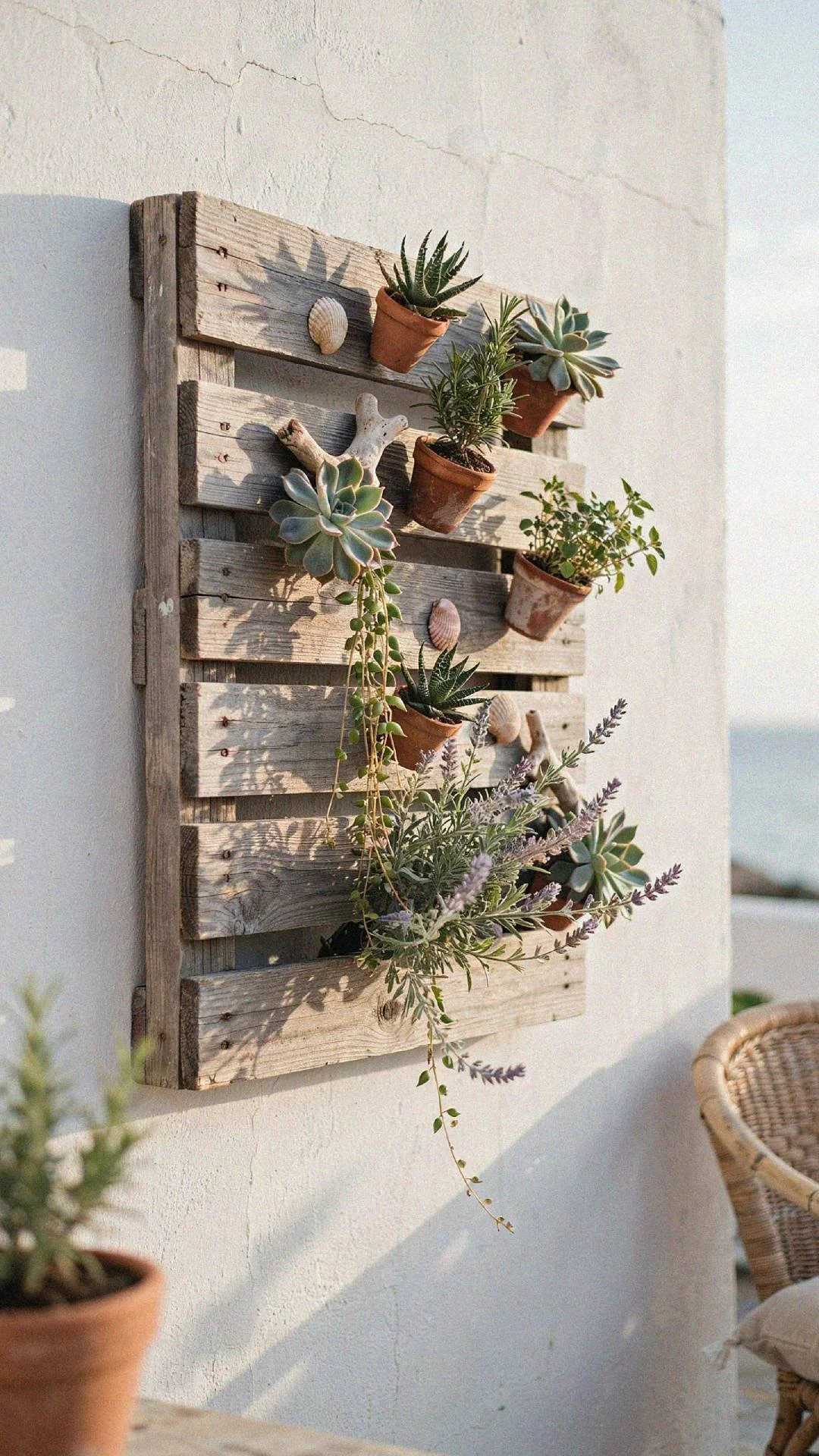
Adding coastal elements like driftwood and shells turns a simple space saving trick into a real beachside focal point.
This one is perfect if you are working with a patio, a narrow side yard, or even just one bare exterior wall.
Best for: narrow side yards, bare exterior walls, patios with no ground space to work with
How to Recreate It
Purchase or build a vertical planter system with pockets or shelves (weathered wood or white-painted options work beautifully)
Select coastal-friendly plants that can handle salt spray: succulents, ornamental grasses, sea lavender, and herbs like rosemary
Add a moisture-retaining potting mix specifically formulated for vertical gardens
Install a simple drip irrigation system to ensure consistent watering
Incorporate found beach objects like small pieces of driftwood or shells among the plantings
DIY Project
Create your own vertical garden using repurposed pallets. Sand down a wooden pallet and apply a weathered whitewash finish (1 part white paint to 3 parts water). Staple landscape fabric to the back and bottom, then fill with soil. Plant drought-tolerant coastal varieties in the spaces between slats. Attach rope details or nautical cleats to enhance the coastal feel. The entire project can be completed for under $50!
Buy It Option
Pre-made vertical garden wall planter with pocket system ($75-150)
Coastal plant collection specifically curated for vertical gardens ($30-60) - this will be a mix of veggies, herbs, and trailing flowers and plants.
Weathered wood picture frames to surround smaller vertical gardens ($20-30) - you might have to thrift these or check out a local antique store.
Styling Tips for Beginners
If you're new to gardening, start small with just a few plant varieties that are extremely forgiving, like succulents and air plants. Position your vertical garden where it will receive morning sun but afternoon shade to prevent plant stress.
Begin with a smaller vertical garden and expand as your confidence grows.
Remember that coastal gardens often look best with a slightly wild, windswept appearance, so don't worry about perfect symmetry!
Creating a vertical garden transforms an ordinary wall into a stunning focal point while preserving your valuable floor space. It's like getting free square footage for your garden!
2. Multi-Level Container Groupings
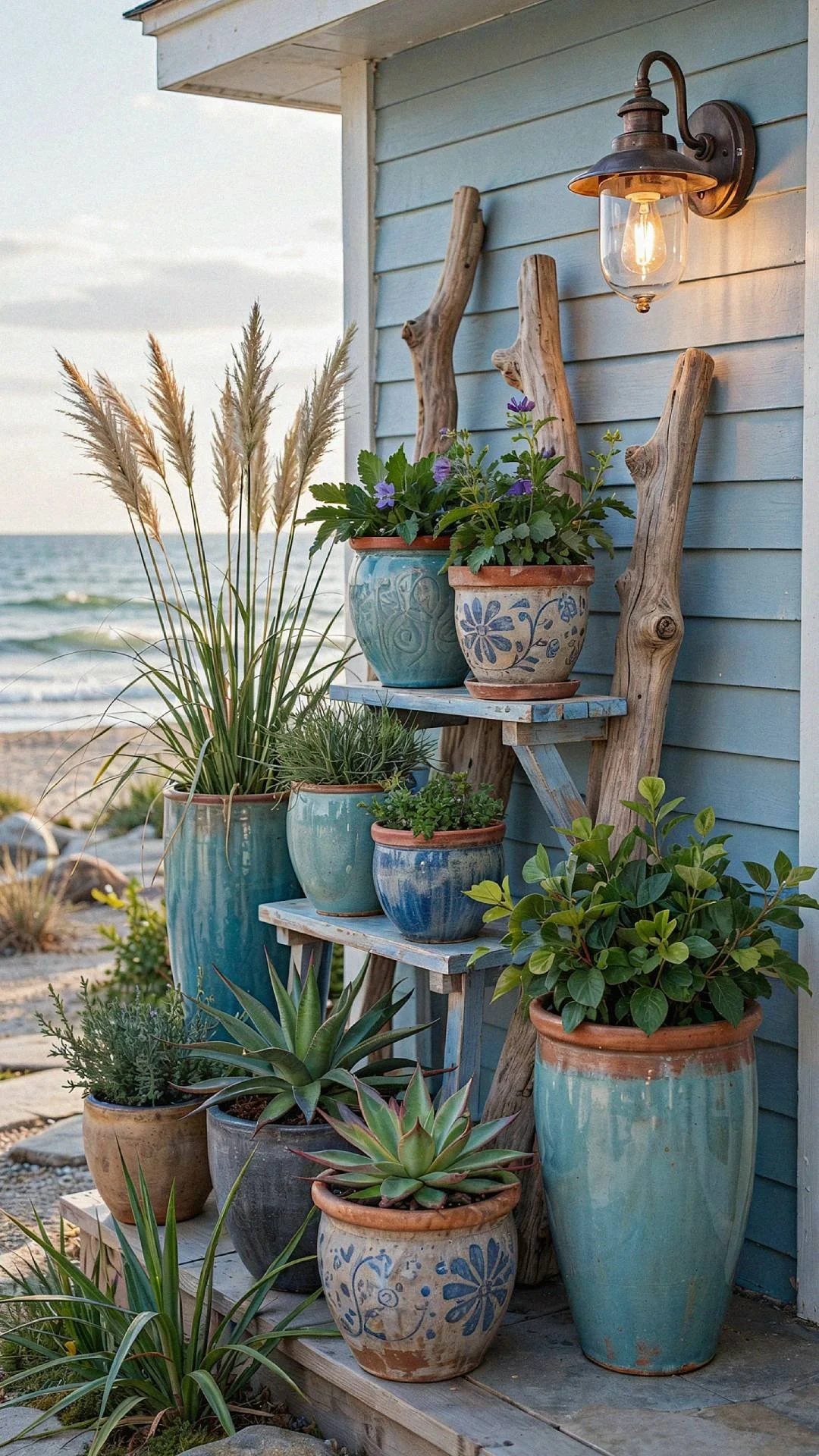
If you want your yard to look bigger and more intentional without moving a single fence line, this is the trick. Grouping containers at different heights tricks the eye into seeing layers and depth, the same way a professional landscaper would design a full sized garden bed.
It is also the most forgiving option on this list since you can rearrange, swap out plants, or start over without any permanent changes.
This one is great for renters or anyone who is not ready to commit to digging up their yard.
Best for: renters, anyone not ready to commit to permanent yard changes
How to Recreate It
Collect containers in varying heights and widths in a coordinated coastal palette (weathered blues, whites, sandy neutrals)
Source plant stands, overturned crates, or large stones to create different height levels
Select plants with varying heights and textures—tall grasses for back, medium shrubs for middle, cascading plants for front
Group containers in odd numbers (3, 5, or 7) for the most visually appealing arrangement
Position the arrangement to create a natural traffic flow or to highlight architectural features
DIY Project
Create custom coastal container stands using found driftwood or reclaimed wood. For a simple stand, connect four pieces of driftwood or weathered 2x4s in a square, then attach shorter pieces across the top to create a platform. Sand any rough edges and seal with marine varnish for longevity. Alternatively, repurpose old metal buckets by turning them upside down and painting them in beach-inspired colors to serve as plant stands.
Buy It Option
Set of 5 coastal-colored containers in graduated sizes ($60-120)
Pre-made plant stands in weathered wood or metal ($25-75)
Premium coastal potting soil with added sand for drainage ($15-20)
Slow-release fertilizer formulated for coastal plants ($10-15)
Styling Tips for Beginners
When creating container groupings, follow the "thriller, filler, spiller" approach: place a dramatic, tall plant (thriller) in the center, surround it with medium-height bushy plants (fillers), and finish with cascading plants around the edges (spillers). This formula creates instantly balanced containers even for beginners.
For ultra-low maintenance, choose succulents and grasses that require minimal watering.
Try moving your containers around until you find the most pleasing arrangement before filling them with soil and plants.
Container gardening offers the perfect solution for coastal cottages with poor soil conditions. Plus you can take your favorite plants with you if you ever move!
3. Defined Coastal Pathways
A path might seem like a small detail, but it does a lot of heavy lifting in a tiny yard. A gently curving shell or gravel path makes your space feel like it has intention to it instead of just a patch of grass you glance at on your way inside.
It also gives your eye somewhere to travel, which makes even a postage stamp yard feel bigger than it is. If your yard currently feels flat or undefined, this is the idea to start with.
Best for: flat or undefined yards that need a sense of flow and direction

How to Recreate It
Design a gently curving path rather than a straight line to create visual interest and the illusion of more space
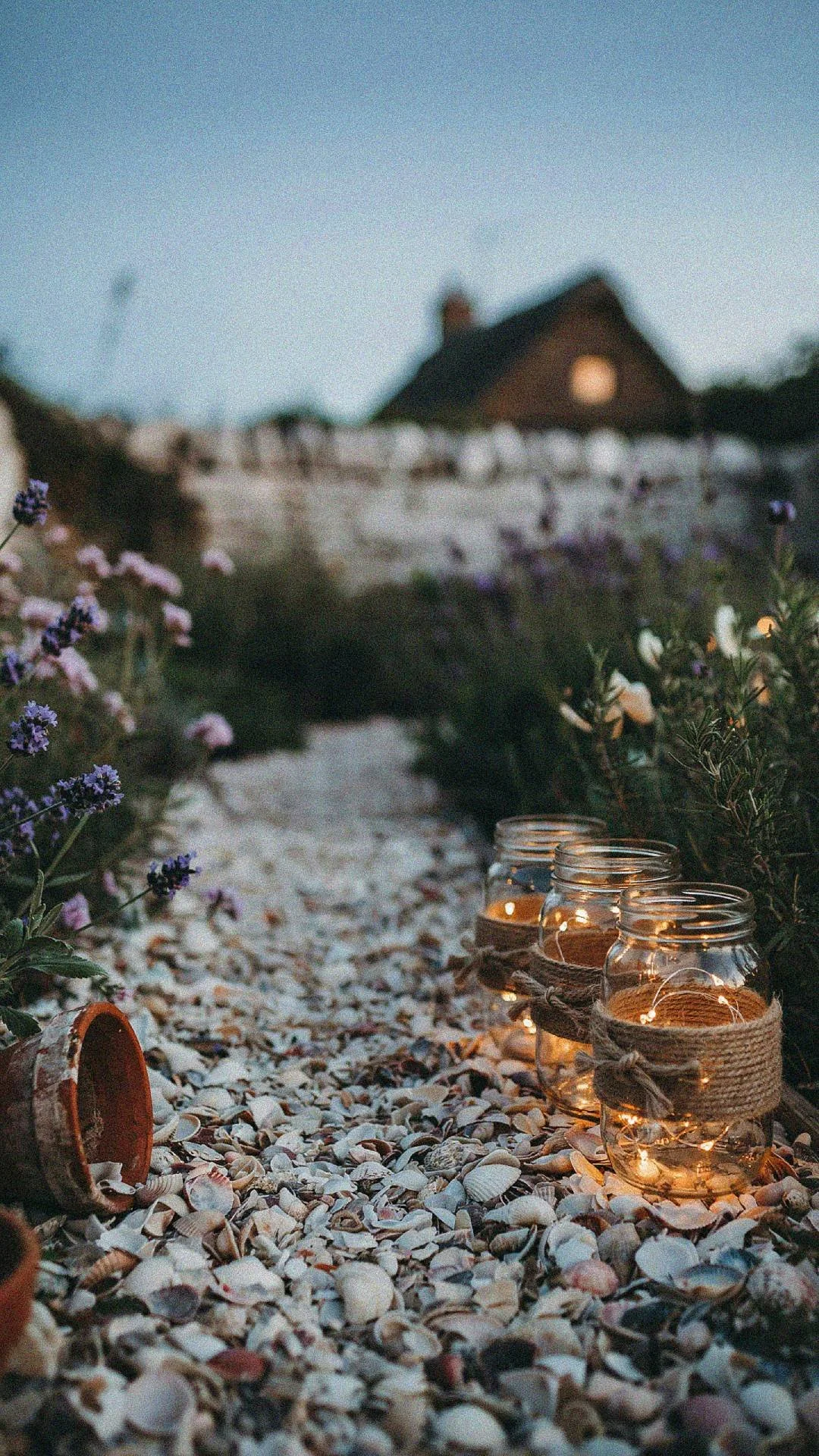
Use beach-appropriate materials like crushed shells, pea gravel, or stone pavers set in sand
Edge the pathway with salt-tolerant, low-growing plants that won't overtake the walkway
Add subtle lighting that highlights the path while creating ambiance
Incorporate small points of interest along the route to create a sense of journey
DIY Project
Create simple and affordable pathway lighting using repurposed glass jars. Clean and remove labels from mason jars or food jars, then wrap copper wire with small LED battery-operated fairy lights around the inside. Attach jute rope or sisal around the rim for a nautical touch. Place these along your pathway at varying heights (some directly on the ground, others hung from shepherd's hooks) to create a magical coastal evening ambiance without complex electrical work.
Buy It Option
Crushed oyster shells for pathway material (approximately $5-8 per square foot)
Edging material like flexible plastic or metal ($30-50 for a small pathway)
Set ofsolar copper pathway lights ($50-90)
Pre-selected grouping of coastal path-friendly plants ($30-60)
Styling Tips for Beginners
When creating a pathway in a small space, keep the width appropriate. Generally 24-36 inches is perfect for a cottage feel without wasting valuable space.
For the easiest maintenance, choose a pathway material that complements your home's exterior colors. If you're unsure about a permanent pathway, try laying it out with rope first and live with it for a few days to ensure the flow works for your space.
Remember that coastal pathways look best when they appear slightly weathered and not too formal or structured.
A thoughtfully designed pathway transforms a simple walk to your door into a coastal experience that sets the tone for your entire cottage aesthetic!
4. Pocket Garden Retreats
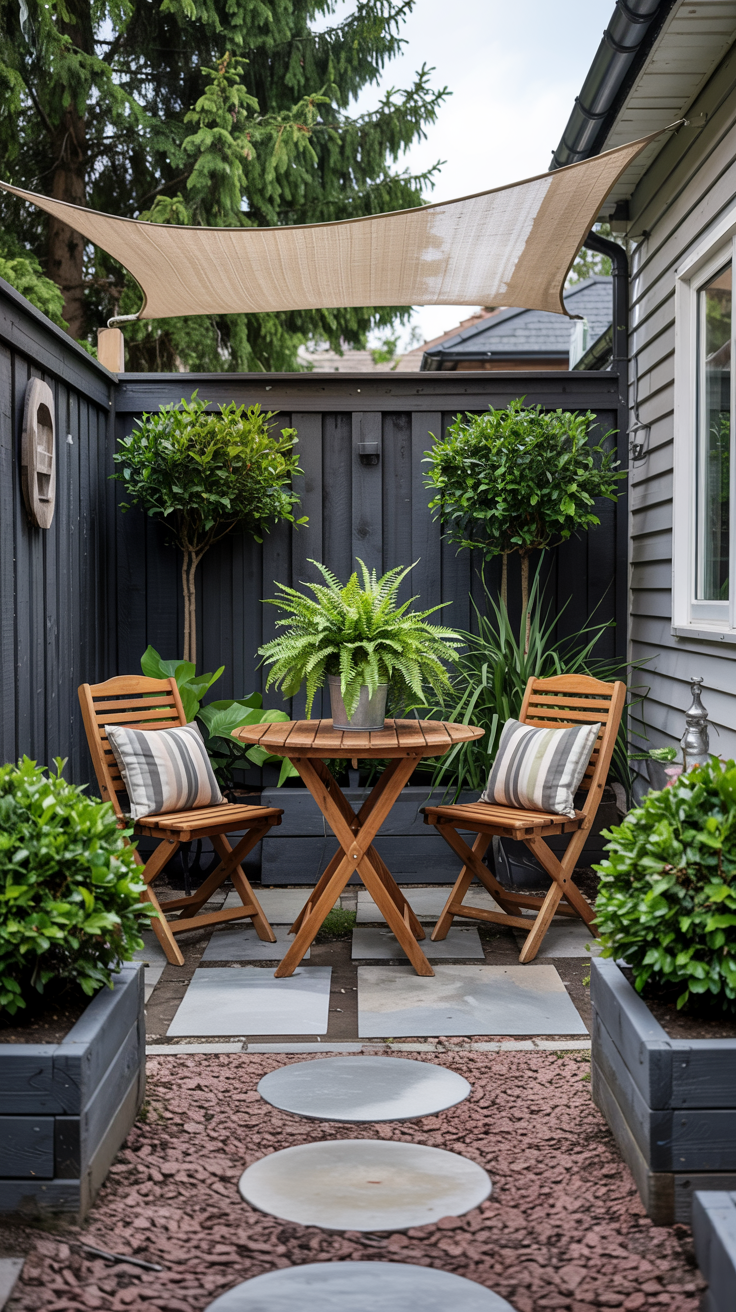
Every yard, no matter how small, has one underused corner that is just begging to become something more. A pocket garden takes that overlooked space and turns it into a tiny retreat you will actually use, whether that means morning coffee or an evening glass of wine.
The key is keeping it simple, one comfortable seat and one thing you love to look at is really all it takes. If you have ever wished you had a spot to just sit outside, this idea is for you.
Best for: anyone with one underused corner and a wish for a spot to sit outside
How to Recreate It
Identify an underutilized corner or side yard space approximately 5-8 feet in diameter
Create a simple foundation with crushed shells, decomposed granite, or pavers
Select compact, salt-tolerant plants that provide a sense of enclosure without overwhelming the space
Add appropriately-sized seating; a small bistro set or bench works perfectly
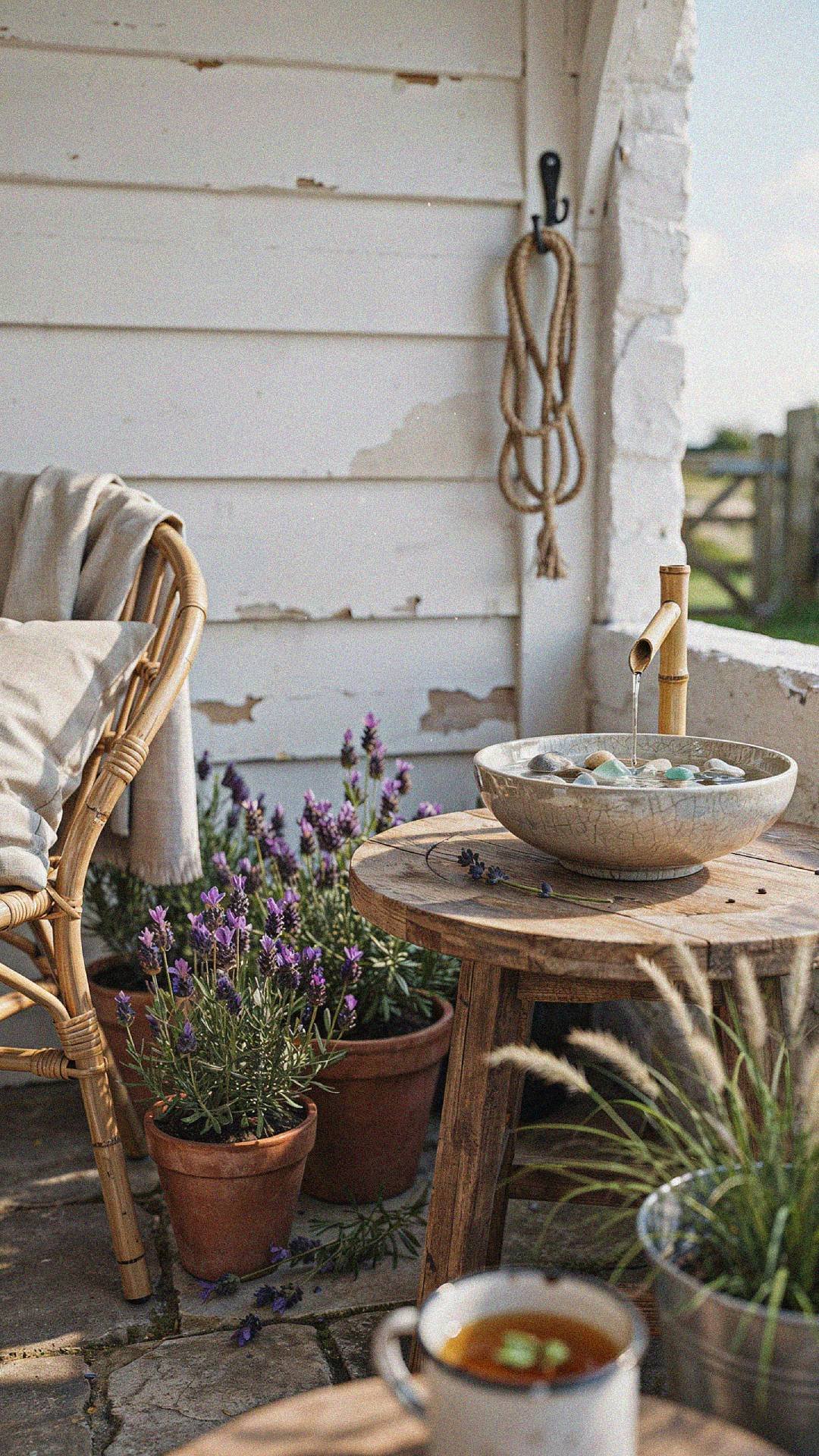
Incorporate one focal point like a small water feature, sculpture, or special plant
DIY Project
Create a simple but stunning tabletop water feature for your pocket garden using a shallow ceramic bowl, a small submersible pump, and beach finds. Fill the bowl with water, arrange smooth beach stones around the submerged pump, and add a few special shells or sea glass pieces. The gentle bubbling creates both soothing sounds and movement in your tiny garden retreat. Total cost is typically under $40, and it can be easily disassembled for cleaning or winter storage.
Buy It Option
Pre-planned "garden in a box" with coastal plants sized for small spaces ($75-150)
Small self-contained water feature ($60-120)
Weather-resistant outdoor rug in coastal colors ($40-80)
Styling Tips for Beginners
When creating a pocket garden, focus on the view from your seating position.
Place your most interesting plants and features where they'll be most appreciated while sitting. Use the "less is more" approach in small spaces. A few carefully selected elements create more impact than many competing features.
Consider using scented plants like lavender or herbs to add another sensory dimension to your tiny retreat. If space is extremely limited, even a simple chair with one beautiful pot and a small side table can create the pocket garden effect.
Your pocket garden becomes a destination within your landscape. Proof that you don't need acres of space to create a meaningful outdoor retreat with coastal charm!
If you want something more substantial than a pocket garden, check out these garden shed ideas.
5. Seaside Cottage Window Boxes
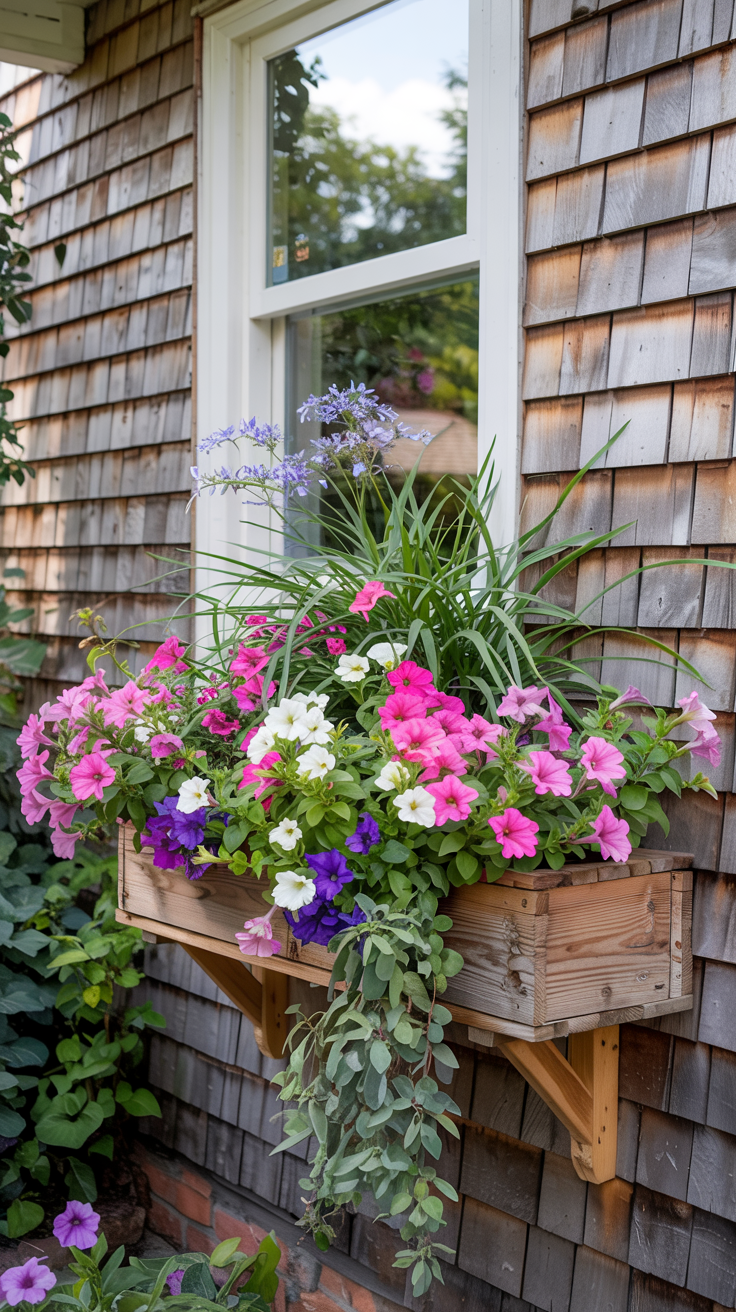
Window boxes are the easiest entry point on this entire list, especially if you have zero yard to work with at all. They take up no ground space, they are budget friendly, and they add instant curb appeal the moment they go up.
I always recommend starting here if you are nervous about gardening in general, since window boxes are hard to get wrong.
This is also the fastest project on the list if you want a same day win.
Best for: total beginners, zero yard situations, anyone wanting a same day win
How to Recreate It
Install sturdy, weather-resistant window boxes that complement your cottage style
Line boxes with coco fiber or use self-watering inserts to provide optimal growing conditions
Select salt-tolerant plants with a mix of textures—grasses, succulents, and small flowering perennials work well
Create a planting scheme with upright plants in back, full plants in middle, and trailing varieties in front
Use lightweight, well-draining potting mix specifically formulated for containers
DIY Project
Build custom window boxes using cedar fence pickets for an affordable and charming option. Cut and assemble pickets to create rectangular boxes sized to fit your windows, leaving small drainage gaps between bottom boards. Apply a diluted wash of paint in a coastal color, allowing the wood grain to show through, then distress lightly with sandpaper for an authentically weathered look. Add metal bracket supports that complement your cottage's hardware. The entire project typically costs $20-30 per window box.
Buy It Option
Pre-made fiberglass or composite window boxes ($50-100 each)
Self-watering window box liners ($15-30 each)
Premium lightweight container soil formulated for window boxes ($15-20)
Pre-planned coastal window box plant collection ($25-40 per box)
Styling Tips for Beginners
When designing window boxes, follow the simple "uplift, upright, filler, spiller" formula for foolproof arrangements. Choose plants with similar water needs to ensure easy care.
For continuous impact, include some evergreen elements like grasses or succulents that look good year-round, then supplement with seasonal flowers. Consider the view from inside as well as outside. Window boxes should enhance both perspectives.
If you're nervous about plant choices, start with extremely hardy varieties like sedum, ornamental grasses, and lavender, which forgive inconsistent watering and thrive in coastal conditions.
Window boxes create instant character and allow you to garden even if you have no yard at all. They're like jewelry for your coastal cottage, adding that perfect finishing touch!
Bringing It All Together
My coastal cottage garden has become more than just decoration. It's where I drink my morning coffee listening to the fountain, where I clip herbs for dinner from my vertical garden, and where friends gather along the shell pathway for impromptu summer get togethers. The space limitations that once frustrated me actually forced me to be more intentional, and now I have a garden with more personality than a lot of the bigger yards I have seen.
Not sure where to start? Here's my advice:
If you have zero yard space at all, start with the window boxes. They are the fastest, most beginner friendly project on this list.
If you are renting or not ready for anything permanent, start with container groupings. You can rearrange or undo it anytime.
If your yard feels flat or boring, start with a defined pathway. It makes the biggest visual difference for the least effort.
If you just want a spot to sit outside and enjoy your space, build a pocket garden retreat this weekend.
Whichever one you pick, resist the urge to do all five at once. Choose just one project, gather your materials this week, and set aside a few hours this weekend to bring it to life. Small, finished projects beat big, half done ones every time.
Once you've tackled your first idea, come back and tell me how it turned out. And if you want more inspiration for the rest of your coastal cottage exterior, check out my full garden tour for more ideas on making a small space feel like a true retreat.
Your cottage garden isn't limited by its square footage. It's only waiting for your first weekend project to bring it to life.
Frequently Asked Questions About Small Space Landscaping
What are the best landscaping ideas for a small coastal yard?
The best small space landscaping ideas focus on going vertical and using containers instead of relying on ground space. Vertical gardens, multi level container groupings, and window boxes all add greenery and curb appeal without needing a big yard. Defined pathways and pocket garden retreats also help a small space feel more intentional and larger than it actually is.
What plants survive in small coastal gardens with salt spray?
Salt tolerant plants are a must for any coastal yard, no matter the size. Succulents, ornamental grasses, sea lavender, sedum, and herbs like rosemary all handle salt spray well and do not need constant babying. These same plants work great in containers, window boxes, and vertical gardens, so you really only need to learn one plant list for your whole small space.
How much does small space coastal landscaping cost?
Most of the projects in this post cost under $50 to complete as a DIY, and some, like the pathway lighting using repurposed jars, cost even less. If you would rather buy pre made options instead of building your own, expect to spend somewhere between $75 and $300 depending on the project and materials.
Can I do small space landscaping if I am a renter?
Yes, container groupings are the easiest option for renters since nothing is permanent and everything can move with you. Window boxes are also usually renter friendly as long as your landlord is okay with brackets on the exterior. Both options let you build a real coastal garden without touching the actual yard or landscaping.
How long does it take to complete a small yard landscaping project?
Most of these projects are designed to be finished in a single weekend. Window boxes and container groupings are the fastest, often done in just a few hours, while a defined pathway or pocket garden retreat might take a full day depending on the size of your space.