
English Cottage Kitchen Decor: 10 Essential Ideas for Coastal Charm
This post may contain affiliate links. If you make a purchase through one of my links, I may receive a small commission at no cost to you.
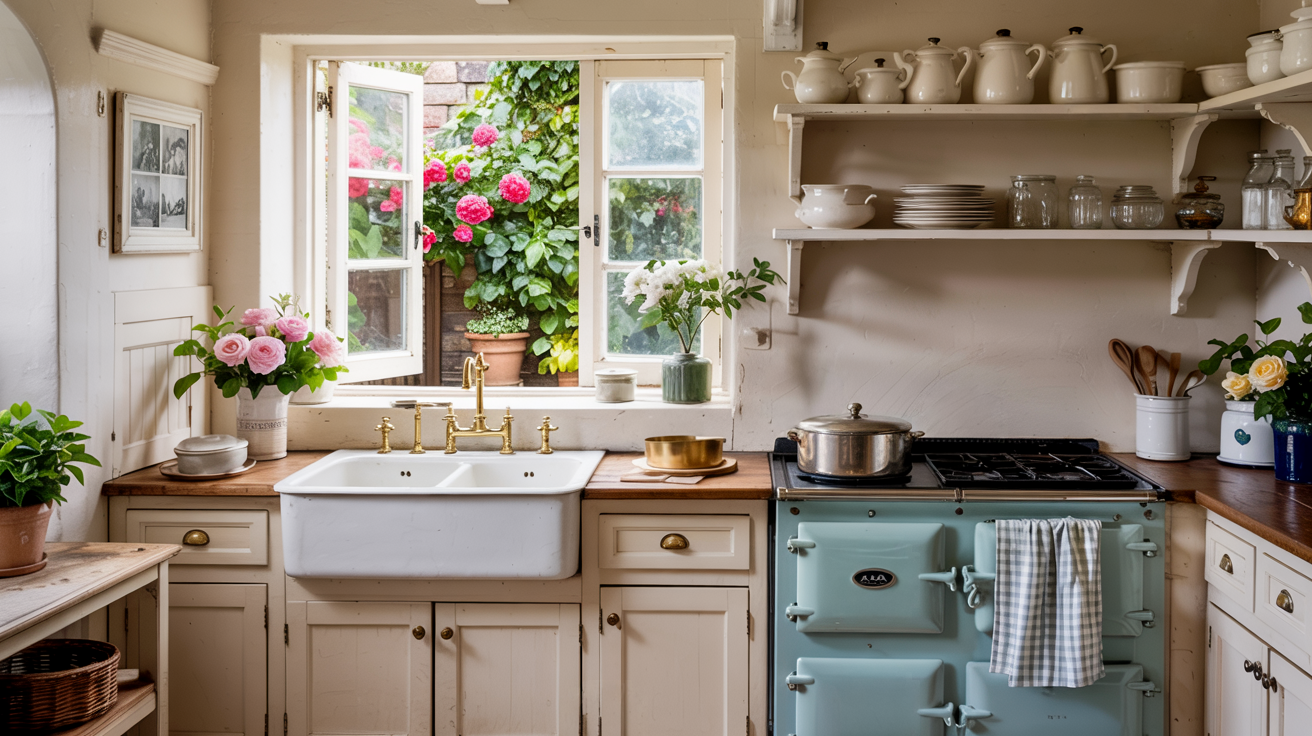
Credit: Dana Rosse with Vintage Soul Boutiques
There is something undeniably comforting about an English coastal cottage kitchen. It isn’t just about the aesthetic; it’s about a feeling. It’s the soft sea breeze drifting through an open window, the gentle clink of mismatched pottery, and the warmth of well-loved finishes that have stood the test of time.
If you have ever dreamed of bringing that charming seaside feeling into your own home, the good news is that you don’t need to live in Cornwall or Devon to achieve it. Unlike the polished "American beach house" look, the English seaside style is less about perfect symmetry and more about character. It is a collected, cozy look that embraces imperfection.
Key Takeaways:
Natural materials like weathered wood, rattan, and driftwood create authentic coastal cottage character
Ocean-inspired ceramics and vintage enamelware add both function and charm to everyday kitchen life
Soft coastal colors (seafoam, misty blue, creamy white) work better than bold nautical themes
Open shelving and glass pendant lighting make spaces feel airy and spacious
Layer textures gradually over time for that collected, lived-in cottage aesthetic
With a few thoughtful touches, you can create a kitchen that feels like a cozy retreat by the sea.
Here are ten must-have cottage kitchen decor items to help you capture this timeless, functional style.
Ocean and Beach Inspired Ceramics
One of the easiest ways to add a bit of seaside magic to your kitchen is through ceramics that reflect the ocean’s charm. However, to keep it authentic to the English cottage style, subtlety is key.
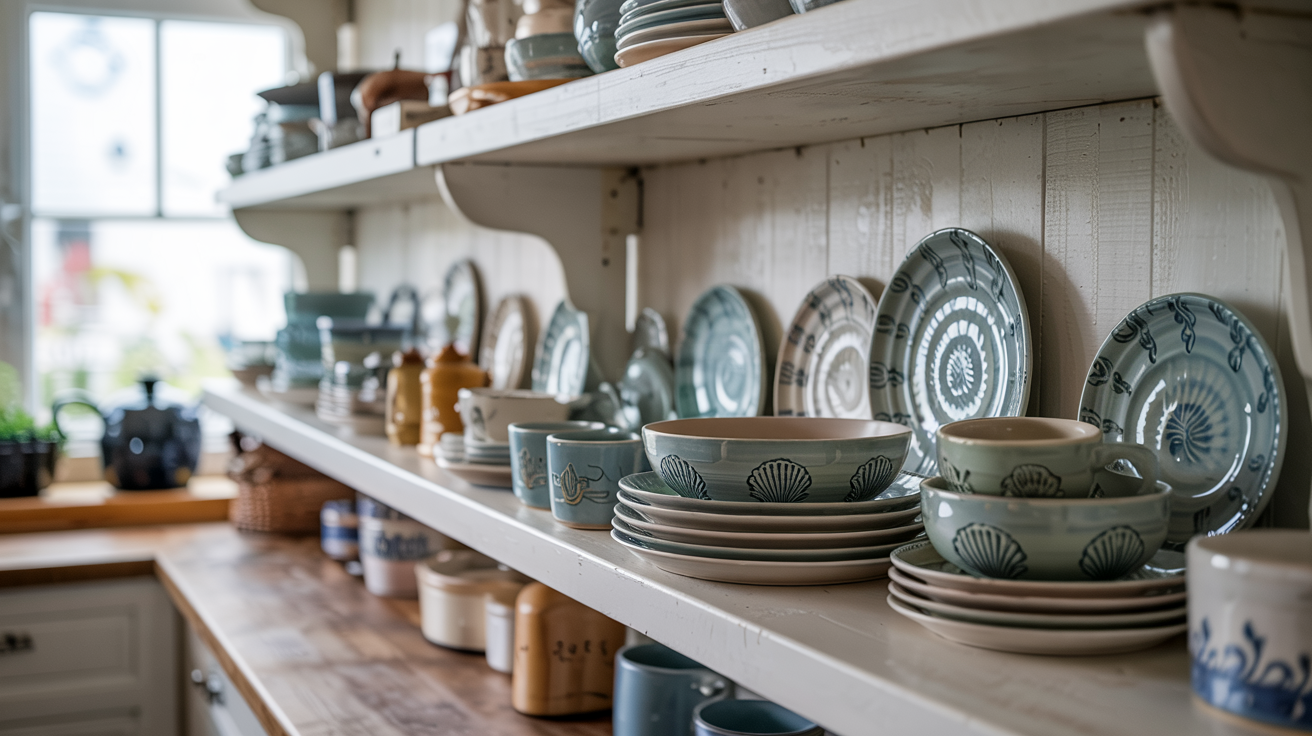
Credit: Dana Rosse with Vintage Soul Boutiques
What to Look For: Think mugs, bowls, or serving platters featuring delicate shell patterns, soft wave motifs, or tiny starfish details. Hand-painted pottery or pieces with a glazing that mimics the colors of the sea—deep indigos, soft teals, and sandy beiges—work best.
Styling Tip: Don’t be afraid to mix and match patterns. In a true cottage kitchen, a table setting rarely matches perfectly. Try displaying your marine ceramics on open shelves or hanging mugs on hooks under a cabinet.
Vintage Enamelware
There is something wonderfully nostalgic about enamelware. It feels like a quiet nod to simpler times and is a staple in British farmhouse and cottagecore kitchen designs. Whether it’s a well-worn pie dish or a sturdy mug, these pieces carry a cozy, lived-in charm.
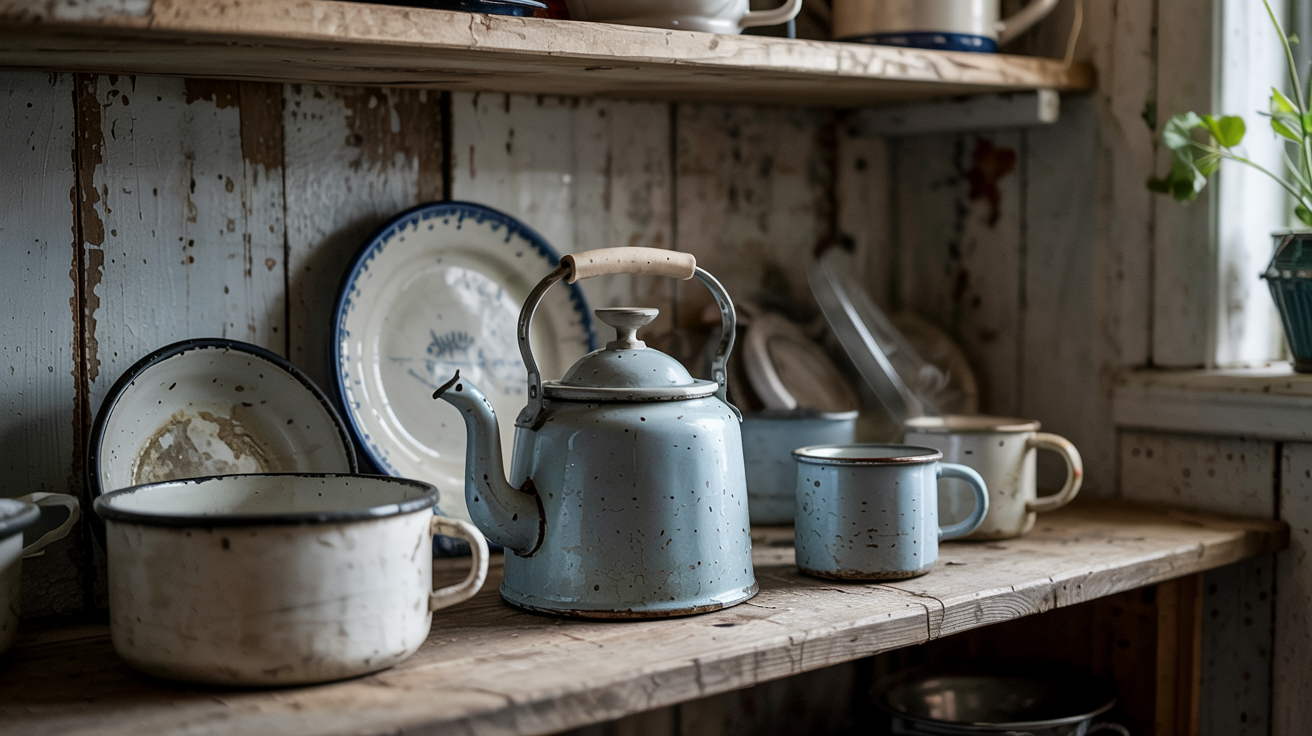
Credit: Dana Rosse with Vintage Soul Boutiques
Why It Works: Vintage enamelware is incredibly durable and practical. Look for pieces in soft coastal shades like creamy white with a blue rim, misty grey, or classic navy.
Styling Tip: Use a large vintage enamel pitcher as a utensil holder near the stove, or use a set of enamel bowls to hold fresh fruit on the counter. If you find vintage pieces with chips or rust spots, don't worry, this "patina" adds to the authentic vibe.
Weathered Wooden Shelves
Nothing says "coastal" like a set of shelves that look as though they have weathered a salty breeze. Open shelving is essential for creating that airy, open feeling found in small seaside cottages.
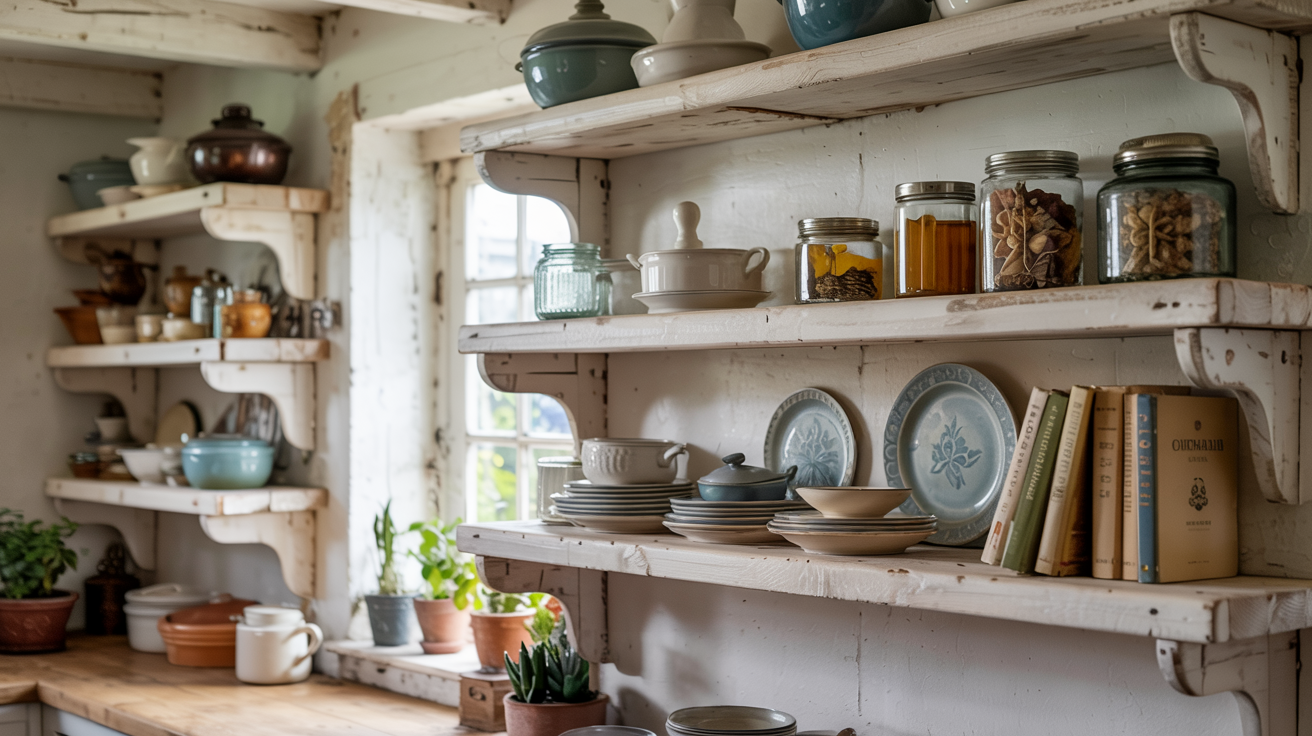
Credit: Dana Rosse with Vintage Soul Boutiques
The Look: Opt for wooden shelving with a naturally worn, reclaimed, or whitewashed finish. Something that hints at driftwood and days spent by the shore. Avoid wood that looks too polished or lacquered.
Styling Tip: Functionality is beautiful. Don't just fill shelves with decor; use them to store your everyday items. Stack your plates, line up your drinking glasses, and place jars of dried pasta or herbs in rows. This mix of practical items with a few decorative shells creates that effortless "collected" look.
Sea Glass Accents
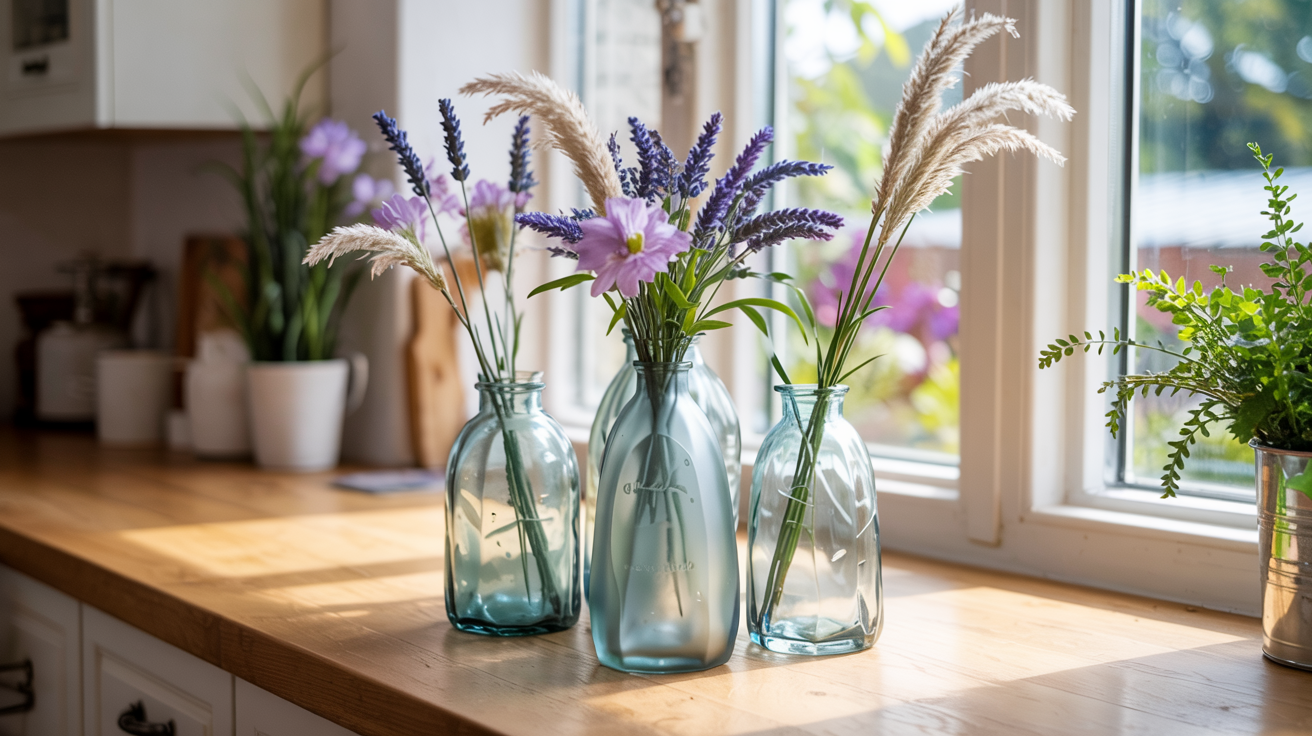
Sea glass pieces are like little treasures from the ocean; each one is soft-edged, frosted, and full of quiet beauty. They are perfect for adding a pop of color to a white coastal kitchen.
Credit: Dana Rosse with Vintage Soul Boutiques
How to Use Them: Try incorporating frosted glass vases, large mason jars, or decorative bowls in shades of seafoam, pale blue, and soft bottle-green. When placed on a windowsill, they catch the natural light and glow, mimicking the effect of sun hitting the ocean.
A Simple DIY: If you have a collection of small sea glass pieces found on beach walks, fill a clear glass lamp base or a large apothecary jar with them. It serves as a visual memory of your travels and adds texture to the room.
Coastal-Inspired Linens
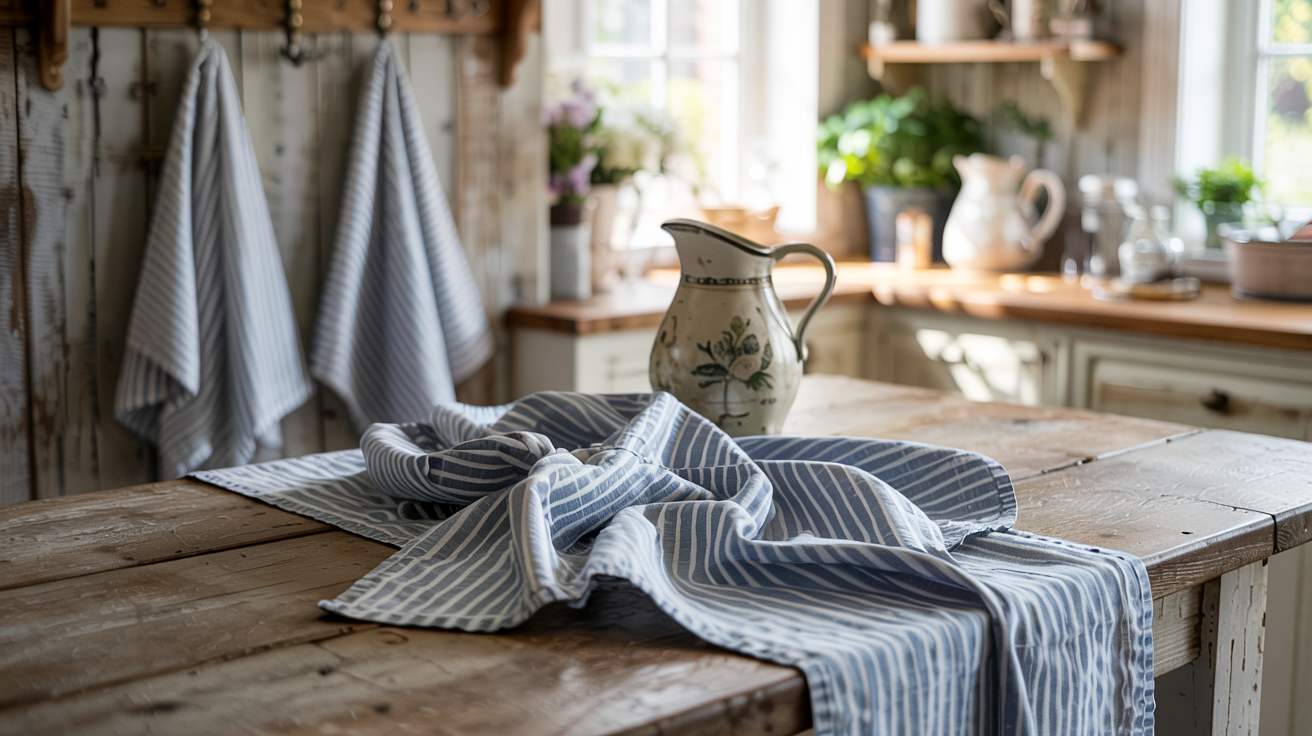
Linens are the soft layer that can completely transform the mood of a hard-surface kitchen. In a rustic coastal kitchen, textiles add warmth and sound absorption.
Credit: Dana Rosse with Vintage Soul Boutiques
What to Look For: Steer clear of synthetic fabrics and stick to natural textures like 100% cotton or washed linen. Look for tea towels, table runners, or chair cushions in breezy blue-and-white ticking stripes, soft sand tones, or block prints featuring subtle nautical themes.
Styling Tip: Drape a linen runner across your table or hang a patterned towel over your oven handle. For a truly English feel, install a "cafe curtain" on the bottom half of your window using a ticking stripe fabric.
Rattan and Wicker Details
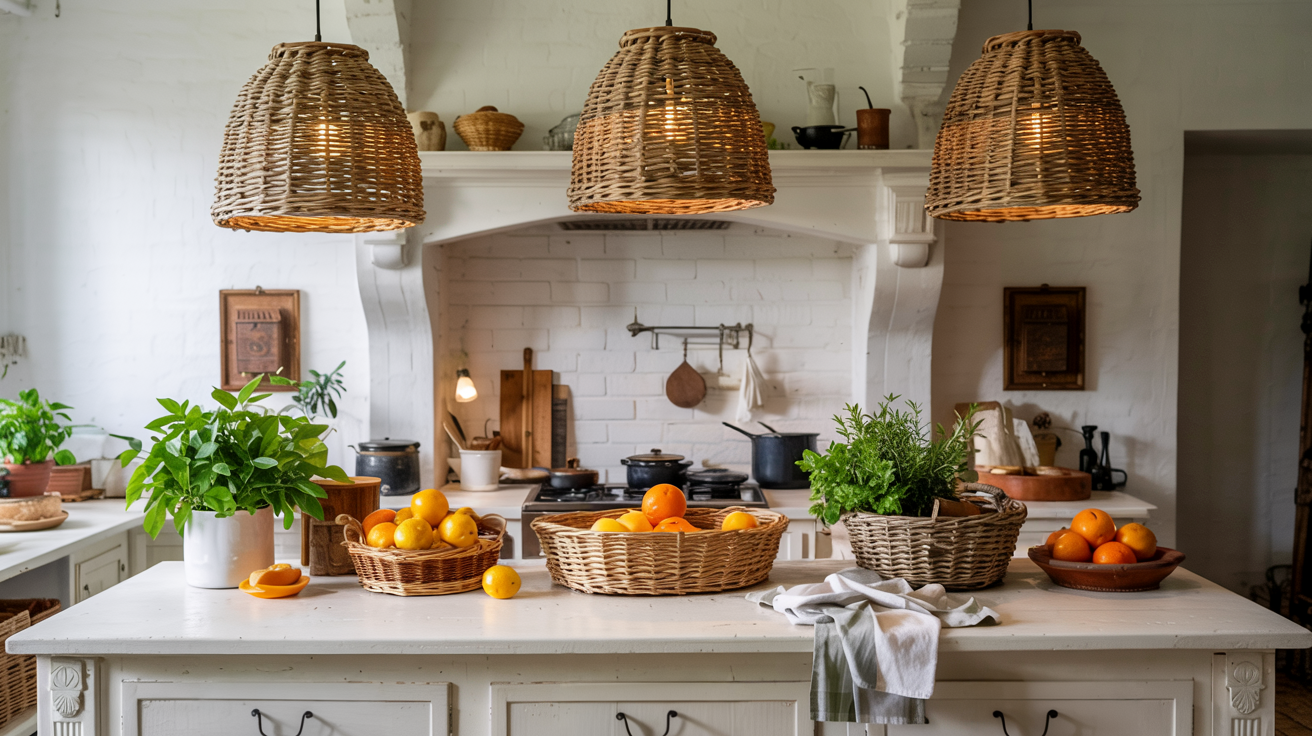
Nothing brings that breezy, coastal warmth quite like touches of rattan and wicker. These natural materials add an earthy element that grounds the airy blues and whites of the room.
Credit: Dana Rosse with Vintage Soul Boutiques
Where to Use It: Consider woven baskets for storing kitchen towels, holding potatoes and onions, or organizing pantry goods. A rattan pendant light or a pair of wicker bar stools can make the room feel more sun-kissed.
Styling Tip: Tray chic! Place a large wicker tray on your island or dining table to corral smaller items like salt and pepper shakers, a vase of flowers, and napkins.
Driftwood Decor
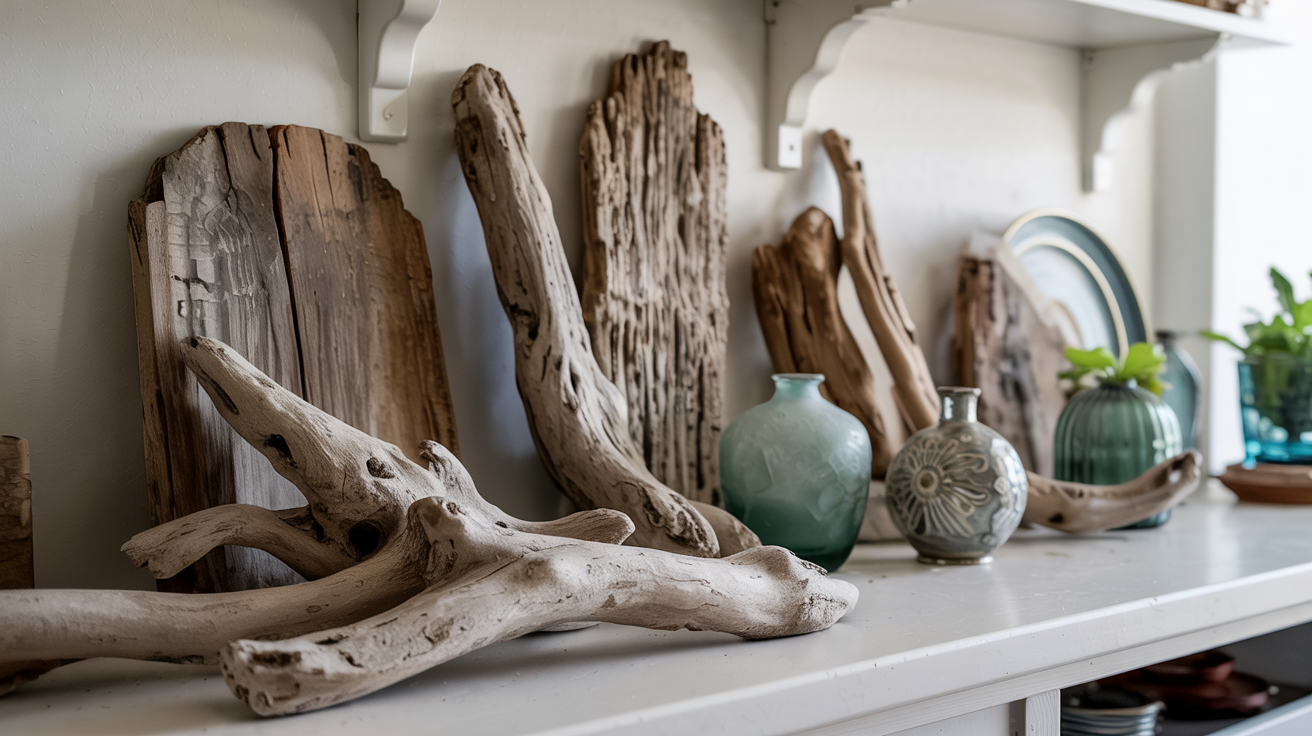
Driftwood brings a wonderfully organic, sculptural charm to a kitchen. Its pale, grey-ish tone is the perfect neutral for a coastal color palette.
Credit: Dana Rosse with Vintage Soul Boutiques
Ideas for Decor: You can use a substantial piece of driftwood as a rustic centerpiece on a dining table or incorporate smaller artisanal items like driftwood picture frames or handcrafted utensil holders.
Styling Tip: If you are handy, you can fashion a piece of sturdy driftwood into a unique rail for hanging pots or drying herbs. Simply attach it to the wall and screw in a few brass hooks. It’s a functional piece of art that tells a story.
Glass Pendant Lighting
Lighting can make or break the mood in a kitchen. In an English coastal cottage, you want to create a soft, inviting glow rather than harsh, clinical lighting.
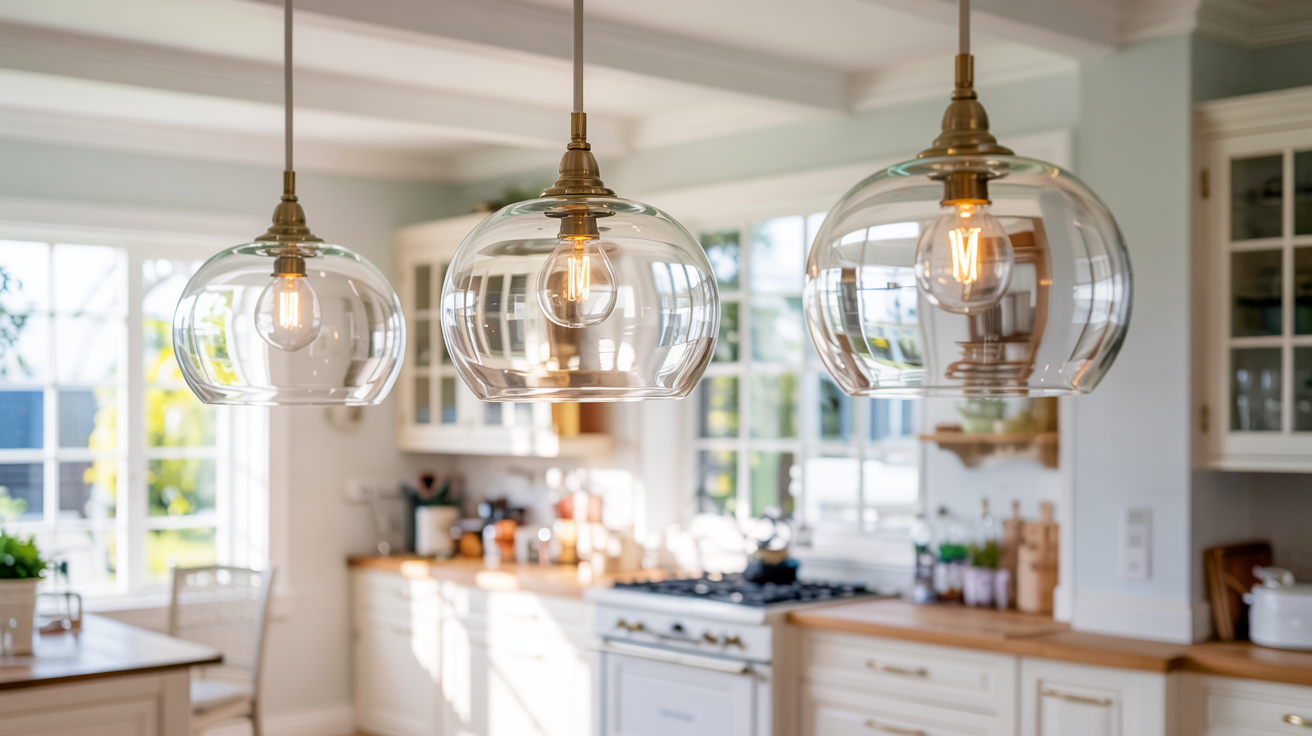
Credit: Judy Acosta from Sunset Beach, NC
The Selection: Glass pendant lights are a perfect choice; they feel light, airy, and nautical without blocking sightlines. Opt for clear, seeded (bubbly), or ribbed glass shades paired with brushed brass or weathered nickel fittings. These finishes echo the hardware found on boats.
Styling Tip: Hang a row of two or three pendants above your kitchen island or breakfast bar. If you have a smaller kitchen, a single statement glass pendant over the sink creates a charming focal point.
Nautical Rope Accents
Nautical rope is a subtle yet charming way to weave maritime character into your decor. The key here is texture. The rough, fibrous nature of Manila or sisal rope contrasts beautifully with smooth ceramic and glass.
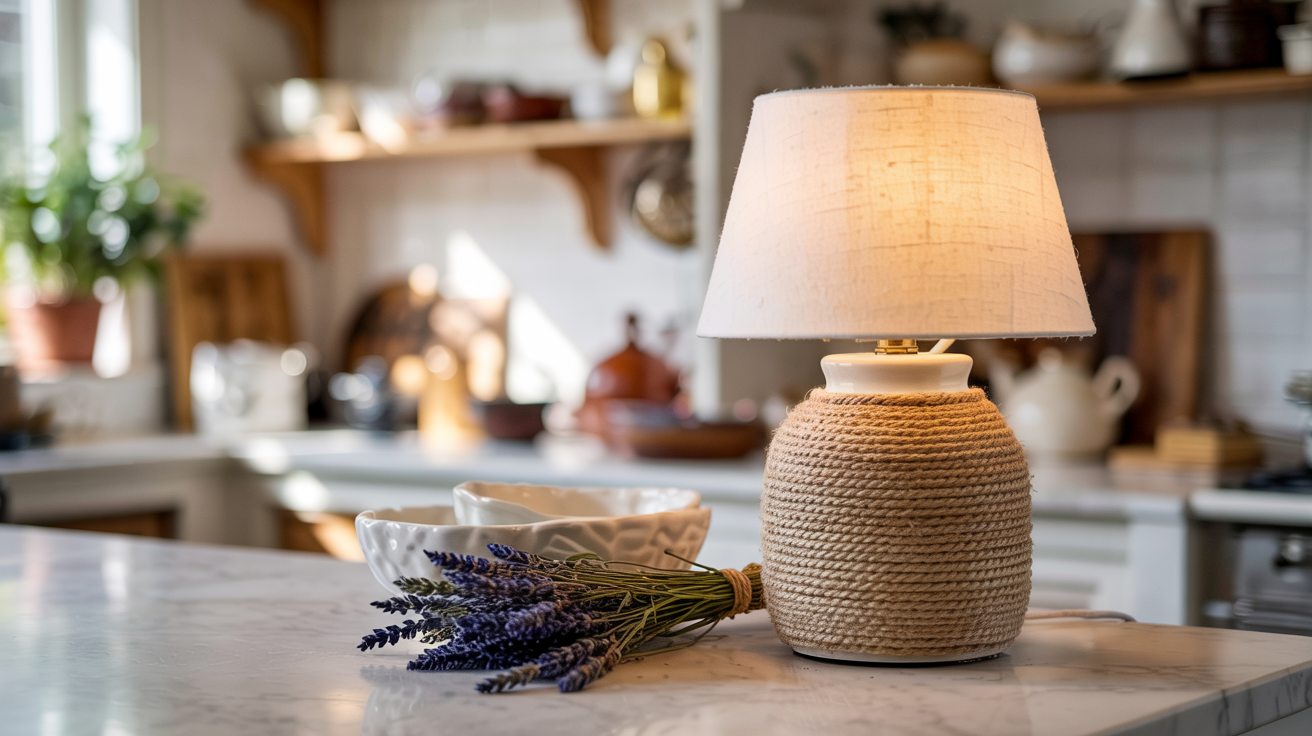
Credit: Judy Acosta from Sunset Beach, NC
Creative Uses: Think beyond the usual. You can use thick rope as a doorstop (tied in a monkey’s fist knot), as handles for drawers, or wrapped around the base of a table lamp.
Styling Tip: For a very affordable kitchen update, wrap the stem of a boring pendant light or the handle of a serving tray with thin jute rope. Use a little hot glue to secure it. It’s an instant upgrade that costs pennies.
Coastal Wall Art
Finally, bring the tranquil spirit of the sea to your vertical spaces. Art makes a kitchen feel like a living room, adding personality and color.
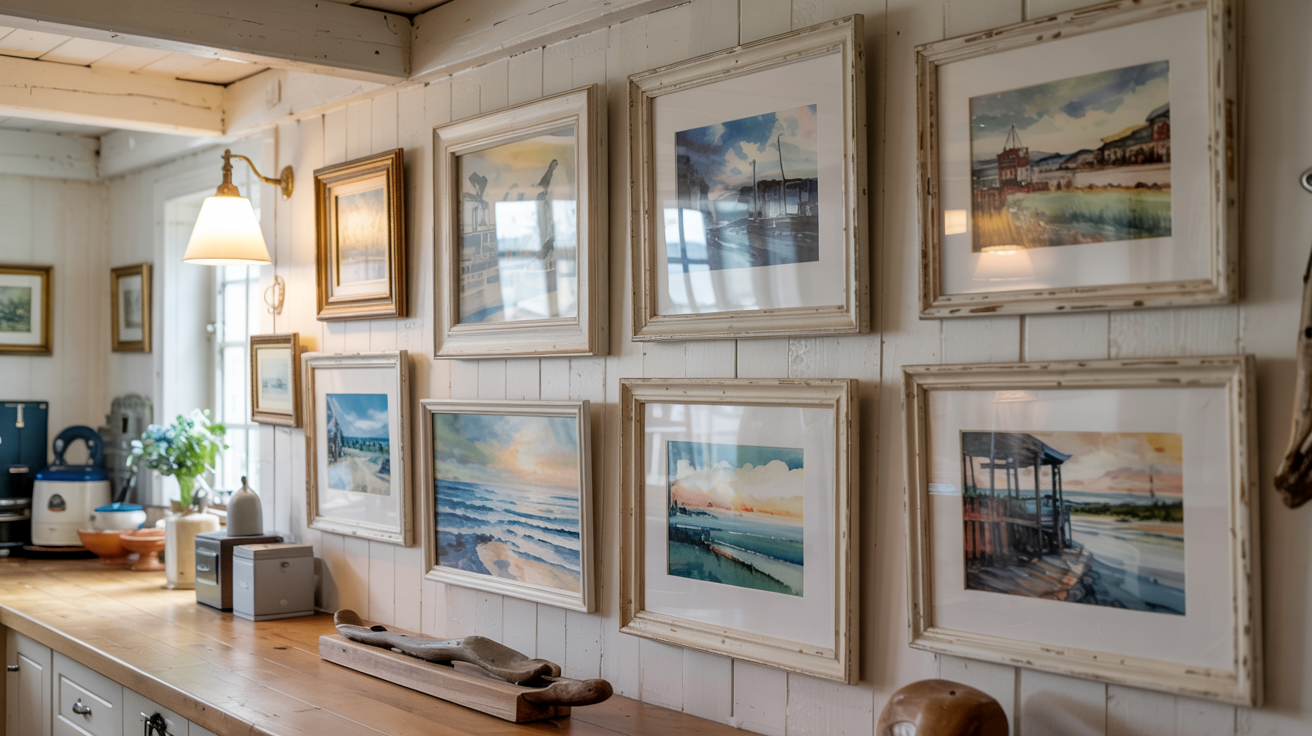
Credit: Bob Arthur from Myrtle Beach, SC
What to Choose: Think soft watercolor paintings of seascapes, framed vintage coastal postcards, or botanical prints of seaweed and coral. To keep the "English Cottage" vibe, mix and match your frames—use some wood, some gold, and some white.
Styling Tip: Create a small gallery wall near your breakfast nook or lean a framed print against the backsplash on your counter. Art doesn't always have to be hung! This casual placement feels relaxed and inviting.
Creating Your Retreat
You are well on your way to creating a kitchen that feels like a peaceful coastal retreat. By thoughtfully layering these simple yet meaningful touches, you will bring the timeless charm of an English seaside cottage right into your home.
Remember, the most beautiful cottages are the ones that look lived-in and loved. So, take your time collecting these items, enjoy the process, and let the spirit of the sea inspire you every step of the way.
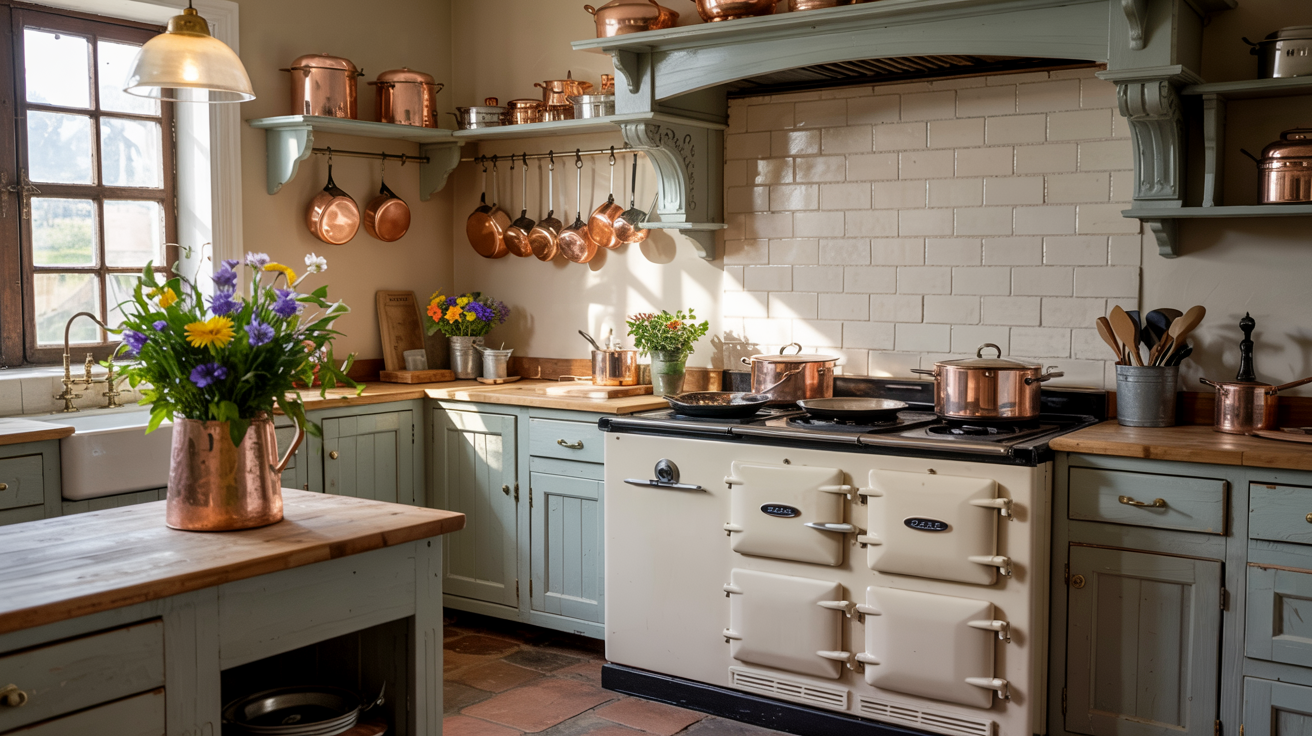
How to Blend English Cottage Style into Your Coastal Kitchen (Without Looking Landlocked)
Frequently Asked Questions (FAQs)
What colors work best for an English coastal cottage kitchen?
I always recommend soft, muted coastal colors that feel calming rather than bold. Think misty blues, seafoam greens, creamy whites, soft sand tones, and natural wood hues. These colors mimic the English coastline and create that serene, weathered look that's essential to cottage style. Avoid bright navy or vibrant turquoise. You want colors that feel like they've been gently faded by sea air and sunlight.
How can I create an English cottage kitchen on a budget?
Start with textiles and smaller decor items. They make a huge impact without breaking the bank. Swap out your tea towels, add a striped table runner, and hunt for vintage enamelware at thrift stores and flea markets. You can also DIY some elements like collecting driftwood from beach walks or creating your own coastal wall art. Focus on one or two larger investments like open shelving or pendant lighting, then layer in affordable pieces over time.
What's the difference between English cottage style and modern farmhouse?
Great question! While both styles embrace natural materials and cozy vibes, English coastal cottage leans more into weathered, ocean-inspired elements with softer colors and a more relaxed, collected-over-time feel. Modern farmhouse tends to be crisper with more black accents, shiplap, and a cleaner aesthetic. Cottage style is all about those imperfections, patina, and that slightly worn look that makes everything feel loved and lived-in.
Can I mix English cottage style with my existing kitchen?
Absolutely! That's actually one of my favorite things about this style. It's incredibly forgiving and flexible. You don't need to rip everything out and start over. Start by adding open shelving, switch out hardware for brass or weathered finishes, incorporate coastal textiles, and display vintage ceramics. The cottage look is all about layering, so you can gradually introduce elements that work with what you already have.
Where can I find authentic vintage pieces for my cottage kitchen?
I've had the best luck at local flea markets, estate sales, antique shops, and online marketplaces like Etsy, eBay, and Facebook Marketplace. Thrift stores can also be goldmines for enamelware and vintage ceramics. Don't overlook your own family because sometimes grandparents or relatives have old kitchen items they'd love to pass down. The key is patience; the best pieces come from genuinely hunting and collecting over time rather than buying everything new at once.
How do I keep open shelving from looking cluttered?
Here's my rule: edit ruthlessly and group thoughtfully. Display items in odd numbers (3 or 5 pieces), leave some breathing room between groupings, and stick to a cohesive color palette. I rotate items seasonally to keep things fresh, and I only display what I actually use or truly love. Stack plates and bowls neatly, group similar items together, and add a few organic elements like a small plant or fresh herbs to break things up. When in doubt, remove one more thing. Less is usually more.