
Easy Felt Craft Ideas: 6 Most Popular DIY Felt Projects for Beginners
This post may contain affiliate links. If you make a purchase through one of my links, I may receive a small commission at no cost to you.
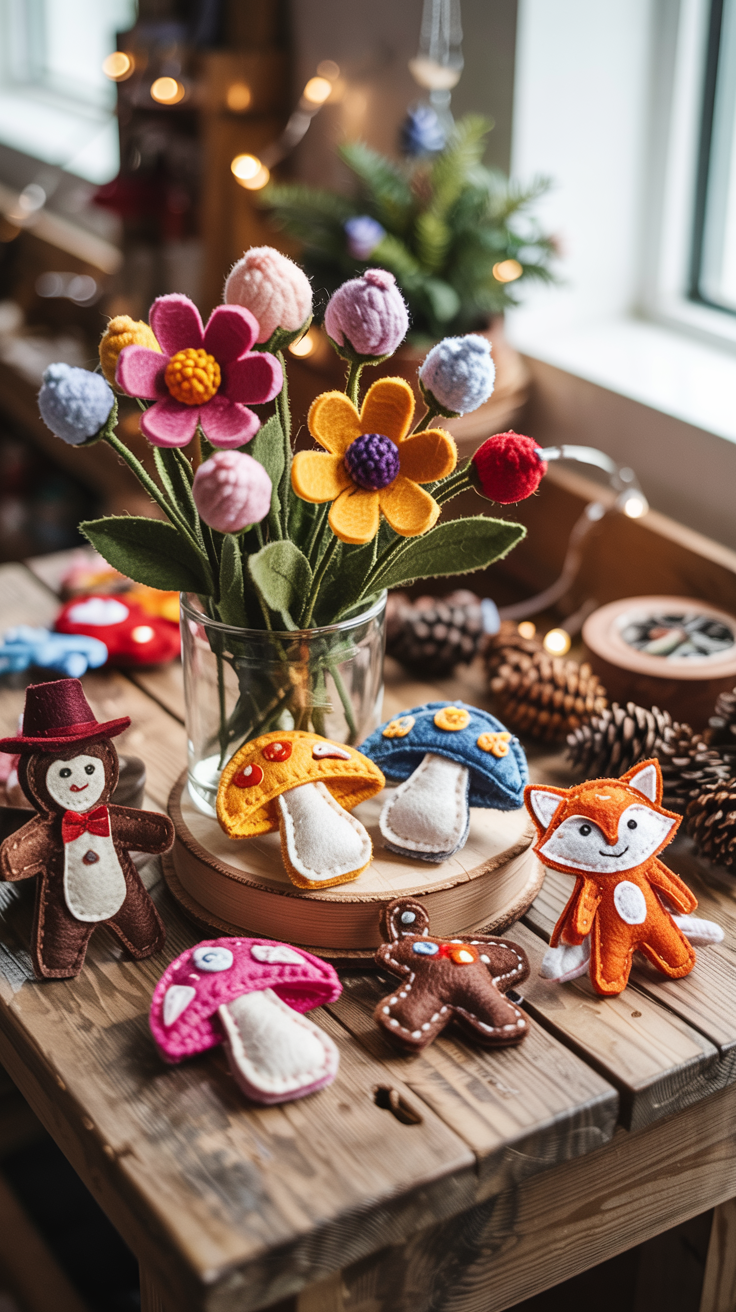
I've spent hours working with felt, and I can tell you it's one of the most forgiving and fun craft materials out there. Whether you're brand new to crafting or just looking for your next creative project, felt is where it's at. The edges don't fray, it comes in every color imaginable, and you can create something amazing in just an afternoon.
I’ll walk you through the most popular felt craft projects that people are making and loving right now. These aren't just trendy ideas. They're projects that are actually doable and fun to sell or to give as gifts!
Key Takeaways
Felt flowers are the number one most popular felt project and perfect for beginners
There are two main types of felting: craft felt (sewn/glued) and needle felting (sculpted)
Seasonal decorations are experiencing a huge comeback thanks to nostalgia trends
Practical items like coasters and keychains make excellent quick projects and gifts
Kids' crafts with felt are safe, educational, and endlessly entertaining
Home decor projects let you customize your space with handmade charm
Both craft felt and needle felting are beginner friendly with different techniques
Why Everyone's Crafting with Felt Right Now
Felt is having a major moment, and for good reason. First off, it's incredibly beginner friendly. Since the edges don't fray when you cut it, you don't need to worry about hemming or finishing seams. That makes it safe and easy for everyone, including kids.
Budget is another huge factor. You can grab a pack of felt sheets for just a few dollars, and most projects require minimal supplies. I've made gorgeous gifts that cost less than five bucks total.
The sustainable crafting movement is also bringing felt back into the spotlight. More crafters are choosing natural cotton felt over synthetic materials, looking for eco conscious alternatives that feel good to work with and good for the planet.
Understanding the Two Types of Felting
Before we dive into the projects, let me clear up something that confuses a lot of beginners. There are actually two completely different types of felting, and they use different materials and techniques.
Craft Felt Projects: Sewing and Gluing
Craft felt is what most people picture when they think of felt. It comes in flat sheets that you can buy at any craft store. You cut shapes from these sheets and either sew them together or use hot glue to attach pieces.
This type of felting is super accessible. You just need scissors, some felt sheets, and either a needle and thread or a hot glue gun. Projects include flowers, bookmarks, coasters, ornaments, stuffed animals, and pretty much anything you can cut and assemble.
I love craft felt for quick projects because there's no learning curve. If you can cut and glue or do basic stitches, you can make beautiful things right away.
Needle Felting: Sculpting with Wool
Needle felting is a completely different technique. You use loose wool roving (fluffy wool fibers) and a special barbed needle to sculpt three dimensional shapes. You stab the wool repeatedly with the needle, and the barbs tangle the fibers together, slowly forming them into whatever shape you want.
This technique creates adorable sculptural pieces like animals, food items, decorative balls, and miniature scenes. The supplies are different too. You need felting needles, a foam pad to work on, and wool roving instead of felt sheets.
Needle felting has a bit more of a learning curve, but it's still totally beginner friendly. The best part is that it's very forgiving. If you don't like how something looks, you just keep stabbing and shaping until it's right.
How to Know Which Type Each Project Uses
Throughout this article, I'll clearly mark which projects use craft felt and which use needle felting. That way you'll know exactly what supplies you need before you start.
Generally, flat items that you can cut out and assemble use craft felt. Three dimensional sculptural items usually use needle felting. But I'll be specific with each project so there's no confusion.
1. DIY Felt Flowers: The All-Time Favorite Project
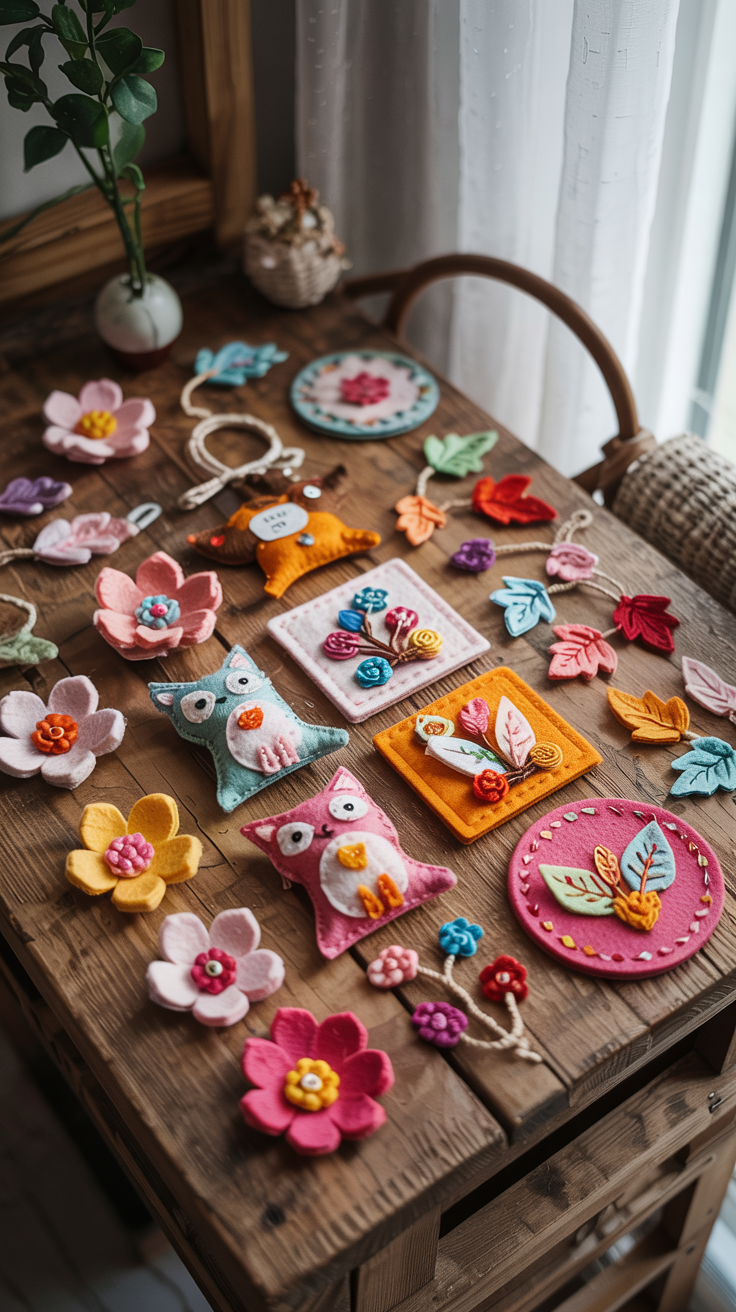
If there's one felt project that dominates every craft blog and Pinterest board, it's felt flowers. I get why. These blooms never wilt, they never need watering, and you can make them in absolutely any color combination you can dream up.
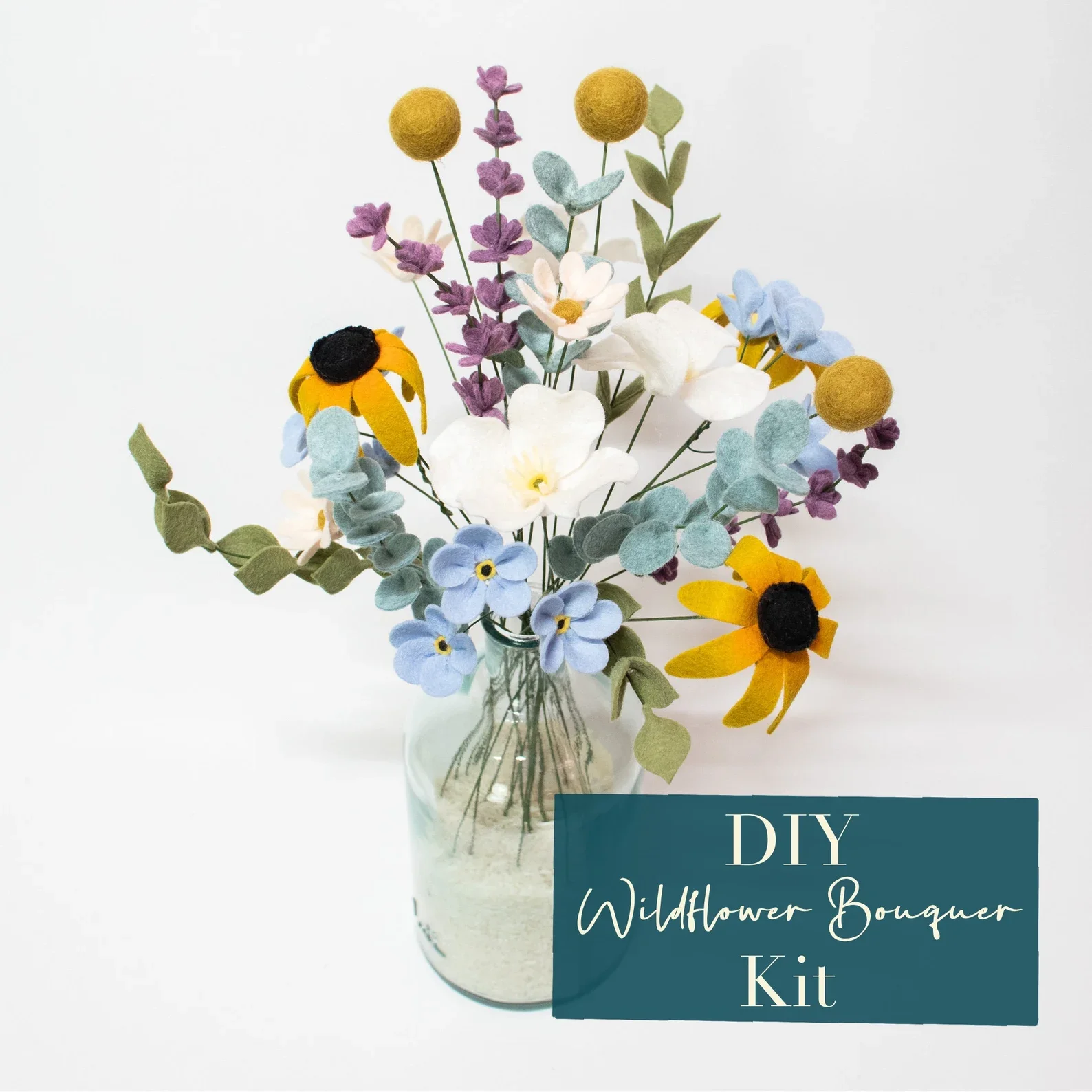
Popular Felt Flower Projects You Can Make
Felt roses are probably the most beloved option. You layer the petals to create stunning dimensional blooms that work perfectly for bouquets, hair accessories, or even jewelry. I've made dozens of these, and every single one turns out unique. These use craft felt and can be sewn or hot glued together.
Succulents are another huge trend right now. Crafters are creating entire miniature gardens that require zero maintenance. You get all the aesthetic appeal of real plants without the worry of keeping them alive. Most succulent projects use craft felt, though some crafters needle felt tiny three dimensional versions.
Peonies bring that romantic, ruffled look that makes a gorgeous statement piece. Meanwhile, simple daisies and sunflowers offer quick, cheerful projects that beginners can knock out in 15 to 30 minutes. All of these flower types typically use craft felt sheets that you cut and assemble.
Why Felt Flowers Are So Popular
These projects work beautifully as home decor, wedding decorations, or thoughtful handmade gifts. You can customize them endlessly, and the best part is how fast you can make them. A simple flower takes just 15 minutes, while more elaborate designs might need an hour or two.
2. Felt Holiday Decorations: Nostalgia is Back
Felt Christmas decorations are making a massive comeback, and it's all about that nostalgia factor. But seasonal felt crafts go way beyond just winter holidays.
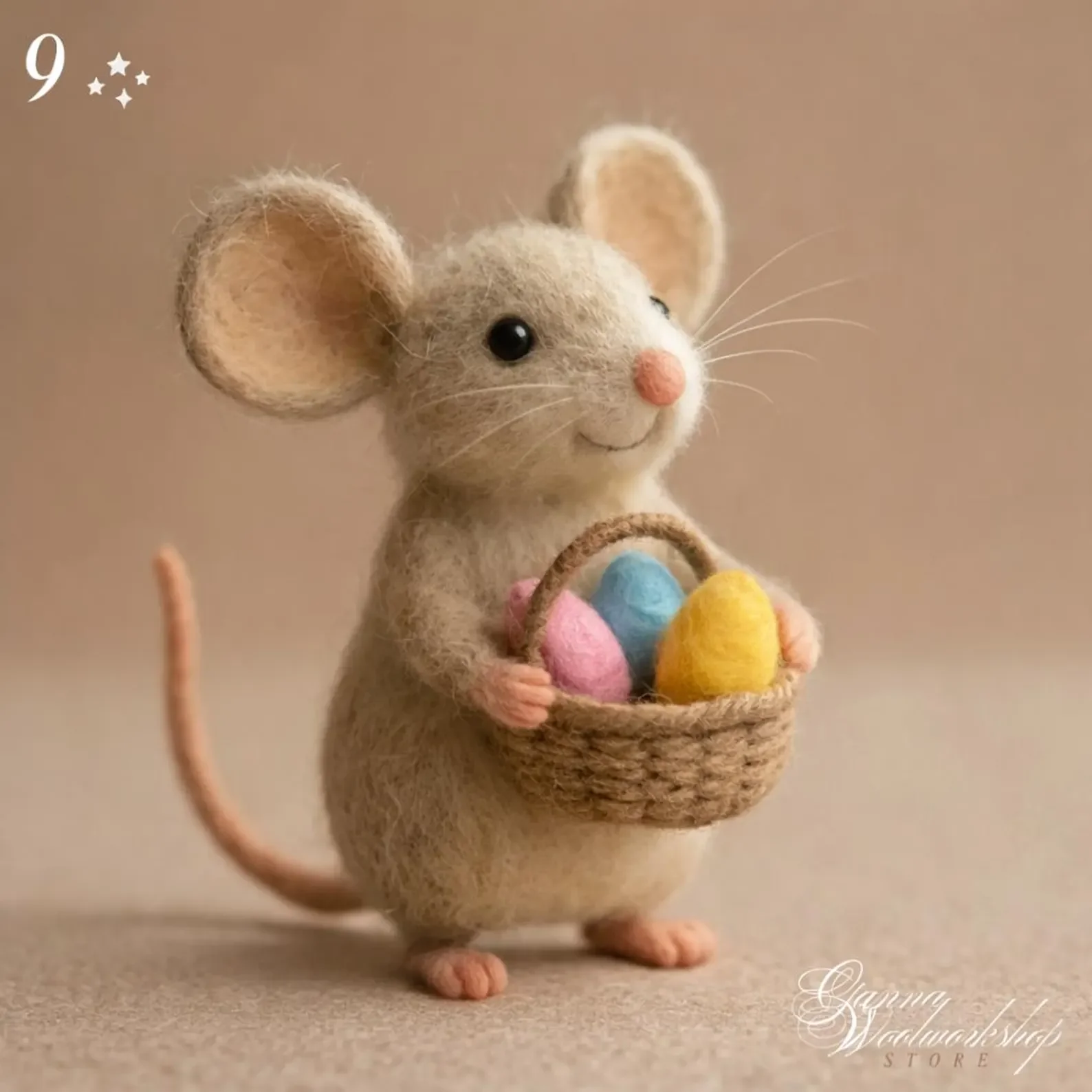
Top Seasonal Felt Craft Projects
Spring brings needle felted eggs, bumblebees, strawberries, and mini sheep. These are all needle felting projects using wool roving. These little cuties fly off craft market tables faster than I can make them. The three dimensional sculptural quality of needle felted pieces makes them extra special and giftable.
Summer is all about watermelon slices, ice cream cones, and beach themed garlands. There's something so cheerful about bright summer colors in soft felt. These can be made with either craft felt (flat ornaments) or needle felting (three dimensional sculptures), depending on your preference.
Autumn crafters love making pumpkins, acorns, leaf garlands, and woodland creatures. The warm fall color palette looks absolutely stunning in felt. Garlands and flat decorations use craft felt, while sculptural pumpkins and animals are often needle felted.
Winter favorites include ornaments, stockings, advent calendars, and gingerbread house decorations. The vintage inspired felt ornaments especially appeal to people seeking that authentic, handmade holiday feeling. Traditional flat ornaments use craft felt and are often sewn or glued, while three dimensional ornament sculptures use needle felting.
Why Seasonal Felt Crafts Are Trending
These items tap into our love of celebrating special times of year while creating family traditions. Many crafters make these to sell at seasonal markets, where handmade holiday decor commands premium prices. The nostalgia factor makes vintage inspired felt ornaments particularly appealing to customers.
3. Easy Felt Craft Projects: Practical Everyday Items
Some of my favorite felt projects are the ones I actually use every day. Functional crafts combine creativity with utility, making them incredibly satisfying to complete.
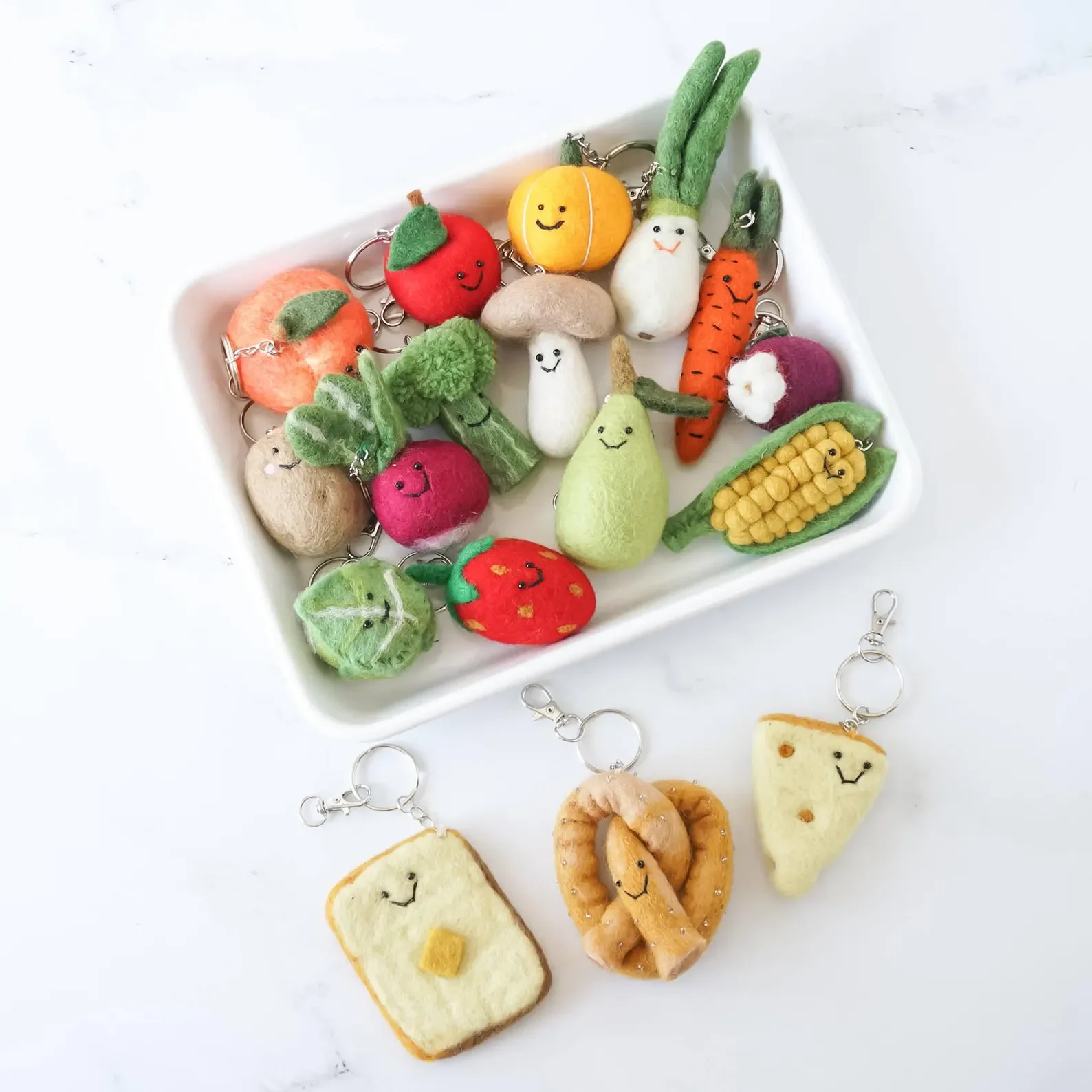
Best Practical Felt Projects for Beginners
Felt coasters are quick to make and perfect as gifts. They require minimal sewing skills, which is great if you're just starting out. These use craft felt sheets that you cut into shapes and stack or sew together.
Keychains and bag charms offer endless design possibilities. I sell these at craft fairs, and they're perfect impulse purchases because people can grab one for themselves and a few for friends. Most keychains use craft felt, though you can also needle felt small charms for a three dimensional look.
Bookmarks appeal to readers everywhere. You can personalize them with names or favorite characters, making them extra special. These are classic craft felt projects using flat felt sheets.
Phone and tablet cases provide stylish protection for your devices. Coffee cup cozies add that cozy, handmade touch to your morning routine. Pencil cases and pouches help organize everything from makeup to craft supplies. All of these functional items use craft felt that's sewn or glued together.
Why Practical Felt Crafts Work
These projects solve real problems while showcasing your creativity. They make excellent gifts because they're both beautiful and useful. Many can be completed in under an hour, making them perfect for batch production if you're planning to sell your work.
4. Felt Crafts for Kids: Safe and Educational
Felt is inherently child friendly, which makes it the perfect material for kids' projects and toys. I've made countless felt toys for the kids in my life, and they hold up surprisingly well to rough play.
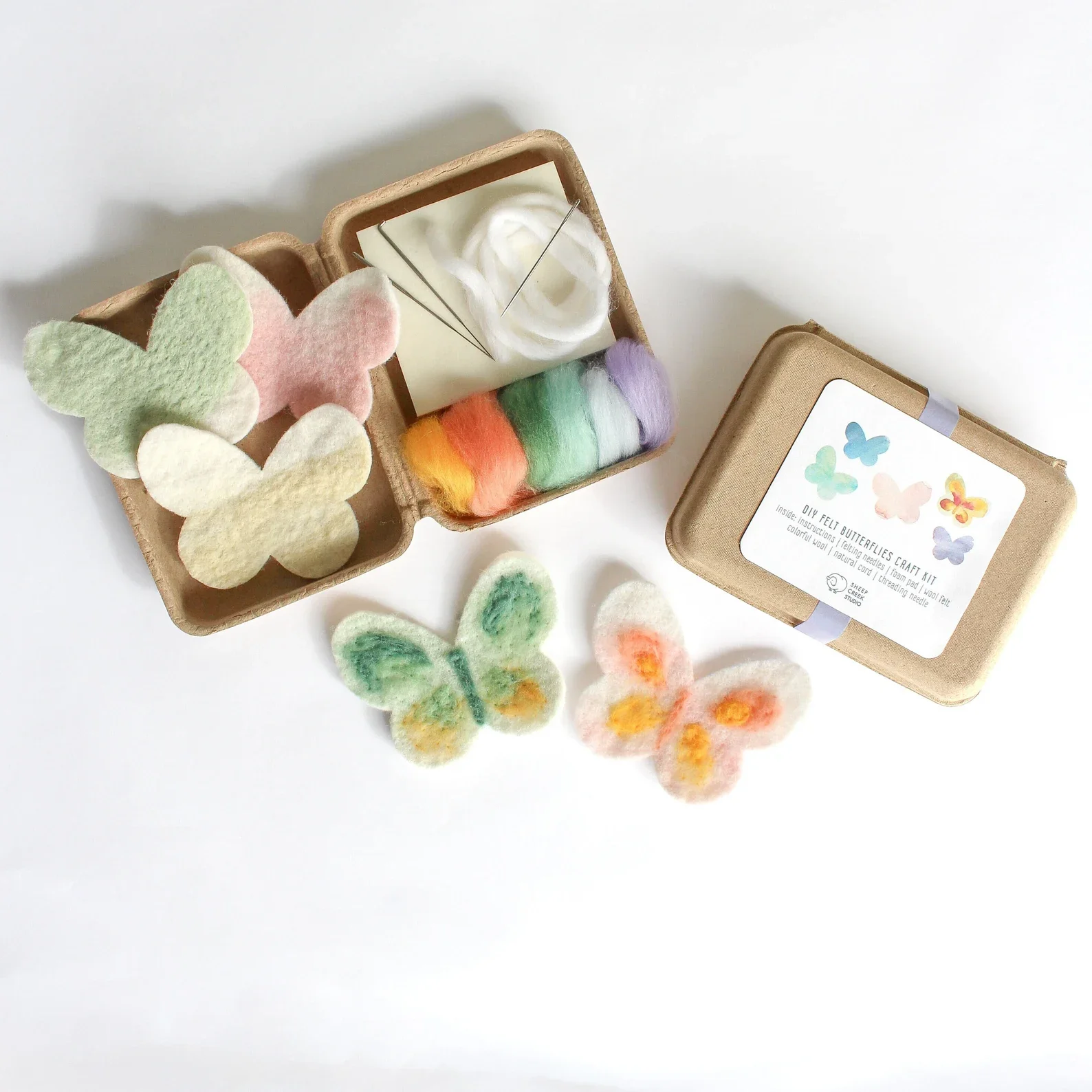
Popular Kids' Felt Craft Ideas
Felt food sets for pretend play kitchens remain timeless favorites. You can make everything from pizza slices to sushi rolls, and kids absolutely love them. These use craft felt sheets that you cut and sew or glue into food shapes.
Quiet books featuring interactive pages with buttons, zippers, and velcro teach fine motor skills while keeping little ones entertained. These are especially great for car rides or restaurant waiting times. Quiet books are craft felt projects that involve sewing felt pieces onto fabric pages.
Stuffed animals and finger puppets encourage imaginative play. Dress up crowns and masks transform children into their favorite characters in seconds. Simple stuffed animals and puppets use craft felt, but you can also needle felt adorable three dimensional animals for a more sculptural look.
Educational items like alphabet letters, counting boards, and shape sorters make learning tactile and fun. I've seen kids who struggle with traditional learning methods light up when working with felt manipulatives. These educational tools use craft felt for the flat pieces and boards.
Why Parents Love Felt Toys
Parents and educators appreciate that felt is safe, durable, and washable. These projects make meaningful handmade gifts for baby showers and birthdays. Many parents enjoy crafting them as special keepsakes that their children will treasure for years.
5. Felt Home Decor: Customize Your Space
Felt home decor projects let you create custom pieces that perfectly match your aesthetic. I've decorated entire rooms using felt projects, and the cozy texture creates an inviting atmosphere that mass produced items just can't match.
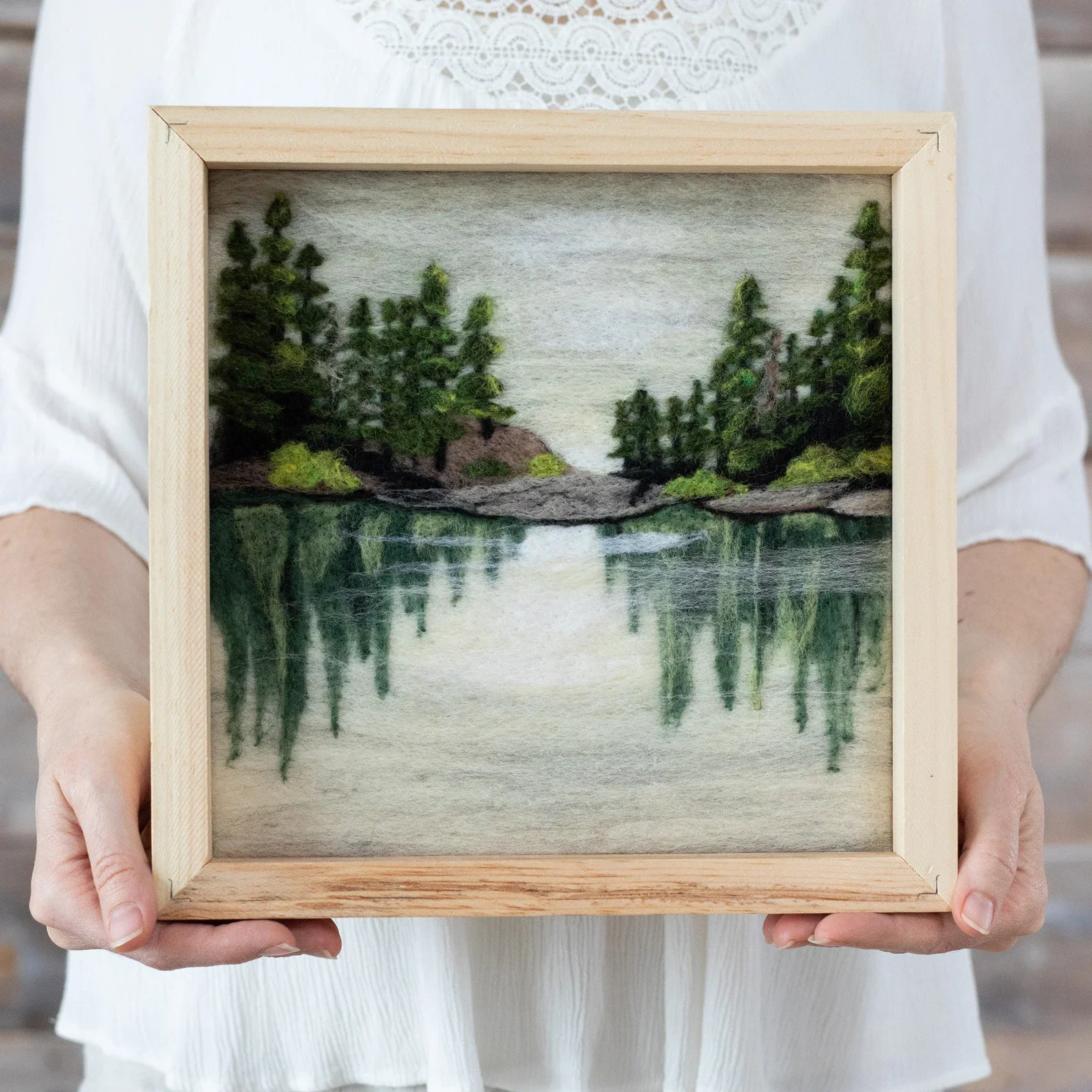
Trending Felt Home Decor Projects
Wall mounted letter boards with felt letters offer customizable messaging for homes and events. You can change the message whenever you want, which makes them incredibly versatile. These use craft felt for the letters that you cut out and arrange.
Garlands and bunting add festive touches to any space. They work for seasonal decorating or year round charm, depending on the colors and shapes you choose. Garlands typically use craft felt pieces strung together.
Wall art featuring felt flowers, animals, or abstract designs creates dimensional, textured pieces that catch the eye. Craft felt works for layered wall art, while needle felting creates three dimensional sculptural wall pieces.
Plant hangers and decorative pots add bohemian charm to any corner. These use craft felt sewn or wrapped around containers.
Throw pillow covers bring cozy texture to living spaces. Decorative animals like llamas, foxes, and woodland creatures bring whimsical touches to nurseries and bedrooms. Pillow covers use craft felt, while decorative animals can be either craft felt (flat or stuffed) or needle felted (sculptural).
Why Handmade Felt Decor Stands Out
Handmade home decor adds personality and warmth that you simply cannot get from mass produced items. Felt's soft texture creates an inviting, cozy atmosphere in any room. Plus, you can customize everything to match any color scheme or design style, from minimalist to maximalist.
6. Felt Accessories: Wearable Art
Felt accessories combine fashion with function, creating unique statement pieces that are surprisingly comfortable to wear.
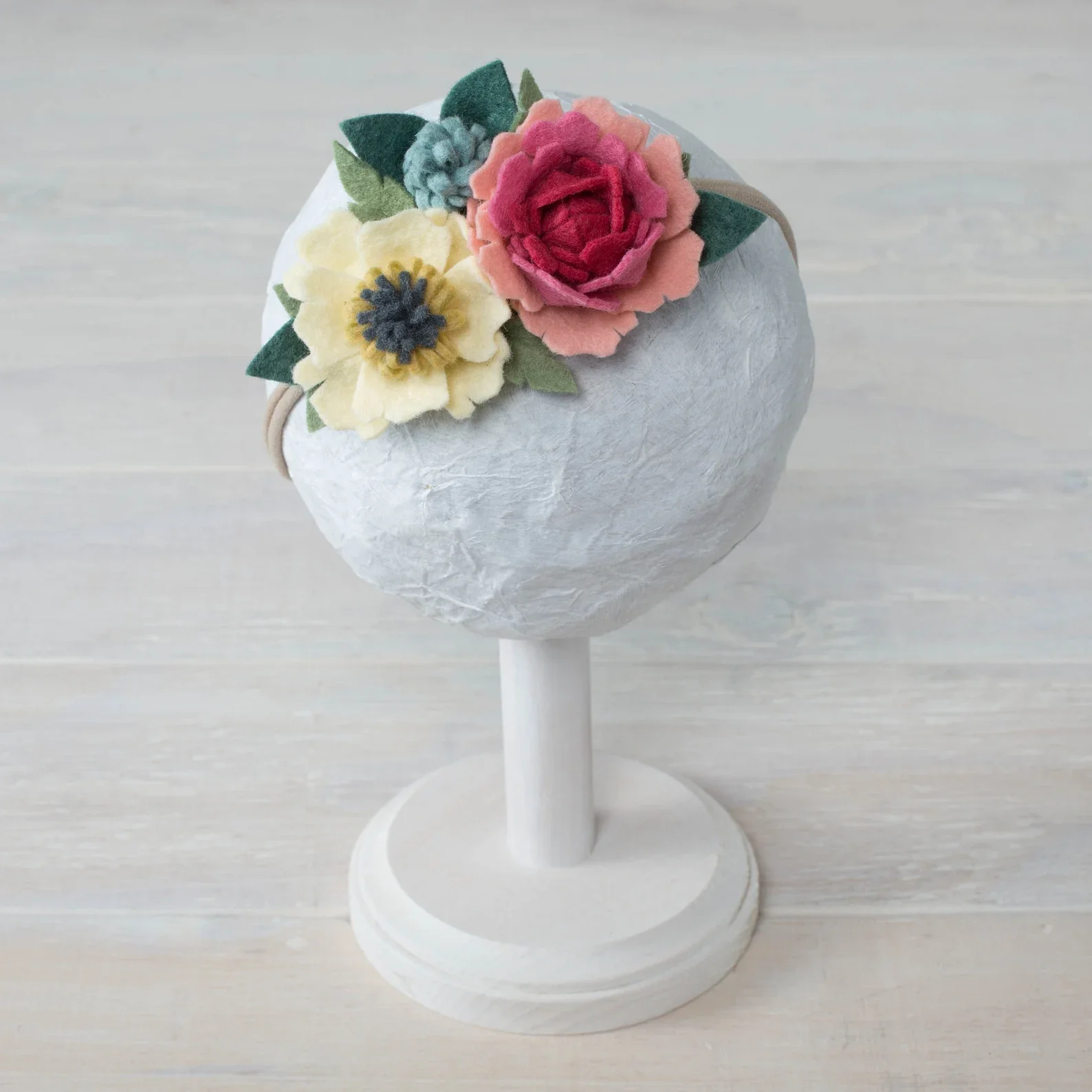
Popular Wearable Felt Projects
Headbands adorned with felt flowers or bows add charming touches to any outfit. I make these for my nieces, and they wear them constantly. These use craft felt flowers attached to headband bases.
Hair clips and barrettes featuring felt embellishments create adorable accessories for all ages. Brooches and pins let you literally wear your art on your sleeve, or your jacket, or your bag. All of these accessories use craft felt that's glued or sewn onto the base hardware.
Statement necklaces made from felt beads or shapes offer bold, lightweight jewelry options. Unlike metal or stone jewelry, felt pieces are feather light and comfortable to wear all day. You can make felt beads from craft felt or needle felt them for a more organic, sculptural look.
Scarves and infinity scarves provide warmth with handmade style. You can make them in any color or pattern combination imaginable. These are craft felt projects sewn together.
Why Felt Accessories Are Popular
Felt accessories are lightweight and comfortable to wear, which is a huge selling point. They make excellent gifts and can be customized to match any personal style. Whether someone loves minimalist designs or bold maximalist pieces, felt can deliver.
Getting Started with Your First Felt Project
Ready to dive in? Here's what you need to know to get started on the right foot with both types of felting.
Supplies for Craft Felt Projects
Craft felt, which is typically an acrylic or polyester blend, is affordable and widely available. This makes it perfect for beginners and projects where you need many colors. You can grab a variety pack for just a few dollars at any craft store.
Wool felt offers superior quality with better durability and a more luxurious feel. It's ideal for items you want to last or pieces you plan to sell.
For those prioritizing sustainability, eco felt made from bamboo or recycled materials provides an environmentally conscious option that still works beautifully.
You need sharp fabric scissors. This is non negotiable. Dull scissors will frustrate you and give you raggedy edges.
Grab embroidery floss in coordinating colors. You'll also need embroidery or chenille needles for hand sewing.
Fabric glue or a hot glue gun works great for no sew options. Pins or clips help hold pieces together while you work.
Supplies for Needle Felting Projects
For needle felting, you'll need wool roving. This comes in tons of colors and is the fluffy wool fiber you'll sculpt with. Start with a variety pack so you have options.
Felting needles are essential. These special barbed needles tangle the wool fibers together. Get a starter set with different needle sizes. They're sharp and break easily, so having extras is smart.
A foam pad or felting mat protects your work surface and gives you something to stab into. Some people use dense foam, others prefer brush style mats.
Cookie cutters or templates help you create consistent shapes when you're starting out.
Safety note: felting needles are extremely sharp. Keep them away from kids and always stab straight down to avoid breaking the needle or poking yourself.
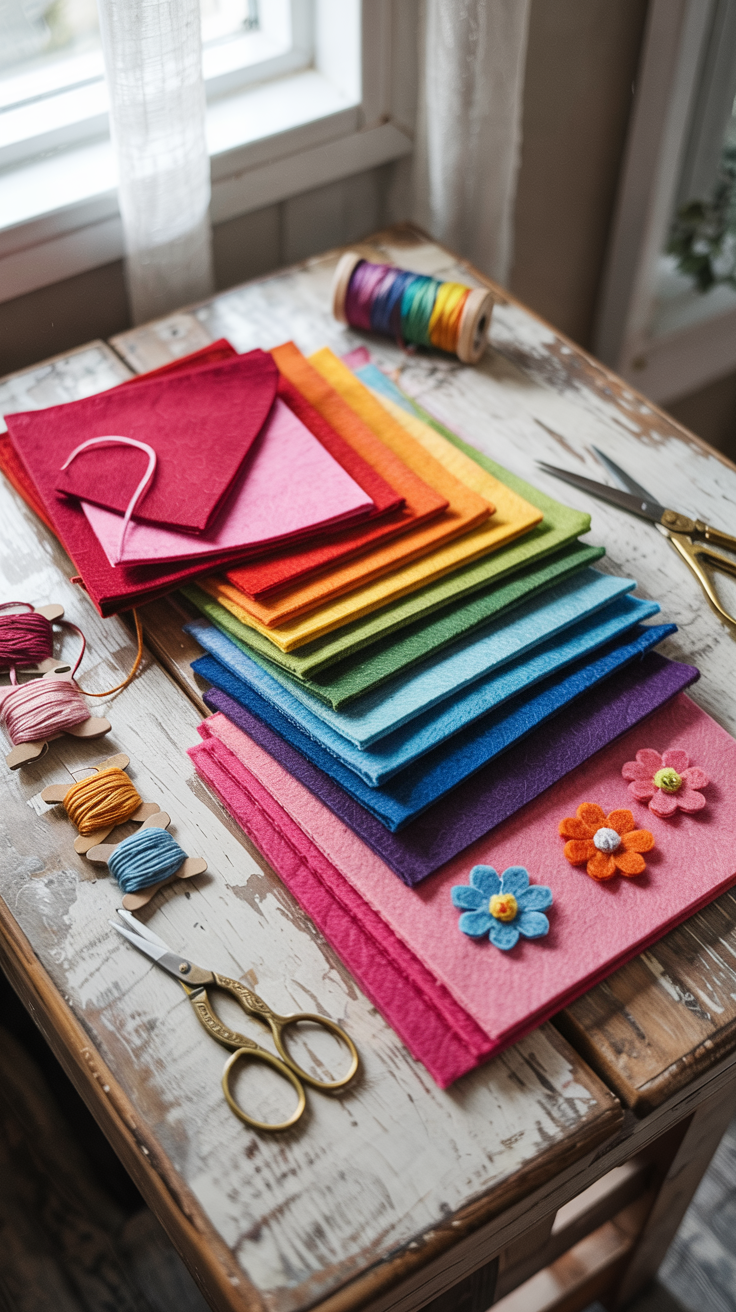
Start Simple and Build Confidence
For craft felt, begin with no sew or minimal sewing projects to build your confidence. Felt bookmarks, simple coasters, or basic flowers are excellent first projects that deliver satisfying results quickly.
For needle felting, start with simple shapes like balls, hearts, or basic animals. Flat designs are easier than fully three dimensional sculptures when you're learning.
Don't stress about perfection. The handmade quality of felt crafts is part of their charm. Slight irregularities make each piece unique and add to their artisanal appeal.
Which Type Should You Try First?
If you want immediate gratification and have basic crafting supplies at home, start with craft felt. You can literally start today with just scissors and glue.
If you love three dimensional sculpture and don't mind investing in some specialized tools, needle felting might be your jam. The meditative stabbing motion is genuinely relaxing once you get into it.
Honestly, there's no wrong choice. Many crafters end up doing both because they're useful for different types of projects. I started with craft felt and added needle felting later when I wanted to make more sculptural pieces.
Taking Your Felt Crafting to the Next Level
Once you've mastered a few basic projects, you might be wondering what's next. Here are some ways to level up your felt crafting game.
Turn Your Hobby into Income
Many crafters have turned their felt hobby into profitable side businesses or even full time ventures. Quick to make items like keychains, bookmarks, and seasonal ornaments are particularly popular at craft fairs and online marketplaces.
The key to success is finding your niche. Maybe you specialize in custom orders, seasonal specialties, or unique designs that stand out from mass produced alternatives.
Felt craft kits have also become extremely popular. You can package your expertise and patterns for others to enjoy, creating another potential revenue stream.
Join the Crafting Community
Connect with other felt crafters online through social media groups, forums, and crafting communities. Sharing your work, getting feedback, and learning from others will accelerate your skills faster than anything else.
Follow felt craft bloggers and YouTube channels for ongoing inspiration and tutorials. Many offer free patterns and templates that can jumpstart your next project.
Keep Experimenting and Learning
Try new techniques like needle felting, which opens up entirely new creative possibilities. Experiment with combining felt with other materials like fabric, wood, or metal.
Challenge yourself with more complex projects as your skills grow. The beauty of felt is that there's always something new to learn and create.
Your Next Steps: Start Crafting Today
Here's how to take action right now and start your felt crafting journey.
First, decide which type of felting you want to try. Craft felt is perfect if you want to jump in immediately with supplies you might already have. Needle felting is great if you're drawn to three dimensional sculpture and don't mind ordering some specialized tools.
Second, pick one project from this article that excites you. Don't overthink it. Just choose something that makes you smile when you imagine making it. If you chose craft felt, maybe start with a simple bookmark or coaster. If you chose needle felting, a small ball or simple shape is perfect for learning the technique.
Third, gather your supplies. For craft felt, head to your local craft store or order online. Get a variety pack of felt sheets in colors you love, some sharp scissors, and basic embroidery floss or a hot glue gun. For needle felting, order a beginner kit that includes needles, a foam pad, and wool roving in assorted colors.
Fourth, find a free pattern or tutorial online. Sites like Pinterest, YouTube, and craft blogs have thousands of free resources. Pick one with clear photos or video instructions if you're a visual learner. For needle felting especially, watching a video helps you understand the stabbing motion and technique.
Fifth, set aside an hour this week to start your project. Put on some music, make yourself comfortable, and just begin. Don't worry about making it perfect. Focus on enjoying the process and learning as you go. With craft felt, you'll see results quickly. With needle felting, be patient as you learn the rhythm of the stabbing motion.
Sixth, share your creation. Post it on social media, give it as a gift, or just display it in your home. Celebrating your accomplishment, no matter how small, builds momentum for your next project. The felt crafting community is incredibly supportive, and people love seeing beginner work.
The felt crafting world is incredibly welcoming, and there's never been a better time to join in. With sustainable materials trending, nostalgia driven designs making a comeback, and the DIY movement stronger than ever, your handmade felt creations are exactly what the world needs more of right now.
Whether you choose craft felt for quick and easy projects or needle felting for sculptural artistry, you're joining a vibrant community of makers who love this versatile medium. So grab your supplies, pick a project, and start creating. Your first finished piece might not be perfect, but it will be yours, and that makes it special.
The Most Marketable Home Decor Crafts to Make and Sell
Frequently Asked Questions About Felt Crafting
What's the difference between cheap craft felt and expensive wool felt?
Cheap craft felt is usually made from acrylic or polyester blends. It's perfect for beginners, kids' projects, or anything where you need lots of colors on a budget. The downside is it can pill, shed, or lose shape over time.
Wool felt costs more but it's incredibly durable, holds its shape beautifully, and has a luxurious texture. If you're making something you want to last for years or planning to sell your work, wool felt is worth the investment. I use cheap felt for practice and experimenting, then switch to wool felt for final pieces I really care about.
Can I wash felt projects?
It depends on what type of felt you used and how you constructed the project. Acrylic craft felt can usually handle gentle hand washing in cold water, but it might shrink or distort slightly. Wool felt is trickier because it can felt further and shrink if agitated in water.
For most felt projects, I recommend spot cleaning with a damp cloth instead of full washing. If you absolutely need to wash something, hand wash in cold water with gentle soap, then reshape it while damp and let it air dry flat. Never put felt in the dryer.
Do I need to know how to sew to make felt crafts?
Not at all! Tons of felt projects use hot glue instead of sewing. Bookmarks, coasters, simple ornaments, and lots of kids' crafts work perfectly with just glue. Hot glue guns are cheap and easy to use.
That said, basic hand sewing does open up more possibilities. The good news is felt is incredibly forgiving for learning to sew. The edges don't fray, so you don't need perfect stitches. A simple running stitch or whip stitch is all you need for most projects.
Is needle felting hard to learn?
Needle felting has a learning curve, but it's not hard. The basic technique is literally just stabbing wool with a special needle over and over. The needle's barbs tangle the fibers together.
The tricky part is getting a feel for how much to stab and how to shape your piece. But here's the thing: it's super forgiving. If you don't like how something looks, you just keep stabbing and adding more wool until it's right. You can't really mess it up permanently.
Start with simple shapes like balls or flat designs. Watch a few YouTube tutorials to see the technique in action. Within an hour, you'll have the hang of it.
How long does it take to complete a felt project?
This varies wildly depending on the project. A simple craft felt bookmark might take 15 minutes. A basic felt flower could be 30 minutes to an hour. A complex stuffed animal or detailed needle felted sculpture might take several hours spread over multiple sessions.
For beginners, I always recommend starting with quick projects. There's nothing more motivating than finishing something cute in under an hour. You get that sense of accomplishment and want to make more.
Can kids do felt crafts safely?
Absolutely! Craft felt is one of the safest crafting materials for kids. The edges don't fray, so there's no risk of threads getting tangled or swallowed. Kids can use child safe scissors to cut felt shapes, and projects can be assembled with glue instead of needles.
Needle felting is trickier for young kids because felting needles are extremely sharp. I'd say needle felting is better for older kids (maybe 10 plus) who can follow safety instructions carefully. Always supervise and teach them to stab straight down into the foam pad.
For younger kids, stick with craft felt and glue or very basic sewing with supervision.
Where's the best place to buy felt supplies?
For craft felt, any big craft store like Michaels, Joann, or Hobby Lobby has great selection and regular sales. I stock up when felt sheets go on sale for 50 percent off. You can also find variety packs online at Amazon.
For wool felt, I buy from specialty online shops like Etsy sellers or dedicated felt suppliers. The quality is noticeably better than what you find in chain stores.
For needle felting supplies, I recommend getting a beginner kit online first. These kits include everything you need and are cheaper than buying items separately. Once you know you like it, you can buy individual colors of wool roving as needed.
How do I prevent my fingers from getting sore when needle felting?
Finger guards or leather thimbles are lifesavers for needle felting. You can buy finger protectors made specifically for felting, or just use a leather thimble on your non dominant hand.
Also, make sure you're stabbing into a proper foam pad. If you're stabbing into a surface that's too hard, you'll tire out faster. The foam should absorb the needle easily.
Take breaks! Needle felting is a marathon, not a sprint. I set a timer for 20 minutes, then take a break to stretch my hands.
Can I sell the felt crafts I make?
Yes! Lots of people successfully sell felt crafts at craft fairs, on Etsy, at local markets, and through social media. Quick items like keychains, bookmarks, and seasonal ornaments sell particularly well because you can price them affordably and make them in batches.
Just make sure you're using your own designs or patterns that are labeled for commercial use. Most free patterns online are for personal use only. If you want to sell items, look for patterns that explicitly allow commercial use, or create your own designs.
What's the best first project for someone who's never crafted before?
For craft felt, I always recommend a simple bookmark. You literally cut a rectangle, maybe add a fun shape on top, glue it together, and you're done. It's useful, it's cute, and it builds confidence.
For needle felting, start with a simple ball. Just take a bit of wool roving, start stabbing it with the needle, and watch it transform into a firm little ball. Once you can make a ball, you can make anything because all needle felted shapes start as balls that you refine.
How do I store my felt and supplies?
Felt sheets store beautifully flat in plastic bins or file folders. I organize mine by color in a drawer so I can see everything at a glance. Keep them away from moisture and direct sunlight to prevent fading or mildewing.
Wool roving for needle felting does best stored in sealed bags or containers to keep it clean and fluffy. I use large ziplock bags organized in a bin.
Needles should be stored safely in a case or pin cushion where they won't poke anyone. I keep mine in a small tin with a piece of foam in the bottom.
Is felt crafting expensive?
Not at all! Felt crafting is one of the most affordable crafts you can start. A pack of craft felt sheets costs just a few dollars. Basic tools like scissors and glue are things most people already own.
Even needle felting is relatively affordable to start. A beginner kit with needles, foam pad, and wool roving runs about 15 to 25 dollars. That's way cheaper than getting into something like pottery or woodworking.
The best part is you can make gorgeous gifts and home decor for less than buying similar items in stores. I've made gifts that looked like they cost 30 dollars but actually cost me about 3 dollars in supplies.