
Best Indoor Plants for Coastal Homes: A Spring Refresh Guide
This post may contain affiliate links. If you make a purchase through one of my links, I may receive a small commission at no cost to you.
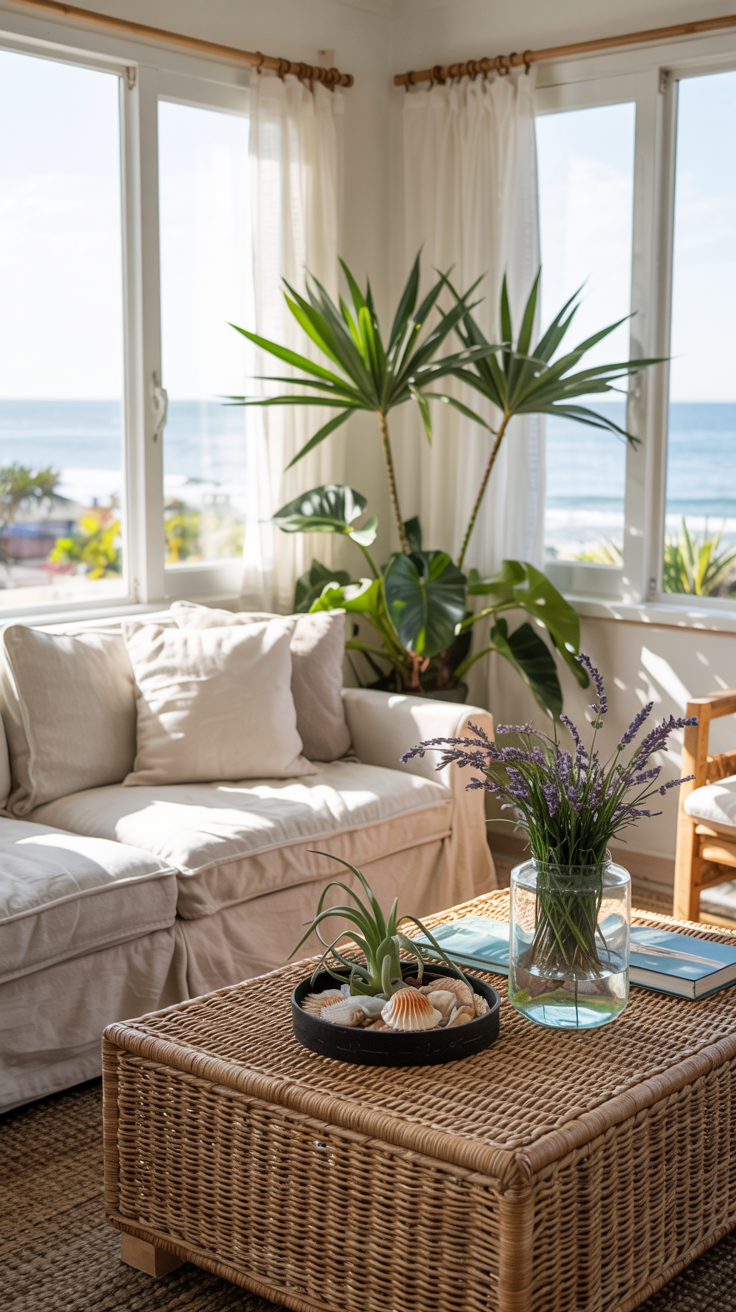
There is a moment every spring, that first warm breeze through an open window, when a coastal home practically asks to be refreshed. And in my experience styling beach cottages along the North Carolina coast, nothing does the job faster or more beautifully than the right botanical touches.
But not just any plant will do. Coastal homes have unique challenges: salt air, bright light, humidity fluctuations, and a color palette that needs to stay cohesive. This guide covers the best indoor plants for coastal homes, exactly where to place them, how to arrange them, and how to keep them thriving even if you would rather be at the beach.
Key Takeaways:
The best indoor plants for coastal homes are salt-tolerant, humidity-friendly, and complement a coastal color palette.
Strategic placement in the entryway, living room, bedroom, bathroom, and kitchen makes the biggest visual impact.
A simple 5-minute weekly care routine is all you need to keep your plants healthy.
Beautiful coastal botanical arrangements do not require a big budget or a designer's eye.
Why Plants Work So Well in Coastal Homes
Coastal decor is built on light, texture, and a connection to nature, which makes it the perfect backdrop for botanicals. The seafoam greens, soft blues, and sandy neutrals of a beach cottage do not compete with plants; they complement them.
Bringing plants indoors also softens the line between inside and outside, which is exactly the feeling a great coastal home is going for.
The 5 Best Indoor Plants for Coastal Homes
When choosing plants for a coastal space, look for varieties that tolerate humidity, bright indirect light, and occasional salt air, especially if you open your windows often. Here are my top picks:
Sea Lavender
Best for: Dried arrangements, mantels, and windowsills.
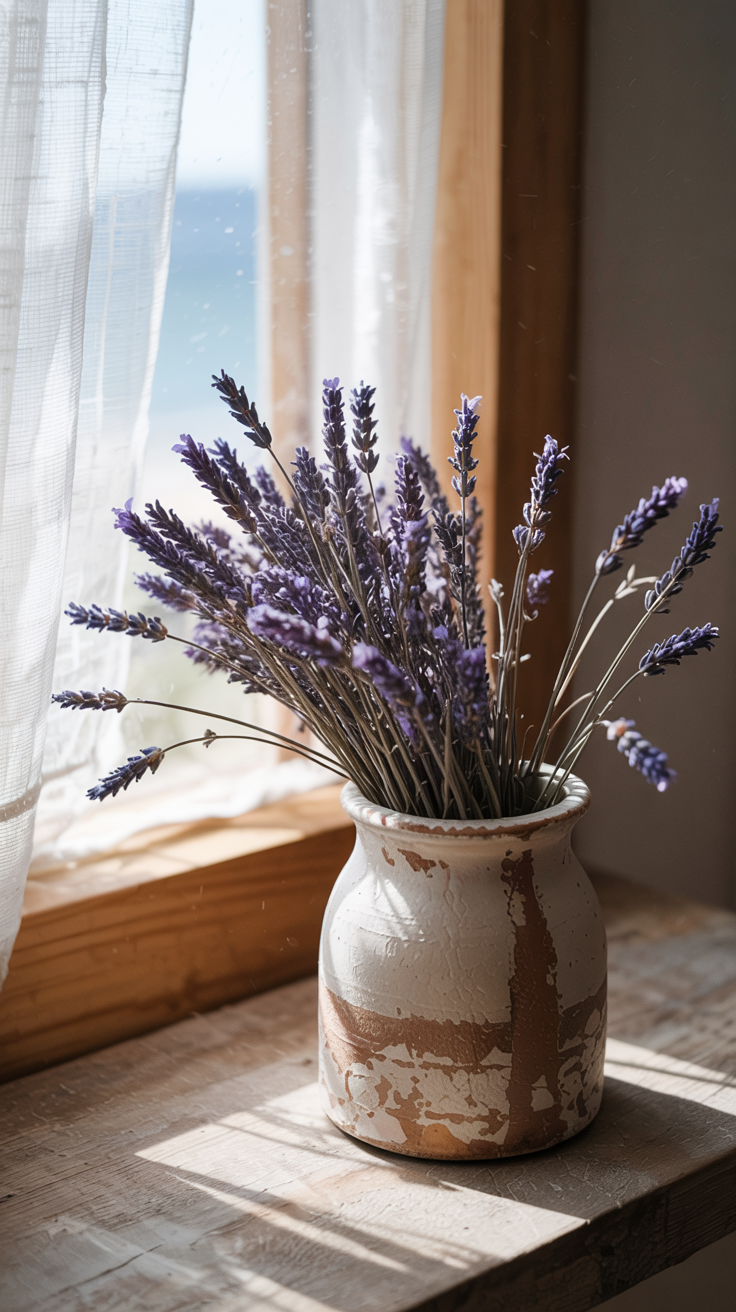
Sea lavender is one of the most authentically coastal plants you can bring indoors. Its delicate purple blooms mimic the wildflowers you would find along the shoreline, and it dries beautifully, meaning your arrangement lasts long after fresh flowers would fade. Place it in a whitewashed or terracotta vase for a timeless coastal look.
Care: Low-maintenance. Prefers bright light and infrequent watering. Excellent for those who travel or tend to forget to water.
Parlor Palm (Chamaedorea elegans)
Best for: Living rooms, entryways, and corners.
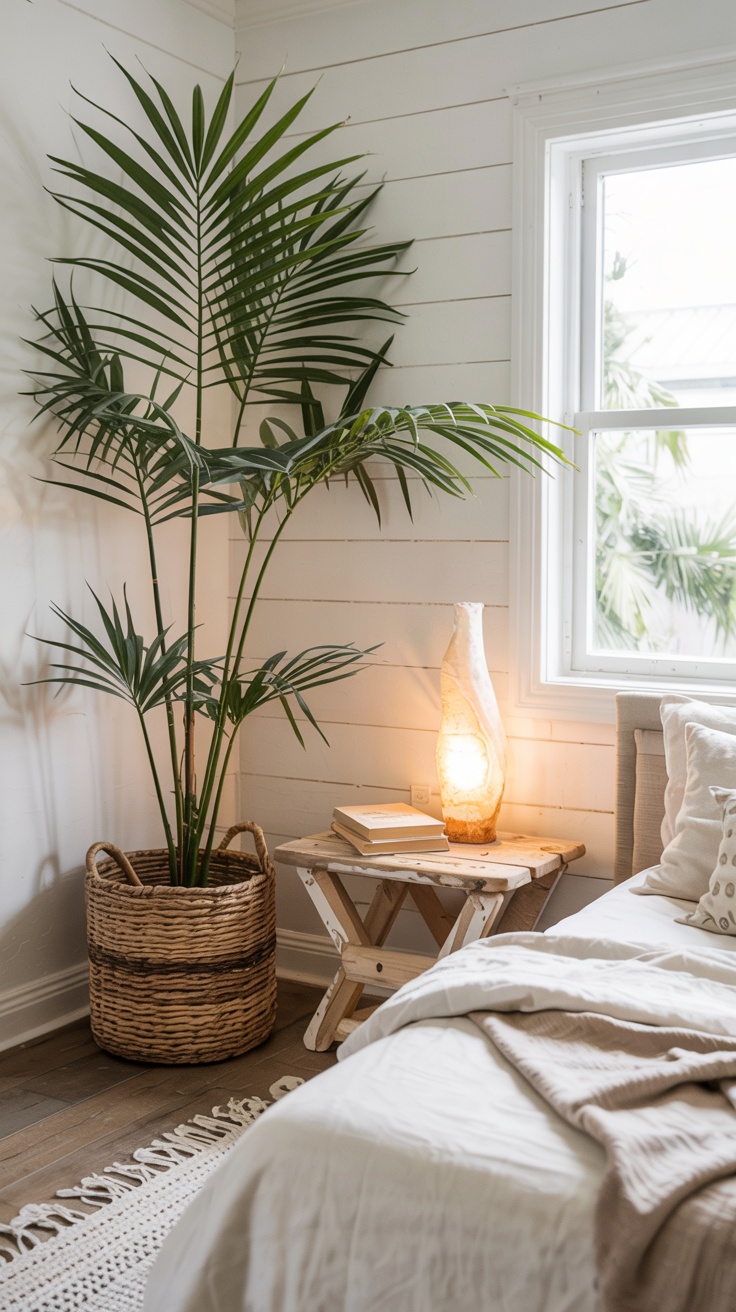
The parlor palm is a coastal home MVP. It tolerates salt air better than most indoor palms, grows in lower light, and adds that tropical texture that makes a beach cottage feel like a vacation year-round. It also helps purify the air, which is a nice bonus.
Care: Water when the top inch of soil is dry. Keep away from cold drafts. Wipe leaves occasionally to remove dust and help them breathe.
Blue Star Fern (Phlebodium aureum)
Best for: Bookshelves, bathrooms, and side tables.
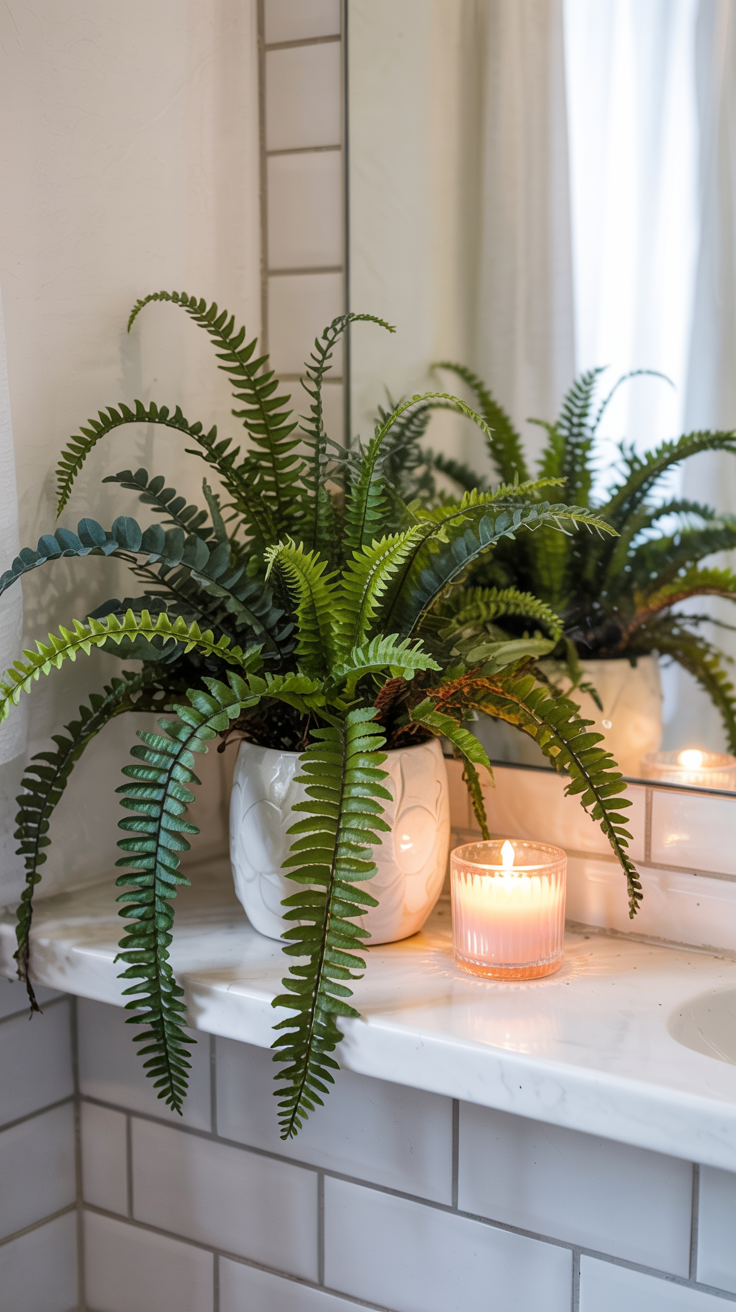
This underrated gem is one of my favorites for coastal spaces. Its blue-green fronds echo the color of shallow ocean water, and it thrives in the humidity that bathrooms and coastal climates naturally provide. Unlike many ferns, it is forgiving if you miss a watering.
Care: Prefers indirect light and consistent moisture, but not soggy soil. Bathrooms with a window are ideal.
Pothos (Epipremnum aureum)
Best for: Trailing from shelves, hanging in shell planters, and kitchen windowsills.
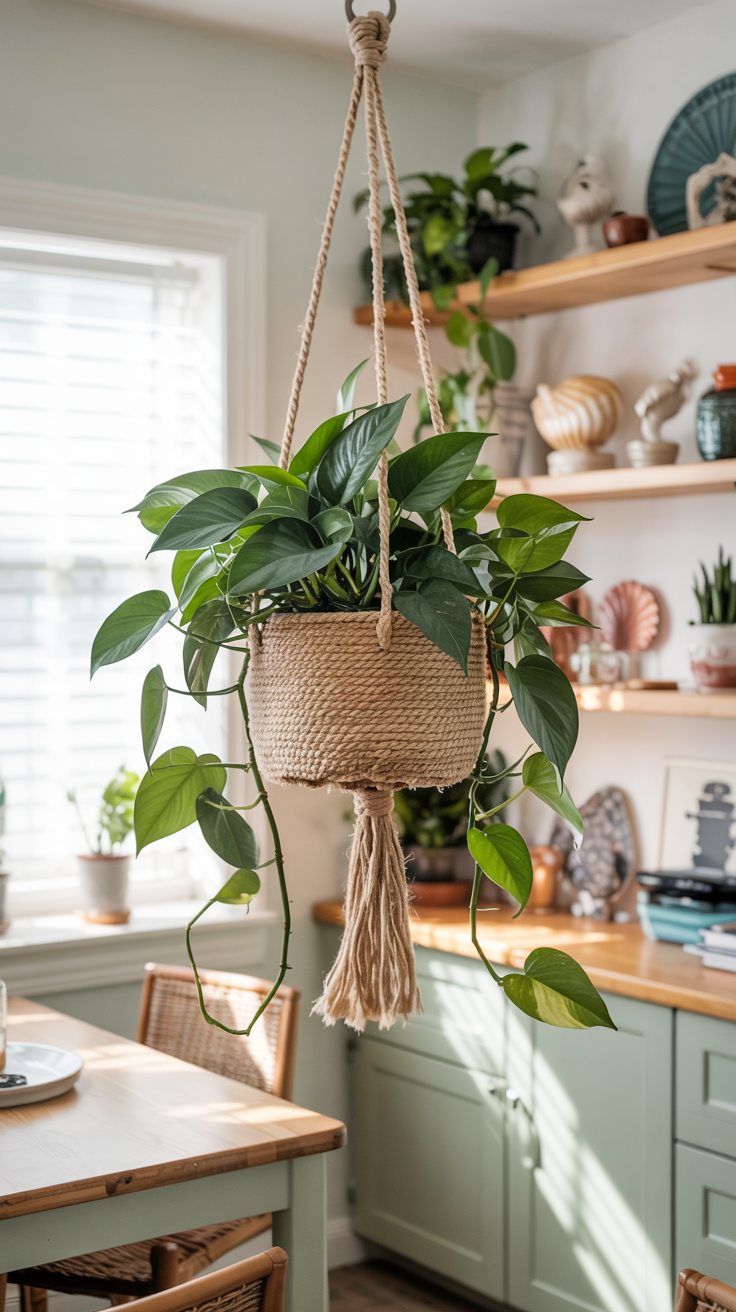
If you are new to houseplants or just want something that asks very little of you, pothos is your answer. It trails beautifully, comes in dozens of varieties (golden, marble queen, and neon are all lovely in coastal settings), and looks stunning in a shell or rope-wrapped planter. It is nearly impossible to kill.
Care: Water when leaves start to look slightly soft. Tolerates low light, though variegated varieties stay more vibrant in brighter spots.
Rosemary
Best for: Kitchen windowsills, herb gardens, and sunlit entryways.
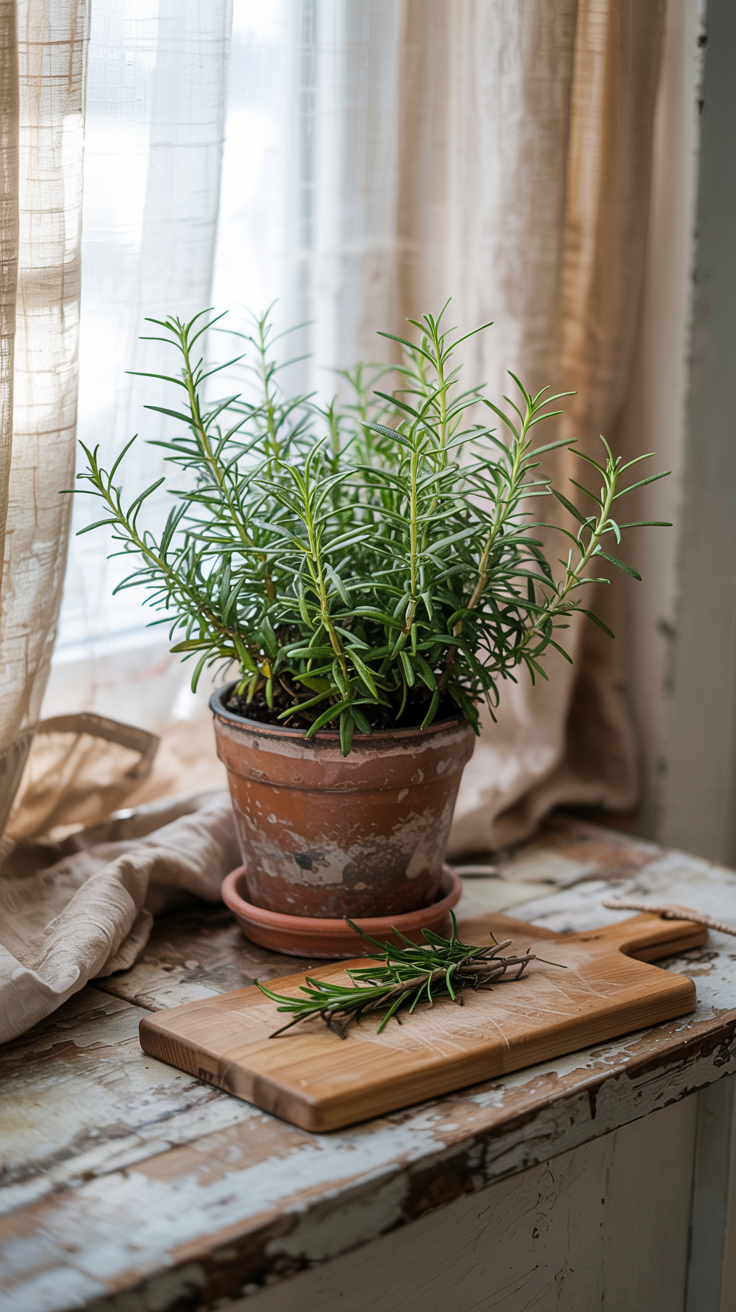
Rosemary is fragrant, functional, and genuinely loves the kind of sunny, breezy conditions a coastal home provides. Keep a pot in your kitchen window and you will always have fresh herbs for cooking and a home that smells incredible.
Care: Needs at least 6 hours of bright light daily. Water deeply but infrequently and let the soil dry out between waterings. It does not like sitting in wet soil.
PRO TIP: Moisture-loving ferns like Blue Star thrive in bathrooms where shower steam creates a naturally humid microenvironment. Just make sure there is some natural light!
How to Style a Coastal Botanical Arrangement
You do not need a florist's eye to put together something beautiful. This simple layering formula works every time:
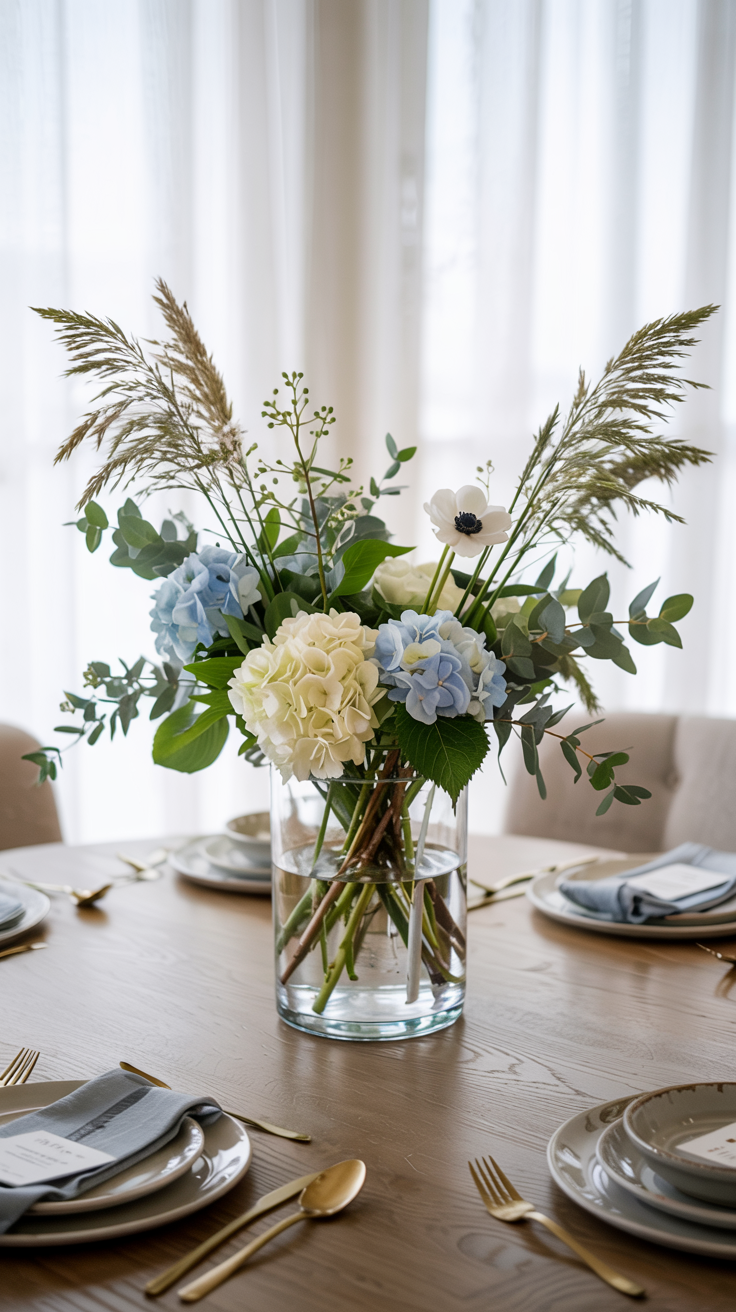
Start with the container. Choose something that feels coastal, like a driftwood planter, blue or clear glass vase, woven seagrass basket, or a shell-encrusted pot.
Add structure. Tall ornamental grasses or sculptural branches give height and a sense of movement.
Place your focal flowers. Coastal colors shine here: white anemones, pale blue hydrangeas, or blush ranunculus all work beautifully.
Layer in texture. Silver dollar eucalyptus, sea holly, air plants, or dried sea lavender add depth without overwhelming the arrangement.
The goal is something that looks like it could have been gathered on a beach walk: effortless, organic, and a little wild.
Where to Place Plants in a Coastal Home
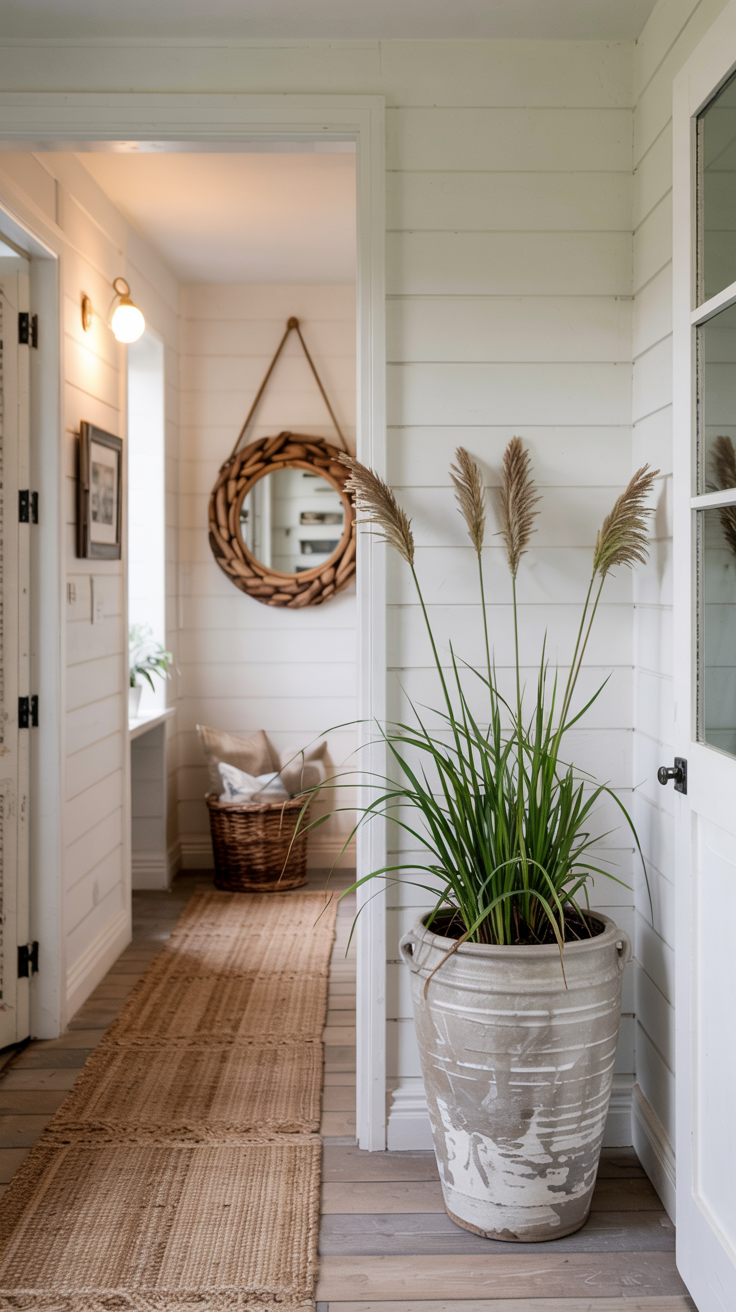
Entryway: This is your first impression. A tall grass in a whitewashed pot or a statement palm immediately signals the relaxed, nature-connected feeling you are going for.
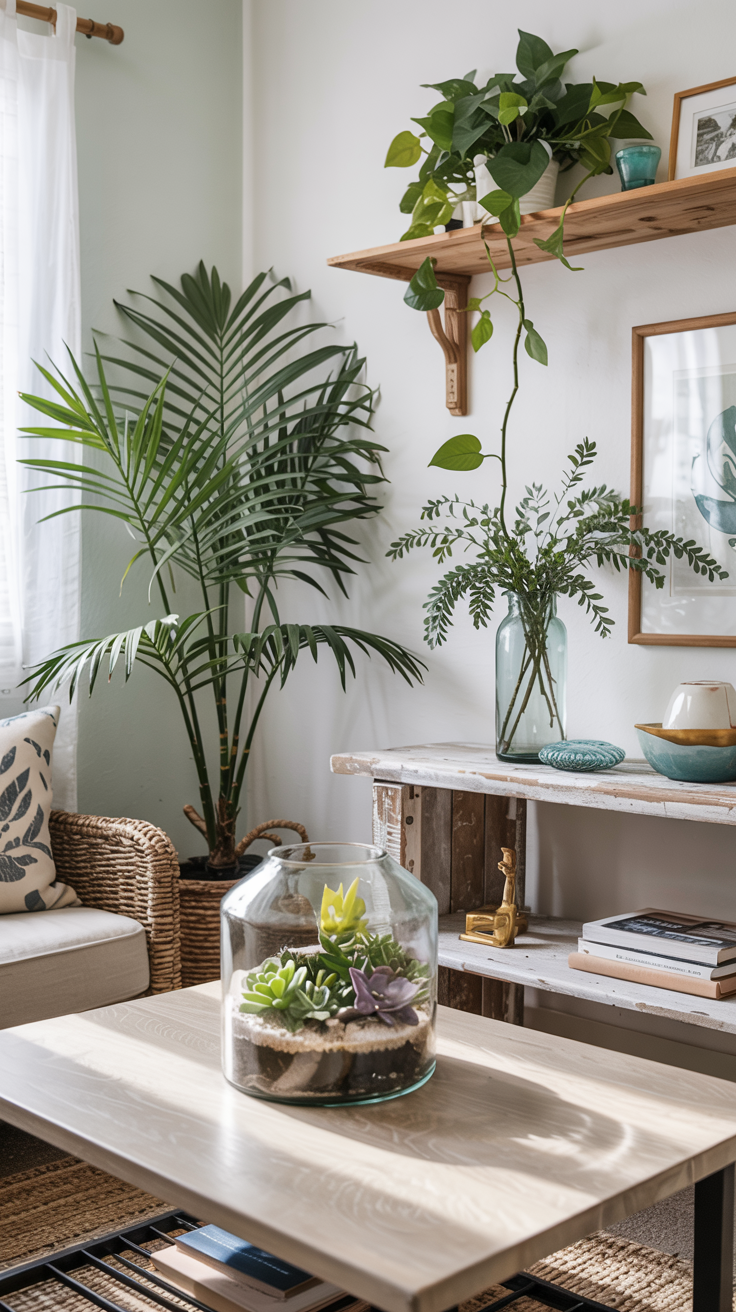
Living room: Think about sightlines and where your eye travels when you first walk in. Place larger plants like a fiddle leaf fig or a parlor palm at anchor points that draw the eye through the space. Group smaller plants in threes on a coffee table or console for a collected, curated look.
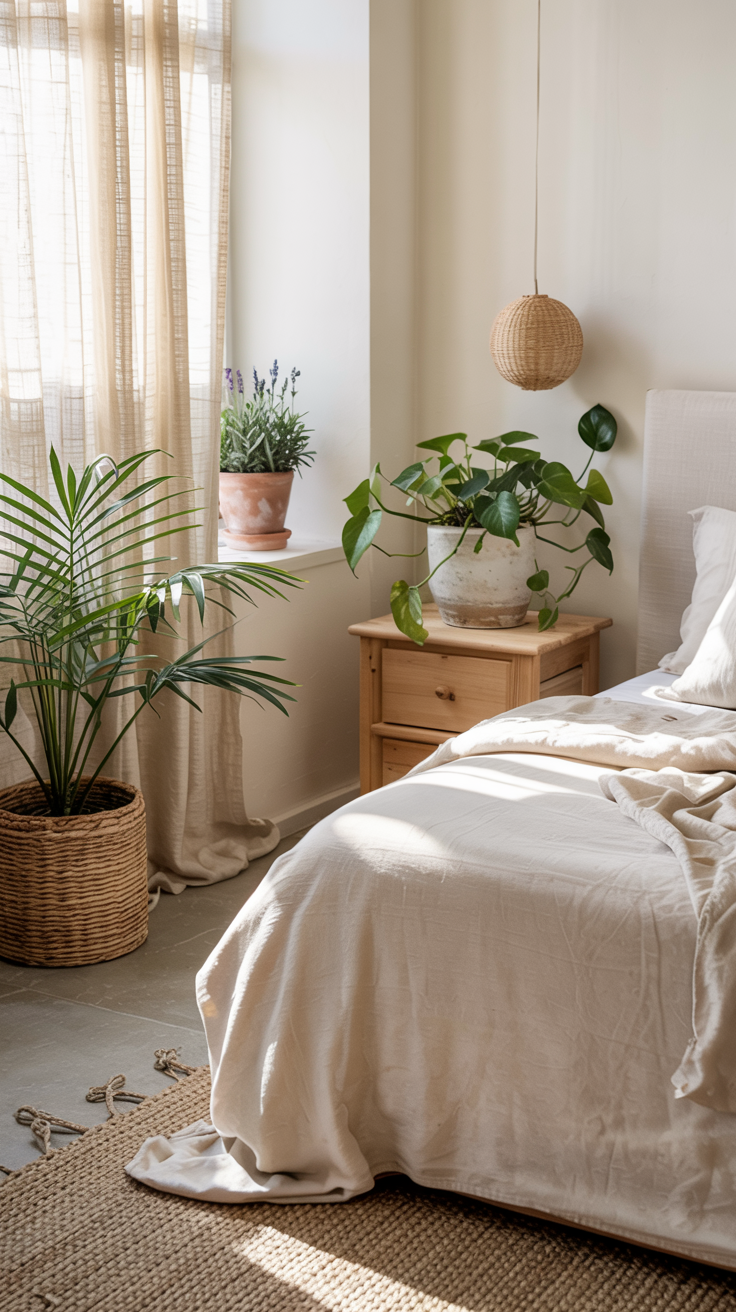
Bedroom: Keep it calming here. A small pothos on the nightstand, a trailing plant on a floating shelf, or a lavender pot near the window all work well. Lavender in particular has been shown in studies to support better sleep, so it is both functional and beautiful.
Bathroom: This is prime real estate for ferns and tropical plants that love humidity. Even a small shelf with a blue star fern and a candle can transform the space.
Kitchen: Herbs belong here. Rosemary, basil, and mint thrive on a sunny windowsill and make your kitchen smell incredible.
Simple Plant Care Routine for Busy Beach Dwellers
You moved to the coast to relax, not to stress about plants. Here is a low-effort weekly routine that keeps everything healthy:
Monday: Do a quick visual check and look for yellowing leaves or drooping stems, then address anything that looks off.
Wednesday: Water as needed. Stick your finger an inch into the soil. If it is dry, water. If it is still moist, wait.
Friday: Mist salt-sensitive leaves, especially ferns, which appreciate the extra humidity.
Weekend: Remove any yellow leaves or spent blooms to keep plants looking their best and redirect energy to new growth.
Important coastal note: The naturally higher humidity near the ocean means most plants need less frequent watering than standard care guides suggest. When in doubt, underwater rather than overwater, because most houseplants are far more forgiving of drought than soggy roots.
Budget-Friendly Coastal Botanical DIY
Some of my most-complimented coastal arrangements cost almost nothing. Try this quick weekend project:
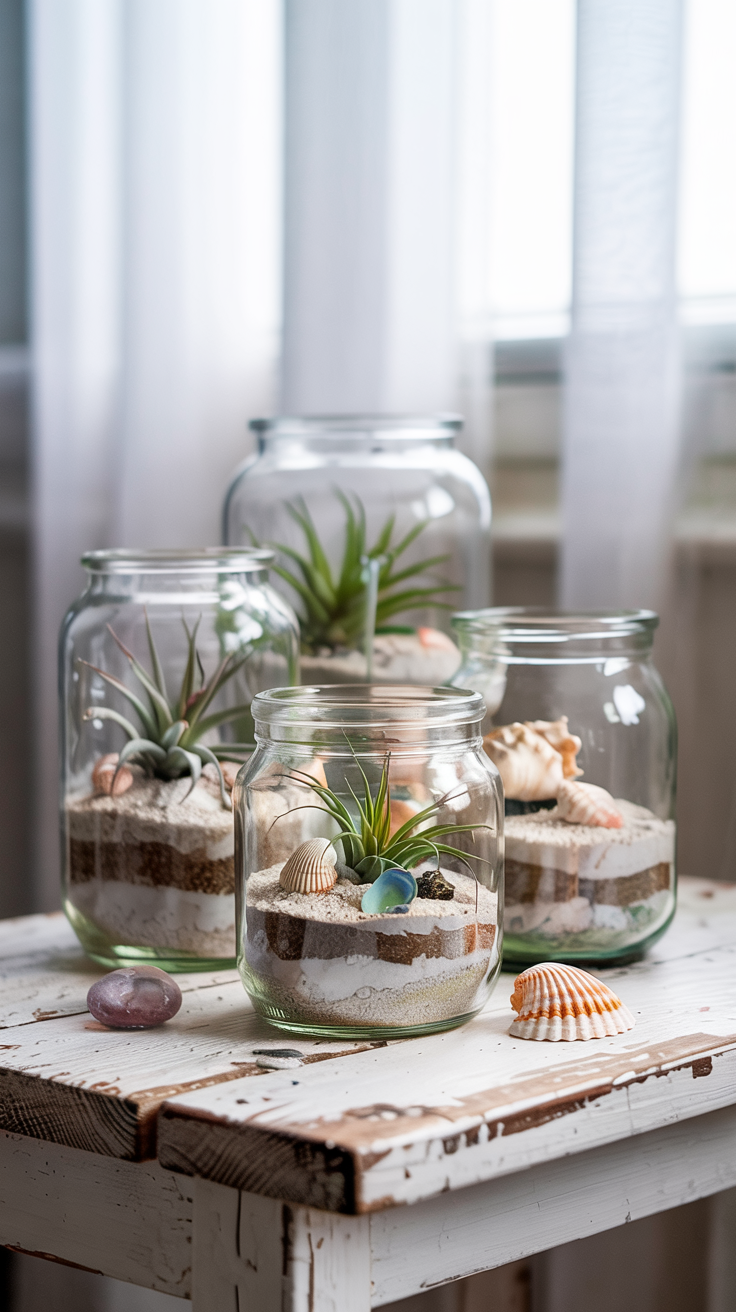
Collect clear glass containers of varying heights, such as mason jars, old vases, or apothecary jars. Layer sand from your beach walks inside each one (check local regulations first, as some beaches restrict sand removal). Add an air plant or small succulent on top, and finish with a few tiny shells or pieces of sea glass. The result is a cohesive, custom terrarium display that looks like you spent a lot more than you did. Here is my step-by-step DIY seaside terrarium guide if you want the full tutorial.
Where to Find Coastal-Friendly Plants
Your best sources, in order of quality:
Local farmers markets and nurseries. Staff can tell you what grows well in your specific coastal climate, and you can see the plants in person before buying.
Specialty plant shops. These often carry more unique varieties like blue star fern or sea lavender that big-box stores do not stock.
Online plant retailers. Convenient, especially for harder-to-find varieties. Sea lavender, Parlor Palm, Blue Star Fern, Pothos, and Rosemary are all available through Amazon.
Refresh Your Coastal Home This Weekend
You do not need to overhaul your entire space to feel the difference. This weekend, pick one room and one plant and start there. Set it somewhere you will see it every day, maybe a sunny windowsill in the kitchen or the entryway table where you drop your keys. Once you notice how much life it adds to the space, the rest will follow naturally.
If you want to go a step further, grab a few clear jars and try the DIY terrarium project above. It takes less than an hour and costs almost nothing. Then, once you are comfortable with your first few plants, use the weekly care routine in this post to keep them thriving without it feeling like a chore.
Your beach cottage is meant to feel alive, and a few well-chosen plants are one of the easiest, most affordable ways to make that happen. Start this weekend and see for yourself.
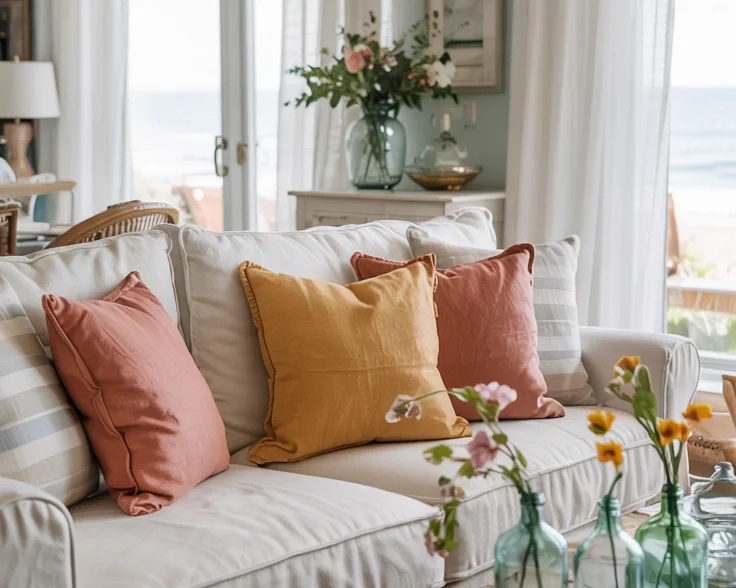
How to Refresh Your Beach Cottage Color Palette for Spring (On a Budget)
Frequently Asked Questions Best Indoor Plants for Coastal Homes
What are the best low-maintenance indoor plants for a beach house?
Pothos, parlor palm, and sea lavender are all excellent choices for beach houses because they tolerate humidity, salt air, and occasional neglect. Pothos in particular is nearly impossible to kill and looks beautiful trailing from a shelf or hanging planter.
Can indoor plants handle the salt air near the coast?
Yes, many can. Salt air is most problematic for plants placed directly in ocean breezes through open windows. Parlor palms, pothos, and rosemary are especially salt-tolerant. For more sensitive varieties like ferns, keep them away from drafty windows and mist their leaves weekly to remove any salt residue.
How often should I water houseplants in a coastal home?
Less often than you might think. Coastal air tends to be more humid than inland environments, which means soil stays moist longer. A good rule of thumb is to check the soil with your finger before watering. If the top inch is still moist, wait another day or two.
What planters work best for coastal home decor?
Look for materials that reinforce the coastal aesthetic: whitewashed terracotta, woven seagrass baskets, rope-wrapped pots, driftwood planters, or clear and blue-tinted glass. Avoid anything too sleek or modern unless your cottage has a contemporary coastal vibe.
Can I use plants from the beach in my indoor arrangements?
You can incorporate natural coastal elements like driftwood, sea glass, and shells into your arrangements. However, be cautious about using plants or grasses collected from protected coastal habitats, as this may be restricted in your area. When in doubt, purchase locally grown coastal varieties from a nursery.