
20 Vintage-Inspired Coastal Kitchen Ideas for a Modern Home
(Updated: 7/6/26)
This post may contain affiliate links. If you make a purchase through one of my links, I may receive a small commission at no cost to you.

You don't need to gut your kitchen down to the studs to get that worn-in, collected-over-time coastal feel.
If you're actually planning a full renovation rather than just adding touches, my 30 small coastal kitchen ideas guide is a better starting point since it walks through layout and renovation decisions this post doesn't cover.
Most of the charm in an old seaside kitchen comes down to a handful of details, warm materials, honest hardware, a little imperfection here and there. Add those into a totally modern layout and you get a kitchen that feels lived-in without feeling like a museum piece.
Now, if you ARE planning a full kitchen renovation, start here instead.
Here are 20 ways to work vintage character into a kitchen you're not renovating from scratch.
Key Takeaways
You can get vintage coastal charm through hardware, lighting, and finishes alone, no gut renovation required
Mixing in one or two standout vintage pieces (a table, a stove, a rug) does more work than changing everything at once
Brass, butcher block, and beadboard are the fastest wins if you're starting small
If you want the full historical decade-by-decade breakdown instead, check out our 20 Vintage Coastal Kitchen Ideas: Seaside Charm from the 1920s to 1940s guide
Structural and Surface Vintage Touches
1. Farmhouse Apron Sink
The farmhouse apron sink is a deep basin with an exposed front panel that sits flush with your cabinetry instead of tucking underneath the counter edge. It was standard in kitchens built before dishwashers were common, since the extra depth made washing large pots and pans easier, and that oversized presence is exactly what reads as vintage today.
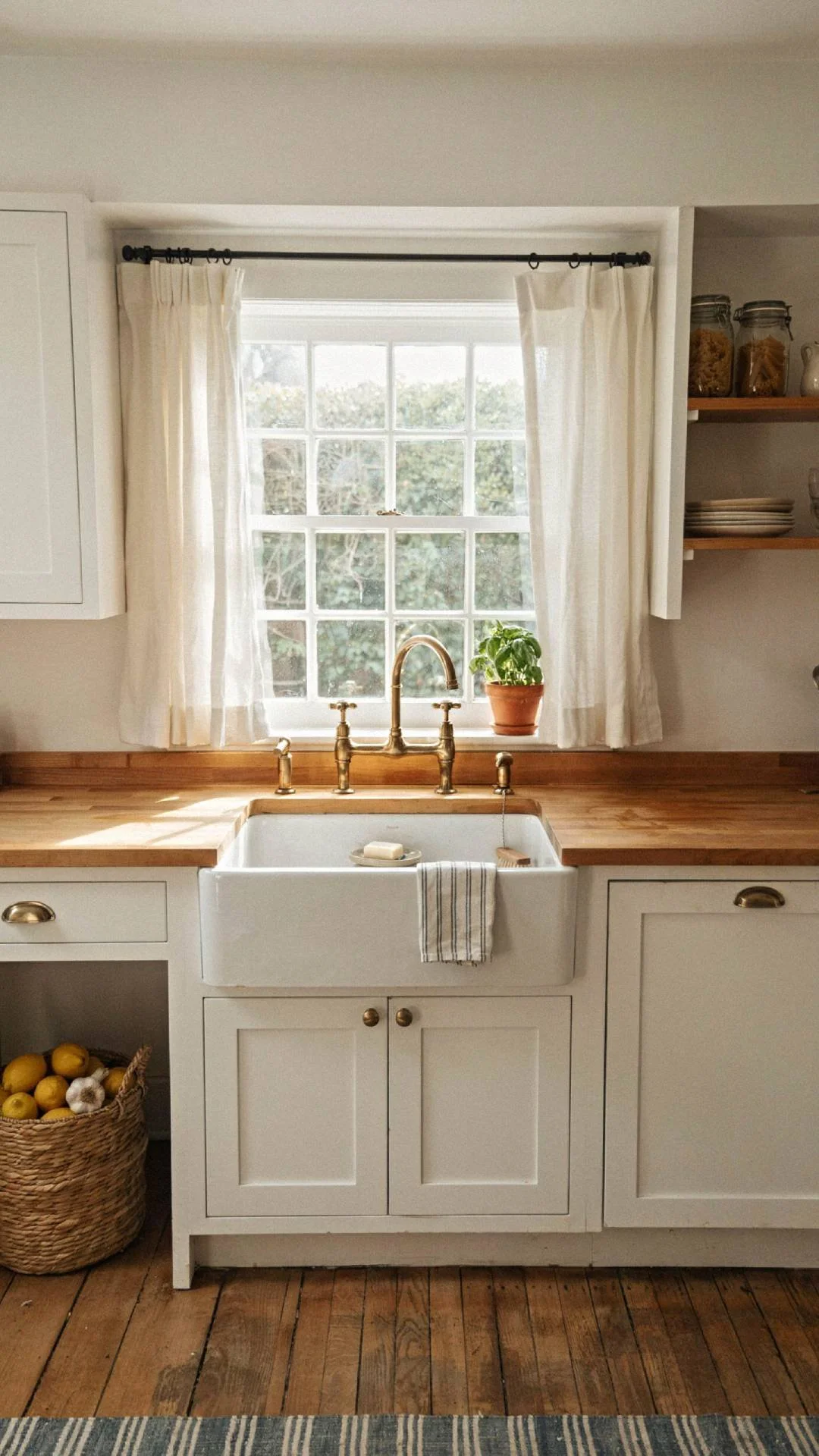
Out of everything on this list, the apron sink is the single fastest way to shift a kitchen from generic modern to vintage coastal. It's a large visual element sitting right at eye level in the main work zone, so it does more heavy lifting than almost any other swap you could make.
How to style it:
Pair it with a bridge faucet in brass or matte black for a cohesive vintage moment
Add a wood cutting board that rests across the basin for extra counter space and texture
Keep a single small vase or dish soap pump nearby rather than cluttering the sink deck
What to buy:
A 30 to 33 inch fireclay or enameled cast iron apron sink in white or soft cream
A matching apron front panel kit if you're retrofitting an existing cabinet base
A wood or marble sink caddy for soap and sponge storage
Small space tip: A 24 inch apron sink fits most standard cabinet runs without requiring you to reconfigure your layout, so even a narrow galley kitchen can work one in without losing counter space elsewhere.
2. Beadboard Paneling
Beadboard is a pattern of narrow vertical wood planks with a small decorative groove between each one, traditionally used on lower walls, cabinet fronts, and ceilings in coastal cottages. It originated as an inexpensive way to add texture and durability to high-traffic areas, and that slightly rustic, handmade look is still what gives a kitchen its cottage feel.
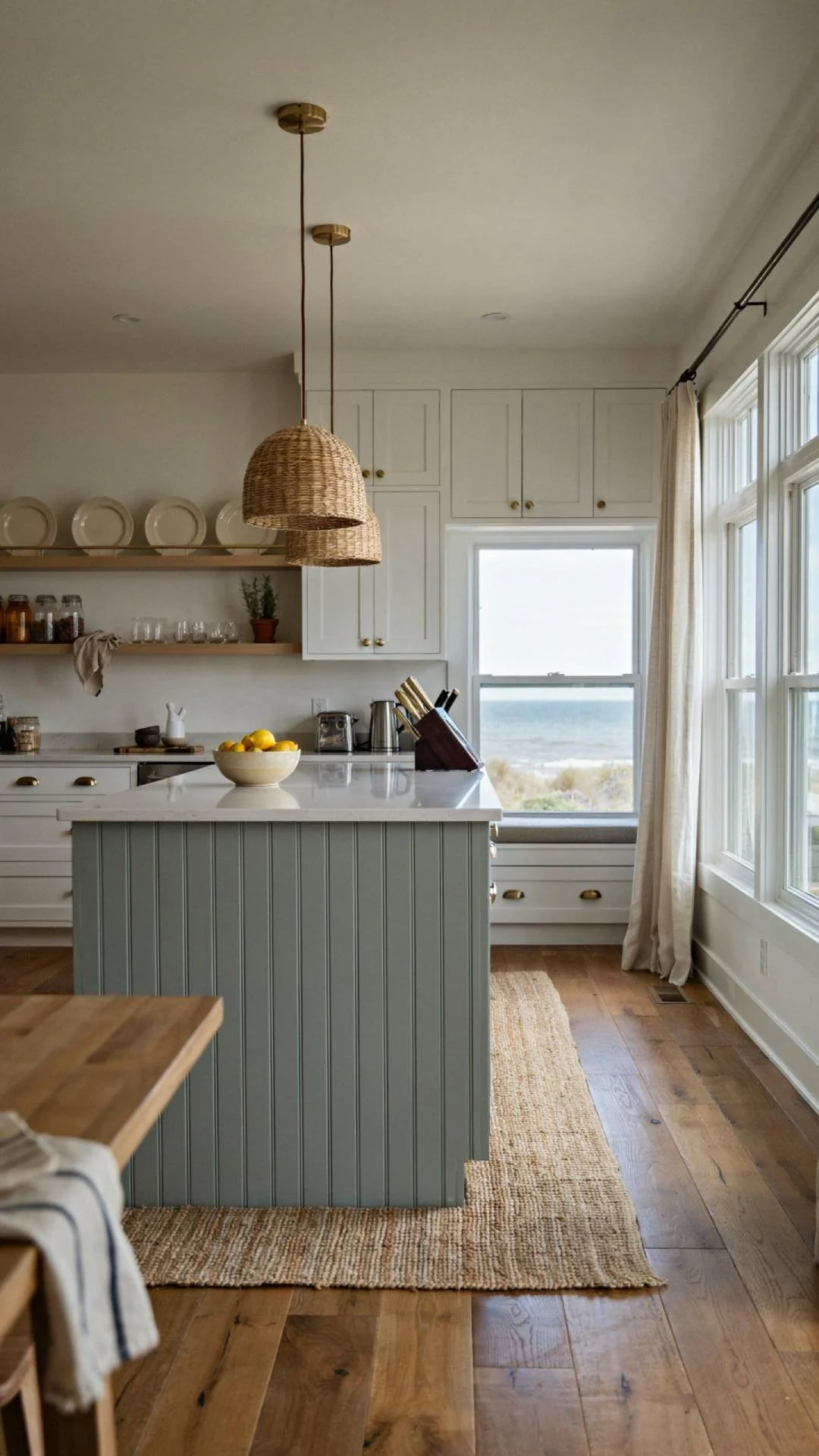
Beadboard is one of the most immediately recognizable cues of an old seaside kitchen, and it adds texture and dimension in a way flat drywall or slab cabinetry never will. It also happens to be one of the more affordable updates on this list relative to the visual impact it delivers.
How to style it:
Paint it a soft white or sage green to keep it from feeling too rustic or heavy
Use it as an accent on just the island base to create a natural focal point
Pair it with simple brass hardware so the paneling stays the star of the piece
What to buy:
Prefabricated beadboard panels sized to your cabinet fronts or accent wall
Cabinet grade paint in a soft coastal tone
Trim molding to finish the edges cleanly where the paneling meets adjacent surfaces
Small space tip: Skip full walls and just panel one accent wall or the island base. It reads just as vintage with far less material and labor, which matters a lot if you're working in a smaller footprint.
3. Butcher Block Countertops
Butcher block countertops are solid wood surfaces, usually maple or walnut, made from strips of wood glued together in a block pattern. They were common in older kitchens before engineered stone became widely available, and they bring a warmth and softness that stone simply can't replicate.
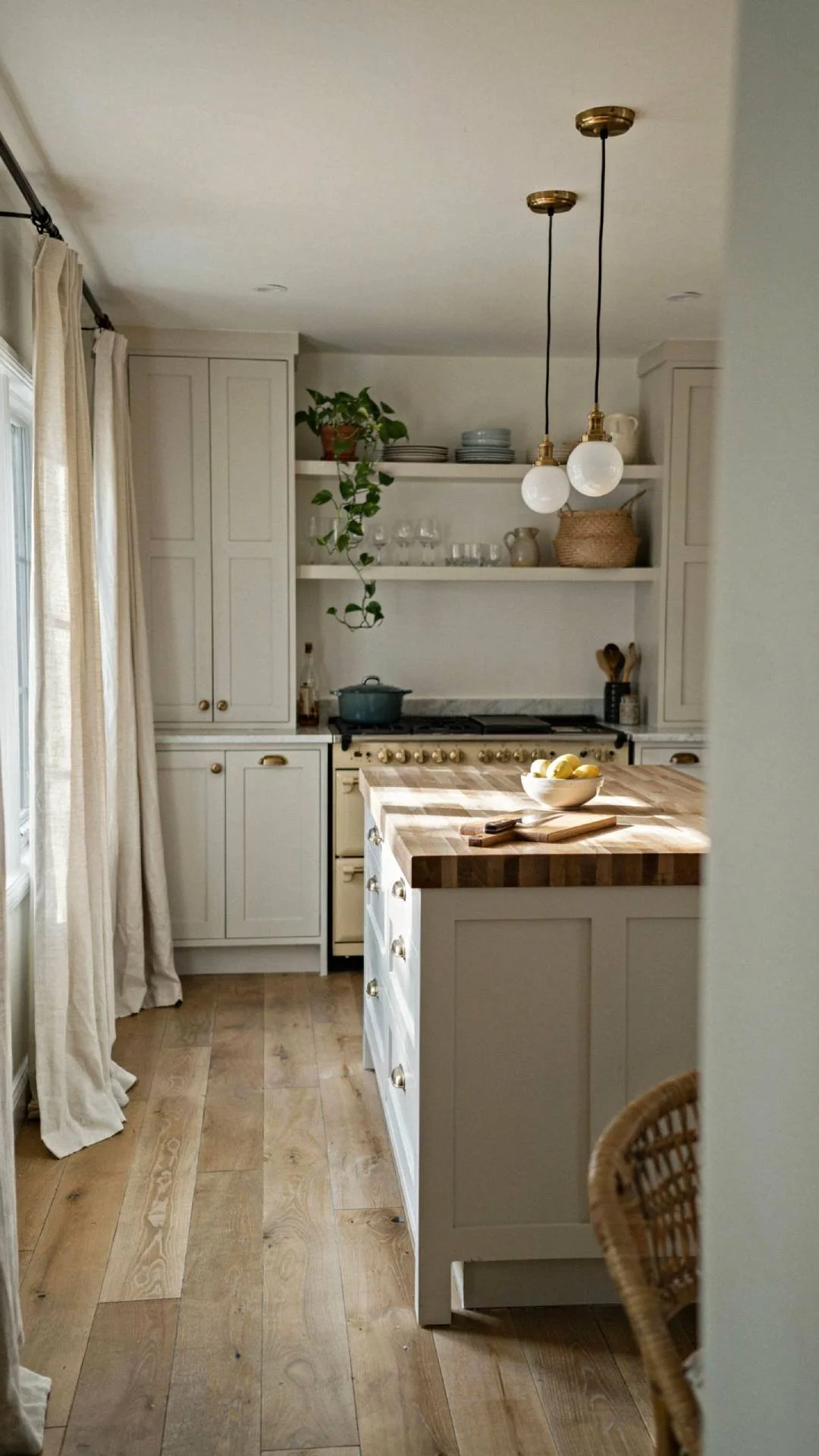
Wood countertops are one of the easiest ways to soften an otherwise modern, hard edged kitchen. Even a small section of butcher block breaks up an all white or all stone kitchen and immediately adds that lived in, collected over time feeling.
How to style it:
Use it just on the island to create contrast against surrounding stone or laminate counters
Seal it regularly with food safe mineral oil to keep the color rich and the surface protected
Let a wood cutting board or ceramic bowl of fruit sit on it to reinforce the warm, organic feel
What to buy:
Maple or walnut butcher block in a thickness that matches your existing counters
Food safe mineral oil or a butcher block conditioning wax for maintenance
Edge banding or trim if you're adding it as an extension over an existing surface
Small space tip: A single butcher block counter extension over an existing surface, like an island cap or a small peninsula, adds the look without requiring a full countertop swap throughout the kitchen.
4. Checkerboard or Subway Tile Backsplash
This covers two classic vintage tile treatments, black and white checkerboard flooring or walls, and simple white subway tile with a contrasting grout line. Both were extremely common in kitchens from the early to mid 1900s and have stuck around because they're timeless rather than trend driven.
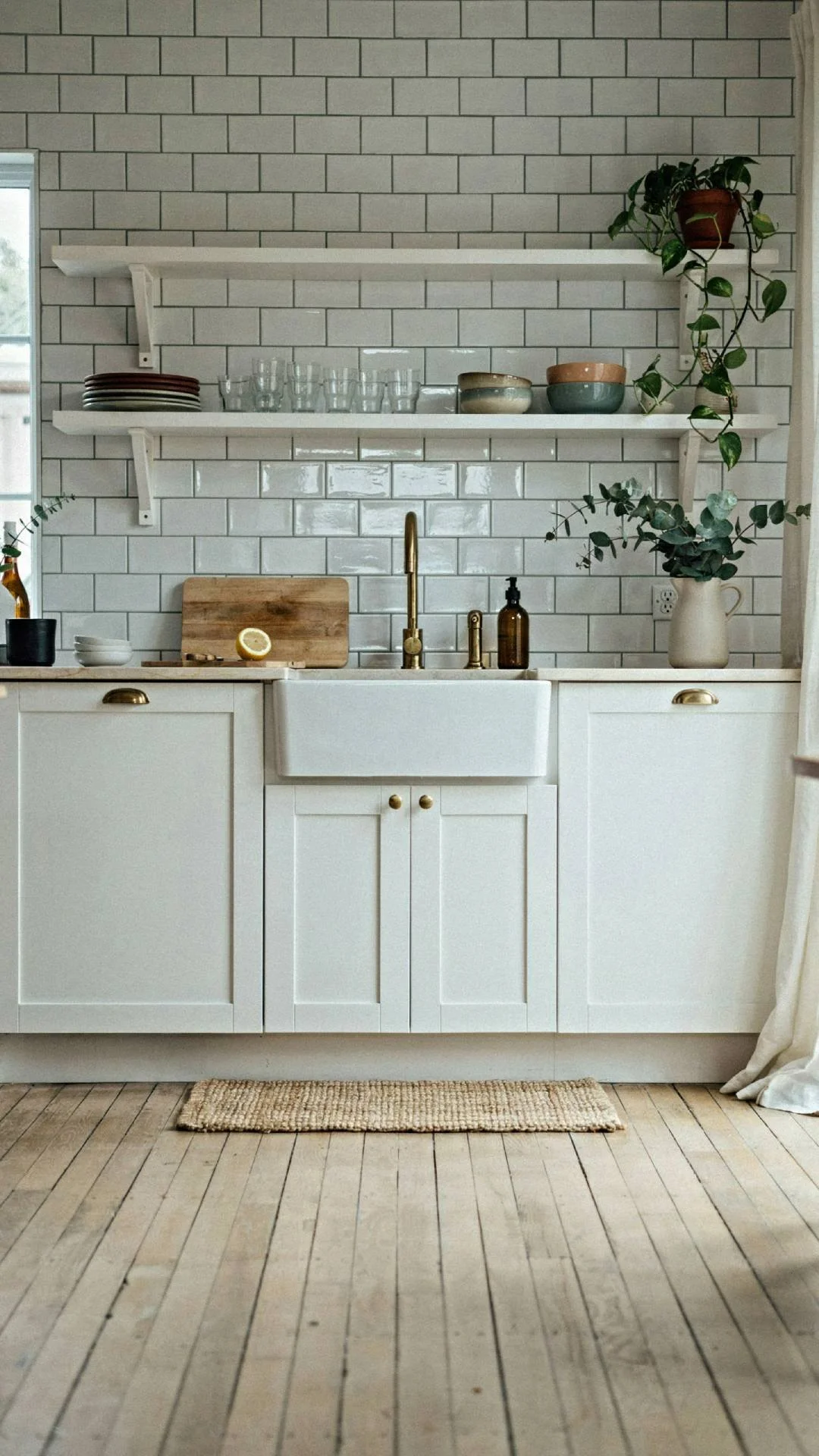
Tile is one of the most affordable updates on this list relative to how much visual character it adds, and it works as a backdrop for everything else in the kitchen rather than competing with it.
How to style it:
Run subway tile up to the ceiling behind open shelving instead of stopping at standard backsplash height
Use a dark grout with white tile for definition rather than a flush, seamless look
Keep the checkerboard pattern contained to one wall or the floor rather than mixing it into multiple surfaces
What to buy:
Ceramic subway tile in a soft white finish
Contrasting grout in charcoal or black
Black and white checkerboard tile if you're tackling the floor instead of the backsplash
Small space tip: Stick to the stove wall only if a full kitchen retile isn't in the budget. A single accent wall of tile still reads as intentional and vintage without the cost of redoing the whole room.
5. Vintage-Look Hex Tile Flooring
Hex tile is a small hexagonal tile shape, most often seen in white with a black accent pattern, that was standard flooring in kitchens and bathrooms through the early and mid 1900s. The small scale of the tile and the graphic pattern it creates underfoot is instantly recognizable as an old house detail.
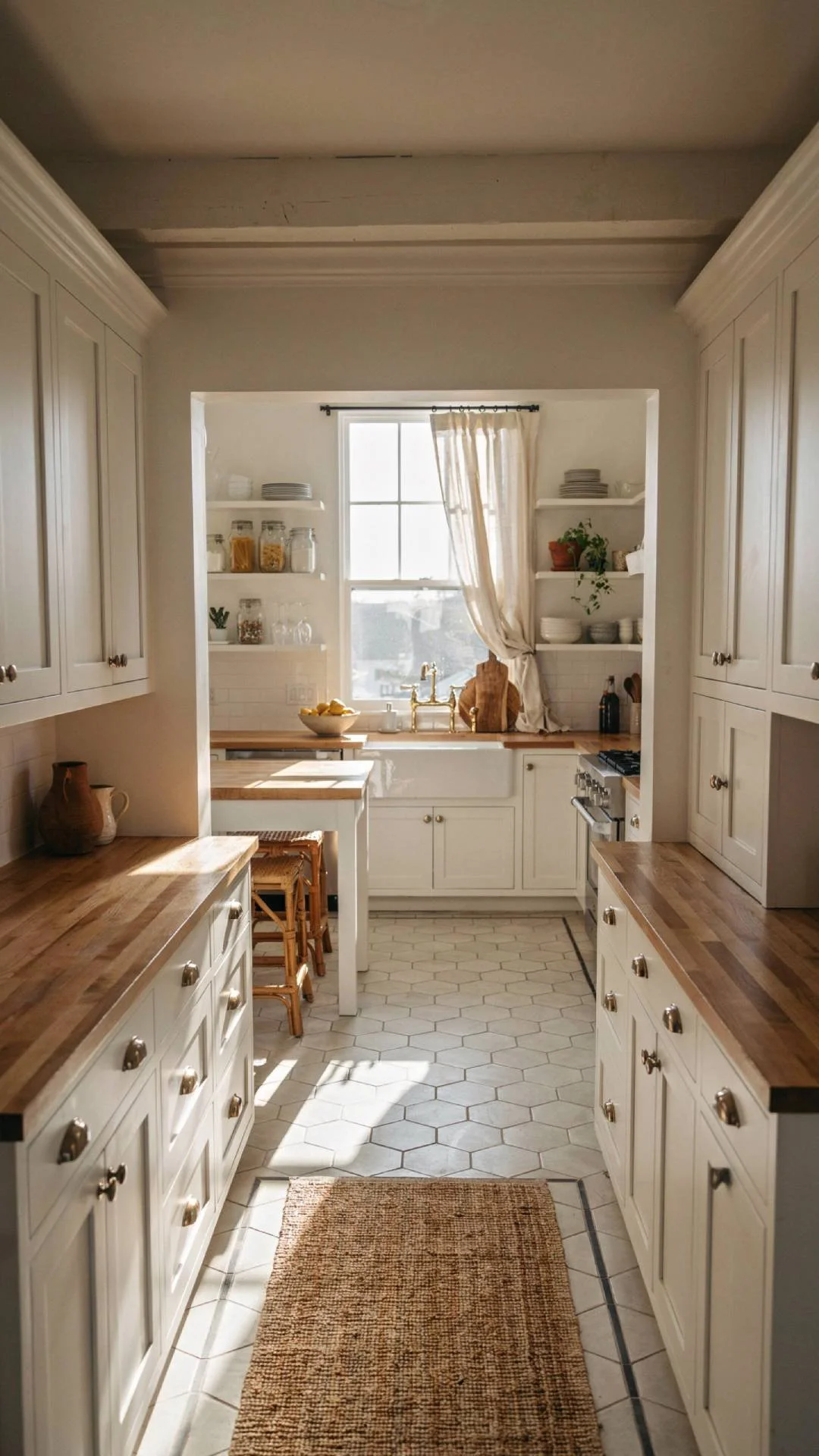
Flooring sets the tone for an entire room before you even look up, and hex tile reads as vintage the moment someone walks in, even if every other surface in the kitchen is brand new.
How to style it:
Add a black hex border a few tiles in from the wall for a subtle vintage pattern
Pair it with white cabinetry so the floor pattern stays the visual focus
Keep grout in a classic white or light gray rather than a stark black for an authentic look
What to buy:
Porcelain hex tile in a matte finish for durability underfoot
Contrasting black hex tile for a border pattern
Tile grout in a light neutral tone
Small space tip: Use it just at a kitchen entry or in front of the sink as a runner style accent instead of tiling the whole floor. It's a much smaller material investment while still delivering the vintage effect.
Storage and Display Pieces
6. Open Shelving with Vintage Dishware
Open shelving replaces upper cabinets with simple wall mounted shelves, turning everyday dishware into a display rather than something hidden behind cabinet doors. It was a practical choice in older homes with smaller kitchens, since open shelves took up less visual weight than bulky cabinetry.

Open shelving turns dishes you already use into decor, which is really the heart of that collected over time look. It also breaks up a wall of solid cabinetry and adds warmth and personality that closed storage can't.
If you want more general coastal kitchen inspiration beyond just the vintage angle, my 34 dreamy coastal kitchen ideas roundup is a good next stop.
How to style it:
Stack plates vertically instead of flat to add height and visual interest
Mix in a small plant, pitcher, or bud vase for texture between stacks of dishware
Group by color family, like all blue and white pieces together, rather than mixing everything randomly
What to buy:
Simple wood or wrought iron shelf brackets
A mix of ironstone, milk glass, or blue and white transferware
A small trailing plant like pothos to soften the display
Small space tip: Two shelves flanking a window does the job without committing your whole upper cabinet run, which keeps enough closed storage available for everyday clutter.
7. Glass-Front Cabinets
Glass front cabinets swap solid wood upper cabinet doors for glass panes, giving you the display benefit of open shelving while still keeping dust and grease off your dishware. They were a popular middle ground in older kitchens for people who wanted the display look without fully open storage.
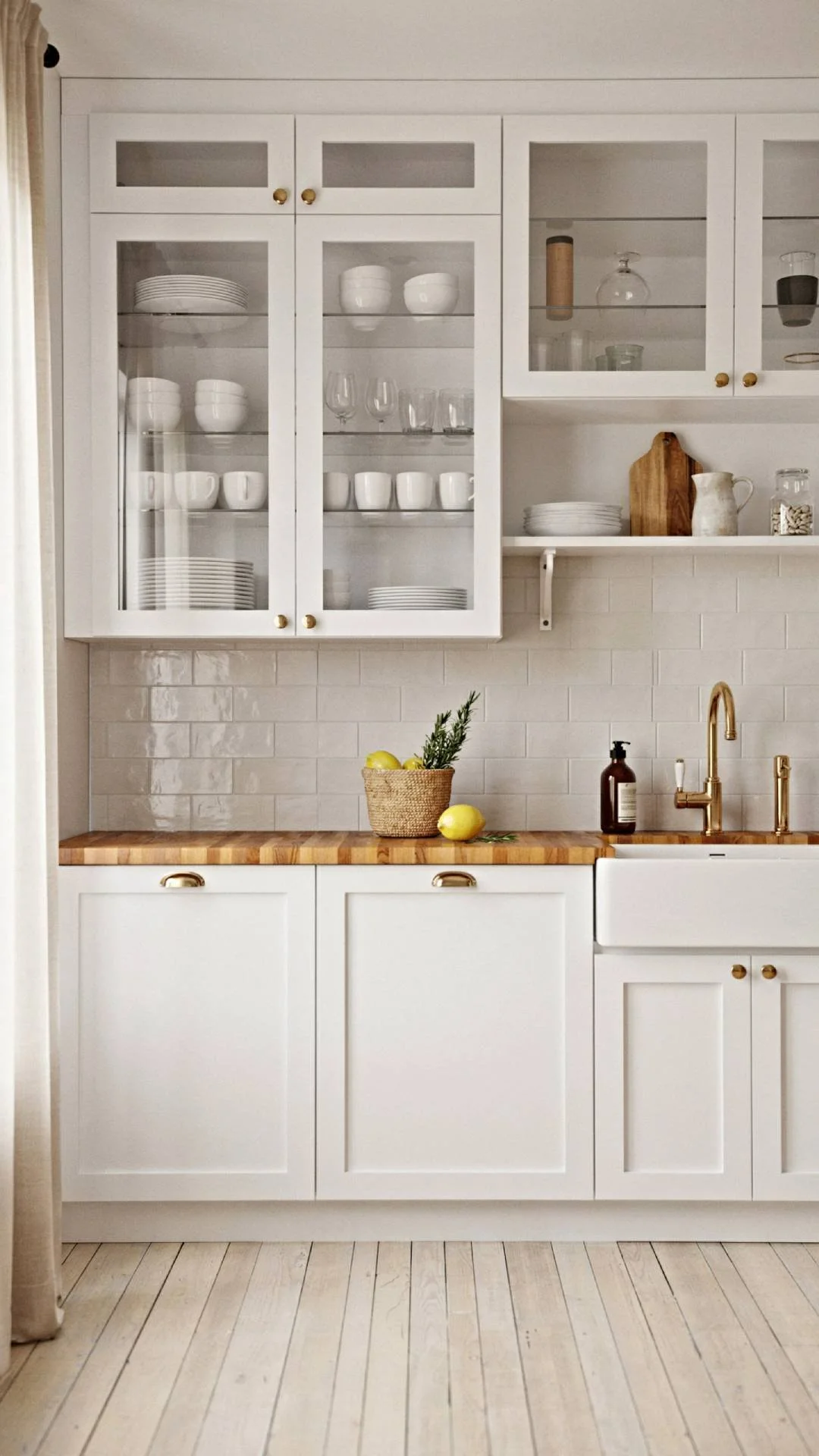
They give you that vintage display quality while still offering a bit more protection and a slightly more polished look than fully open shelves, which makes them a good option if you're not ready to commit to open storage.
How to style it:
Keep what's inside simple and uncluttered so the glass doesn't look busy from across the room
Add a small interior light if your cabinets allow it, for a soft glow at night
Use consistent dishware colors inside so the display feels curated rather than random
What to buy:
A glass front cabinet insert kit for existing cabinet doors
Frosted or seeded glass panes if you want a softer, more vintage look than clear glass
Small LED puck lights for interior cabinet lighting
Small space tip: Convert just the end cabinets near a window for a partial version of the look, which lets natural light hit the glass and highlight what's inside.
8. Vintage Enamelware and Glass Jar Storage
This swaps plastic pantry containers for enamelware canisters, pitchers, and clear glass jars, materials that were the default before plastic became cheap and widely available. The mix of solid color enamel and clear glass adds visual variety that a shelf of matching plastic bins never will.
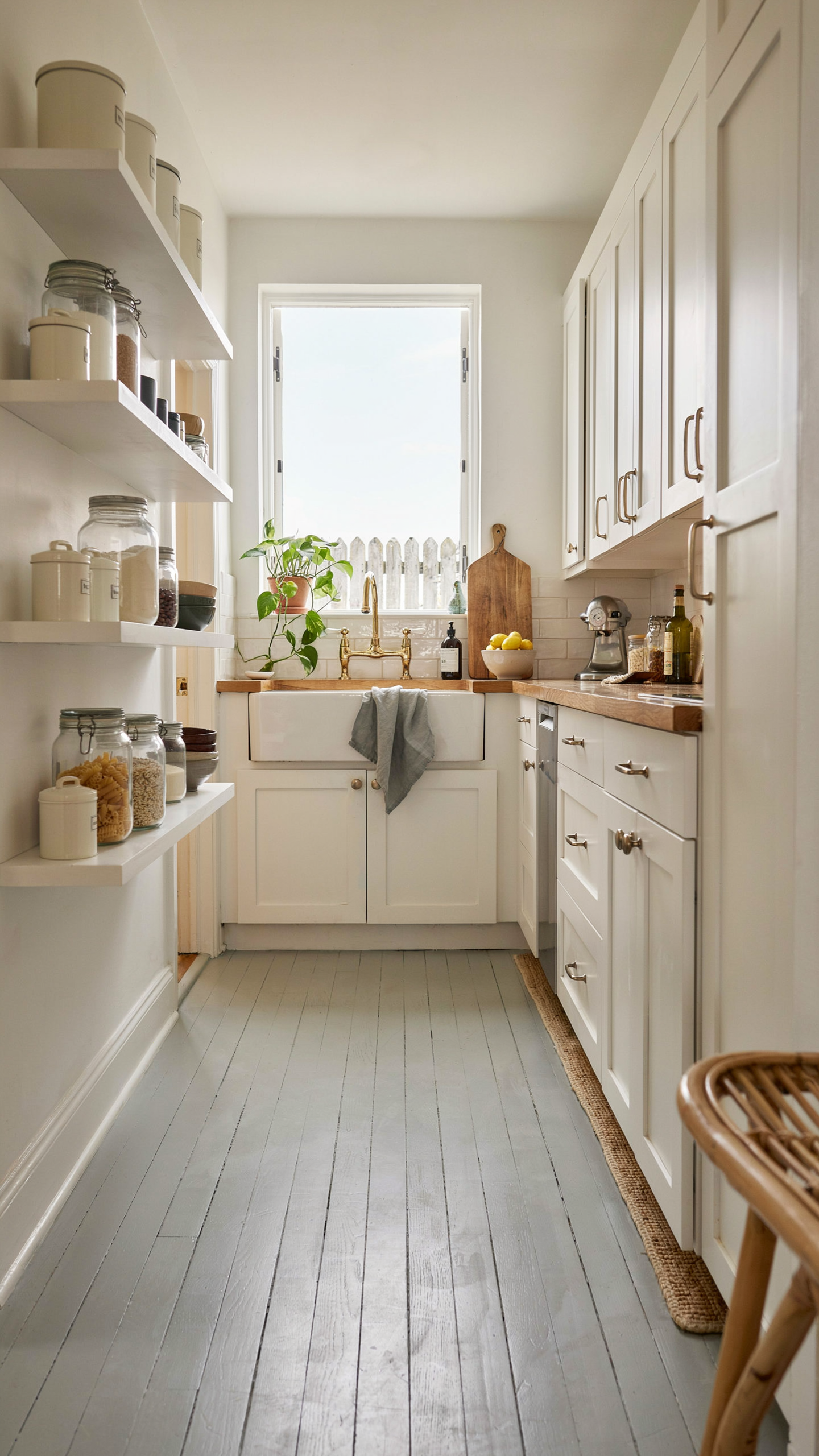
Swapping plastic for enamelware and glass is a small, low effort change with an outsized visual payoff, since it touches something you interact with daily, your pantry staples, rather than a fixture you barely notice.
How to style it:
Label jars simply with a small handwritten or printed tag rather than anything overly designed
Group jars by size on open shelving or the counter for a cohesive look
Use a mix of enamelware and glass rather than committing to just one material
What to buy:
Vintage or reproduction enamelware in cream or soft blue
Clear glass jars with cork or metal lids in a few different sizes
Small chalkboard or paper tags for labeling
Small space tip: A single shelf of jars near the coffee station does more visual work than scattering them throughout the kitchen, so you don't need to fully convert your pantry to get the effect.
9. Vintage Bread Box and Canister Sets
A freestanding bread box paired with a matching canister set for flour, sugar, and coffee was a kitchen staple before built in pantries and airtight plastic storage took over. These pieces sat out on the counter by design, meant to be both used daily and seen.
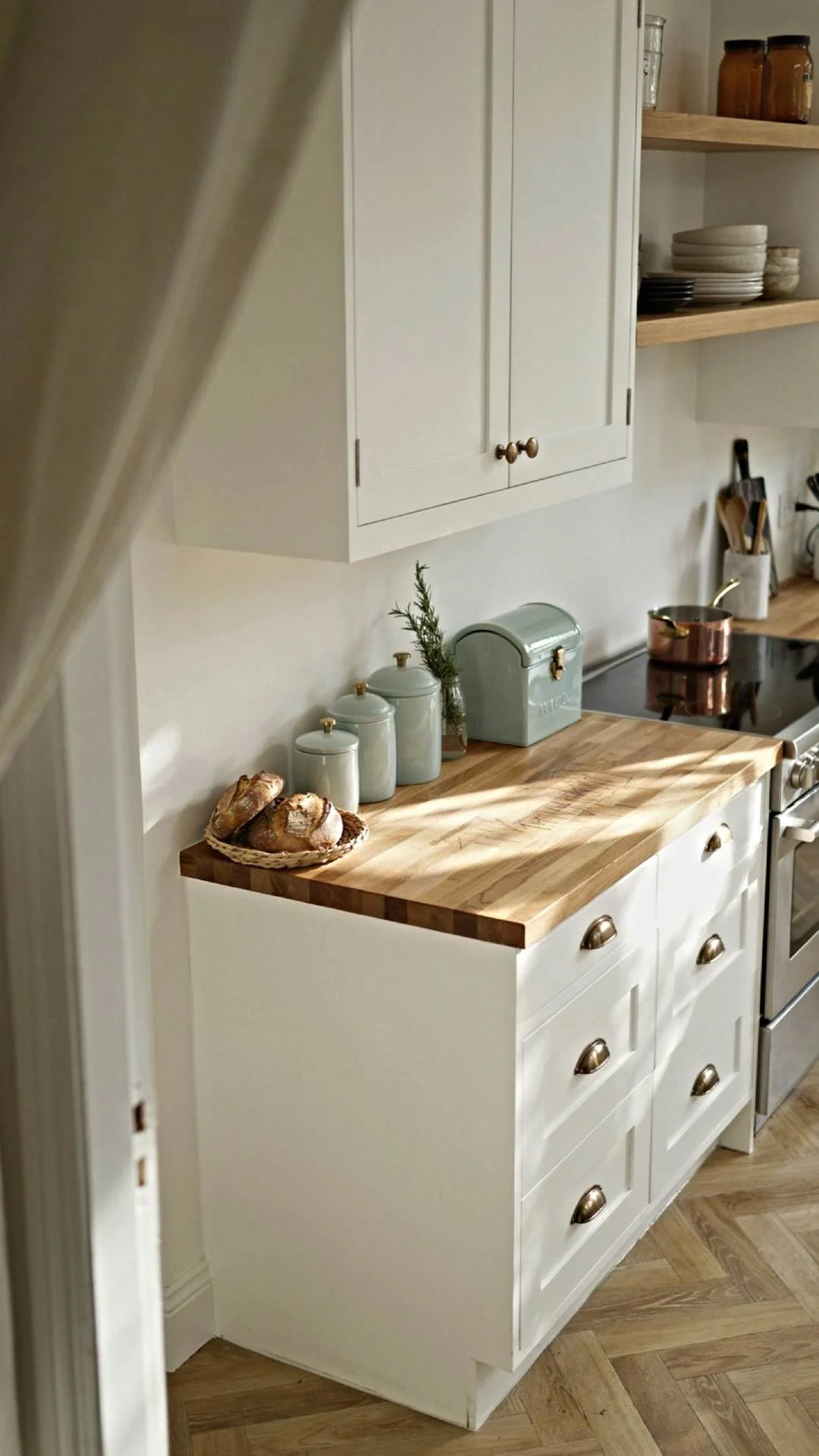
These are functional storage pieces that double as decor, so you're not sacrificing counter space for something purely decorative. They earn their spot on the counter by actually being useful.
How to style it:
Keep them on the counter near the stove where they'd naturally get used
Match the canister set finish to your cabinet hardware for a cohesive look
Leave a little breathing room around them rather than crowding them with other countertop items
What to buy:
A reproduction enamel bread box in a soft pastel color
A matching ceramic canister set for flour, sugar, and coffee
A small wood tray to corral them together as a single vignette
Small space tip: A bread box on top of the fridge frees up counter space while still keeping the vintage look intact, which is a good option if your counters are already tight on room.
10. Salvaged Wood Shelving
Salvaged wood shelving uses reclaimed or intentionally distressed wood instead of new stained lumber, carrying visible marks, grain variation, and wear that new wood simply doesn't have. That imperfection is exactly what makes it feel authentic rather than manufactured.
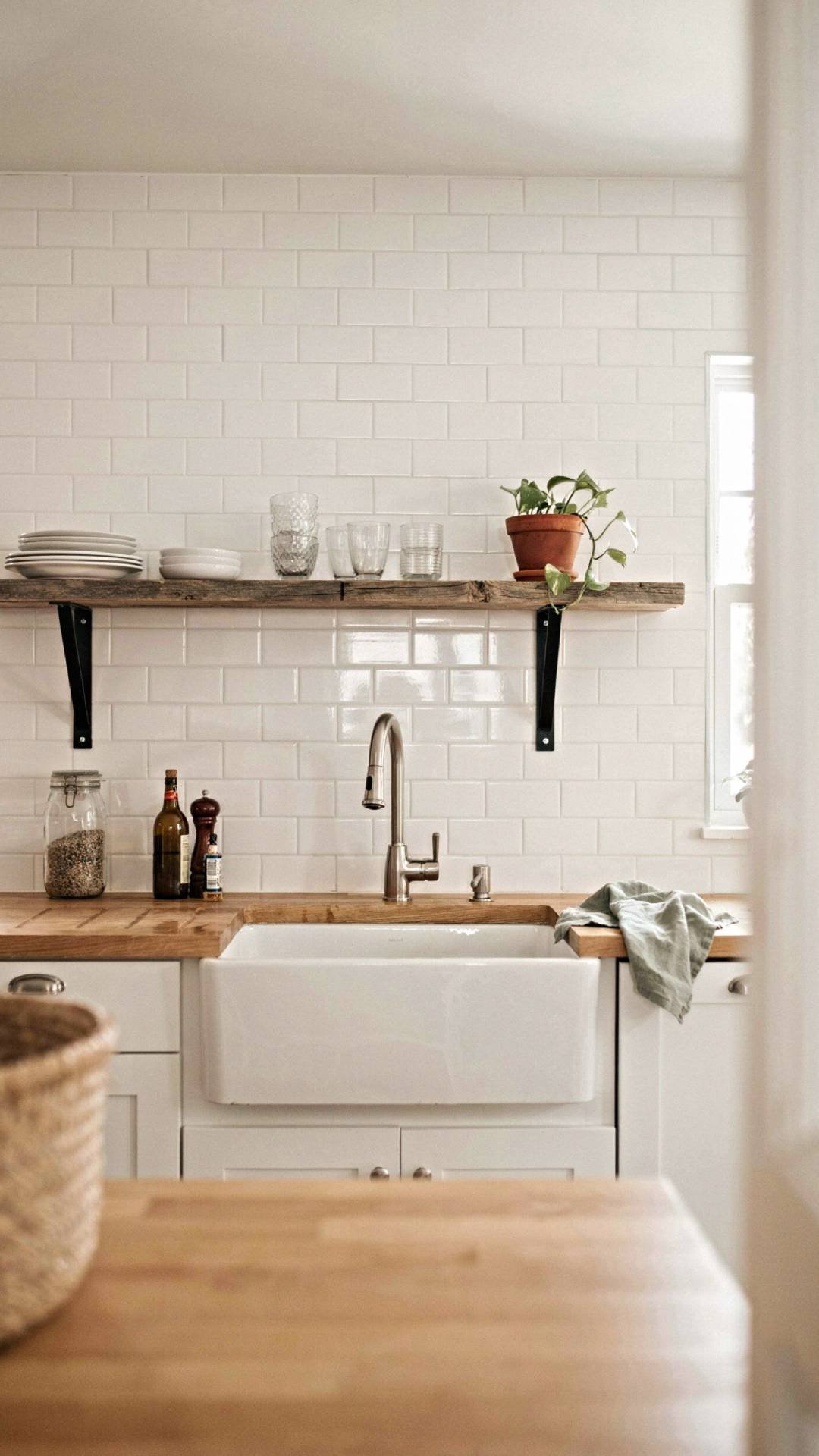
Reclaimed wood adds a worn in texture that new materials can't fake, no matter how good the stain job is. It's one of the few details on this list that genuinely can't be replicated with anything new.
How to style it:
Pair with black iron brackets for contrast against the warm wood tone
Leave the wood partially unfinished so the texture and grain stay visible
Style sparingly, a shelf with two or three items feels more intentional than one that's overloaded
What to buy:
Reclaimed scaffold boards or a distressed wood shelf kit from a home goods store
Black iron shelf brackets
A protective wax or oil finish that won't hide the wood's natural texture
Small space tip: One floating shelf above the sink is enough to introduce the material into the room without needing a full wall of shelving.
Lighting and Fixtures
11. Vintage-Style Pendant Lighting
This includes schoolhouse globe pendants, milk glass fixtures, and exposed bulb designs, all common lighting styles from the early to mid 1900s that have made a strong comeback. The rounded glass shapes and warm bulb glow are distinct from the sharp, minimal lighting common in newer builds.
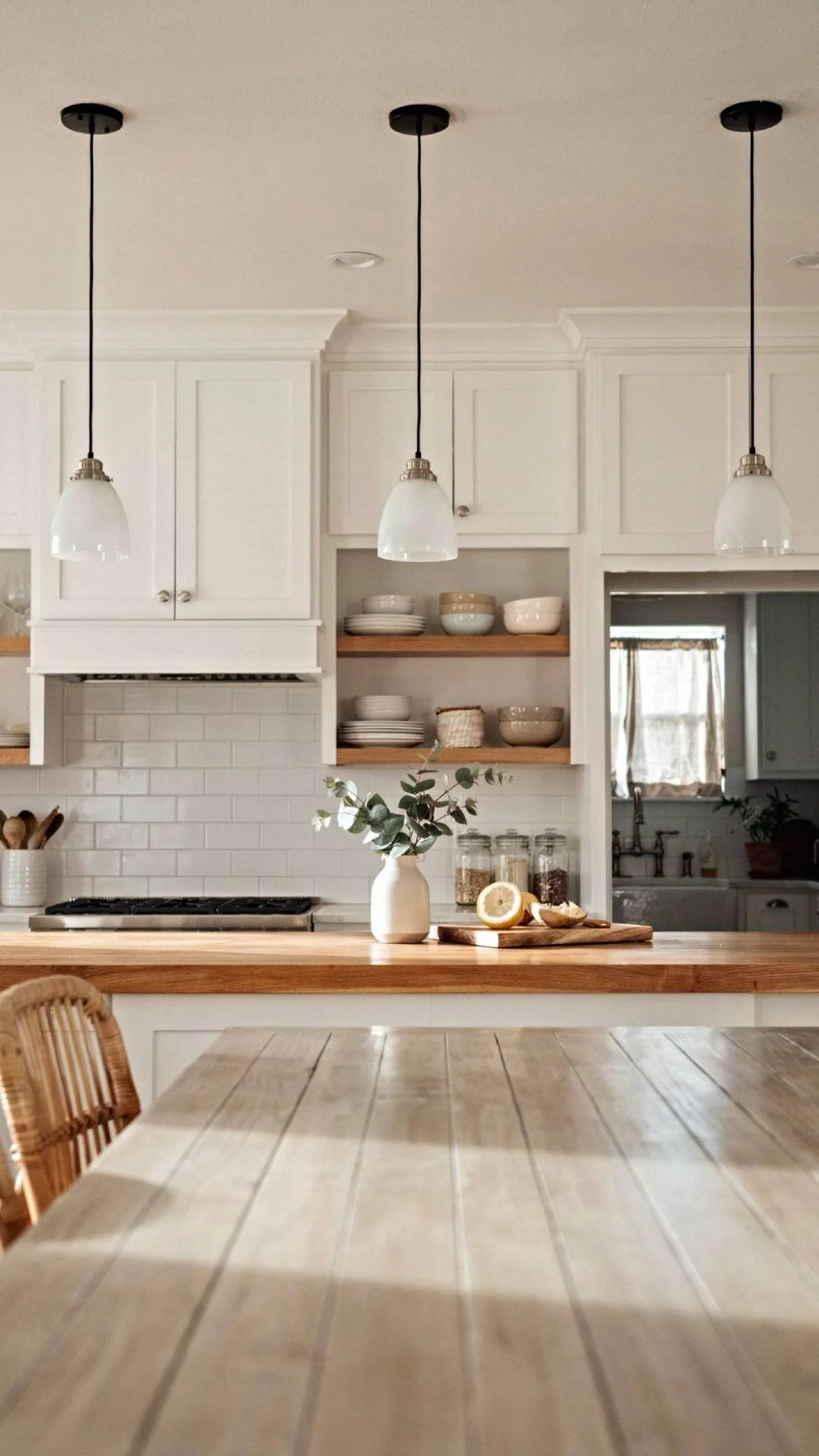
Lighting is one of the first things people notice when they walk into a room, and vintage style fixtures are a relatively easy and affordable swap that changes the entire feel of the space, even if nothing else in the kitchen changes.
How to style it:
Hang two or three pendants in a row over an island rather than relying on one large fixture
Choose a brass or black finish depending on your other hardware to keep the look cohesive
Use a warm toned bulb rather than a cool white bulb to keep the vintage glow authentic
What to buy:
Milk glass schoolhouse pendants in a brass or black finish
Warm white Edison style bulbs
A matching ceiling canopy kit if your existing wiring setup needs an update
Small space tip: A single pendant over the sink is enough if you don't have an island to anchor multiple fixtures, and it still delivers the same vintage effect in a smaller footprint.
12. Unlacquered Brass Hardware
Unlacquered brass hardware, meaning cabinet pulls, knobs, and faucets without a protective clear coat, is designed to develop a natural patina and slight darkening over time as it's touched and used. That living finish is different from lacquered brass, which stays shiny and uniform indefinitely.
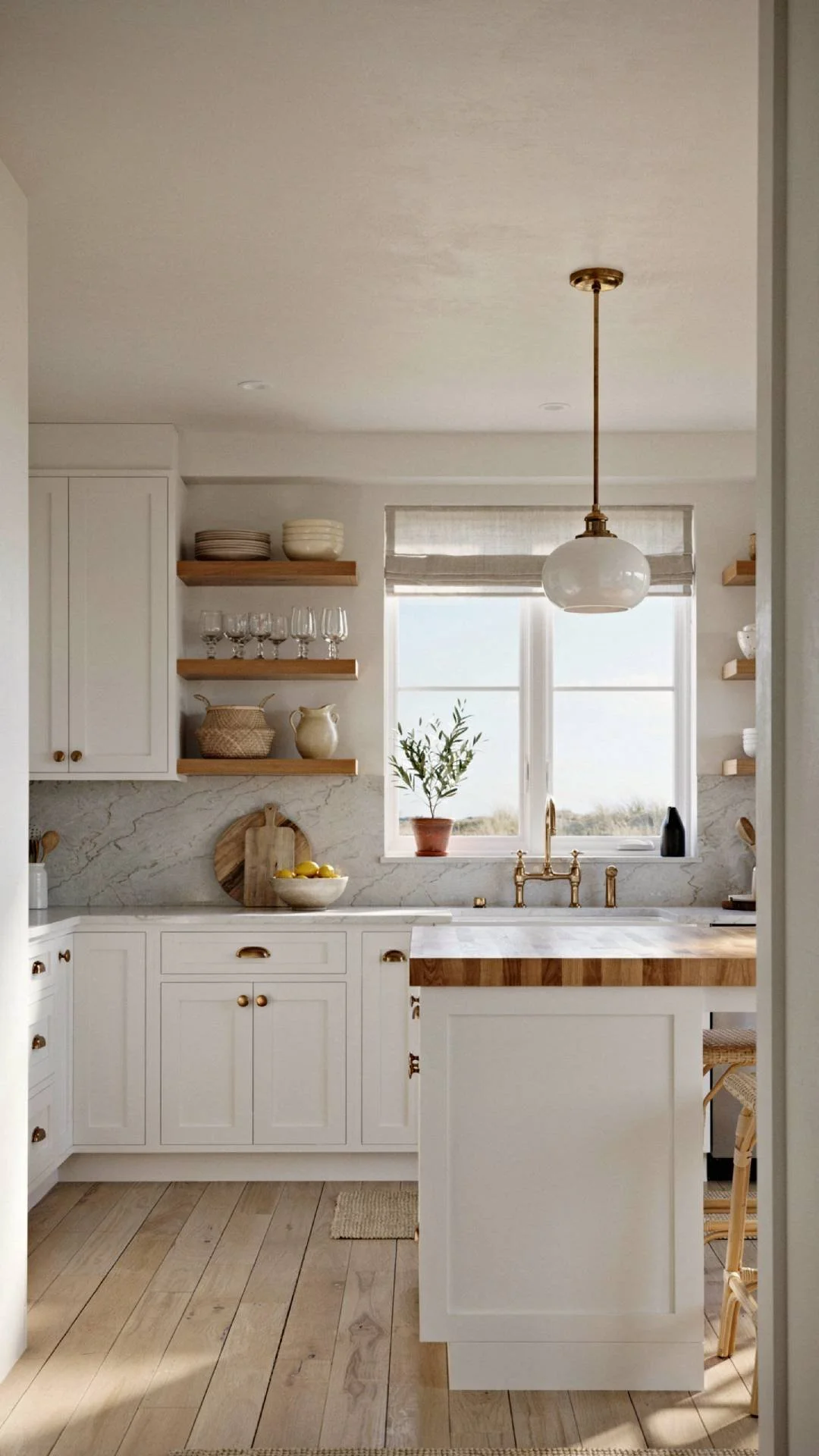
Hardware is a small detail that touches every single cabinet in the room, so it has an outsized effect relative to its cost. It's also one of the cheapest updates on this entire list.
How to style it:
Mix knobs on upper cabinets with longer pulls on lower drawers for variety
Let the brass age naturally rather than polishing it, since the patina is the point
Keep the finish consistent across the whole kitchen rather than mixing brass with chrome or nickel
What to buy:
Unlacquered brass cabinet knobs for upper cabinets
Matching unlacquered brass cup or bar pulls for drawers
A brass cabinet hinge set if your cabinet style shows the hinges
Small space tip: Swapping just the hardware on an existing cabinet run is one of the cheapest and fastest updates on this list, and it works in any size kitchen since it doesn't require any construction.
13. Bridge-Style Faucet
A bridge faucet has two separate handles connected by an exposed horizontal bridge above the sink deck, a design that was standard before single lever faucets became the norm. The exposed plumbing look is part of its vintage charm.
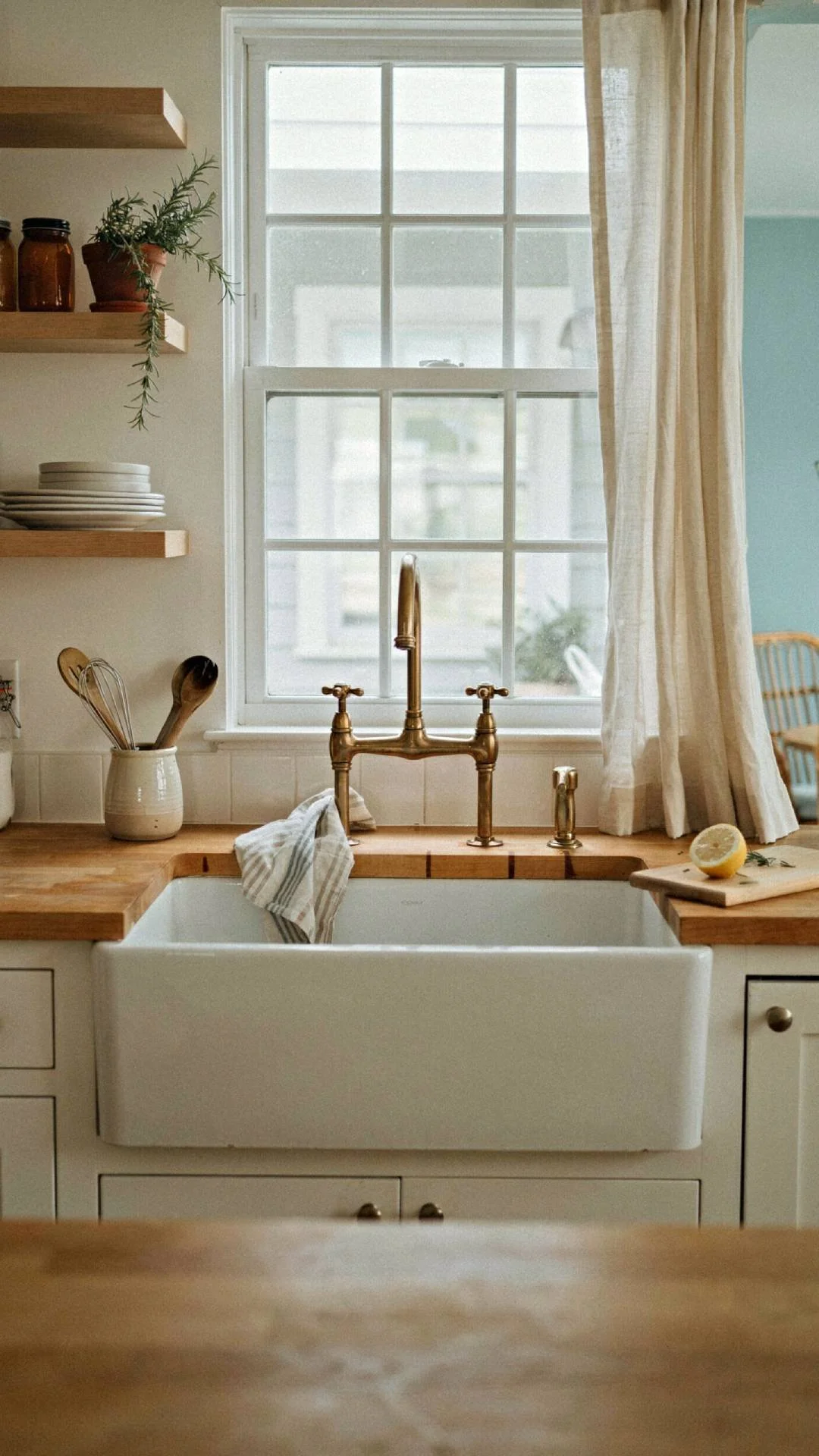
It's a small fixture, but it makes a big visual statement right at the sink, which is one of the most looked at spots in the kitchen. Pairing it with an apron sink creates a strong, cohesive focal point.
How to style it:
Pair it with your apron sink for a cohesive vintage moment at the sink
Choose a finish that matches your cabinet hardware, like unlacquered brass or matte black
Add a small gooseneck spout style if you want extra clearance for filling large pots
What to buy:
A bridge faucet in unlacquered brass or matte black
A matching soap dispenser in the same finish
Supply lines rated for your specific sink configuration
Small space tip: Bridge faucets fit standard sink configurations without needing extra counter space, so they work just as well in a compact kitchen as a larger one.
14. Reproduction Range or Vintage-Look Stove
A reproduction range is a fully modern appliance built to mimic the rounded corners, chunky knobs, and overall silhouette of an old fashioned stove. You get current cooking technology inside a shape that reads as decades old.
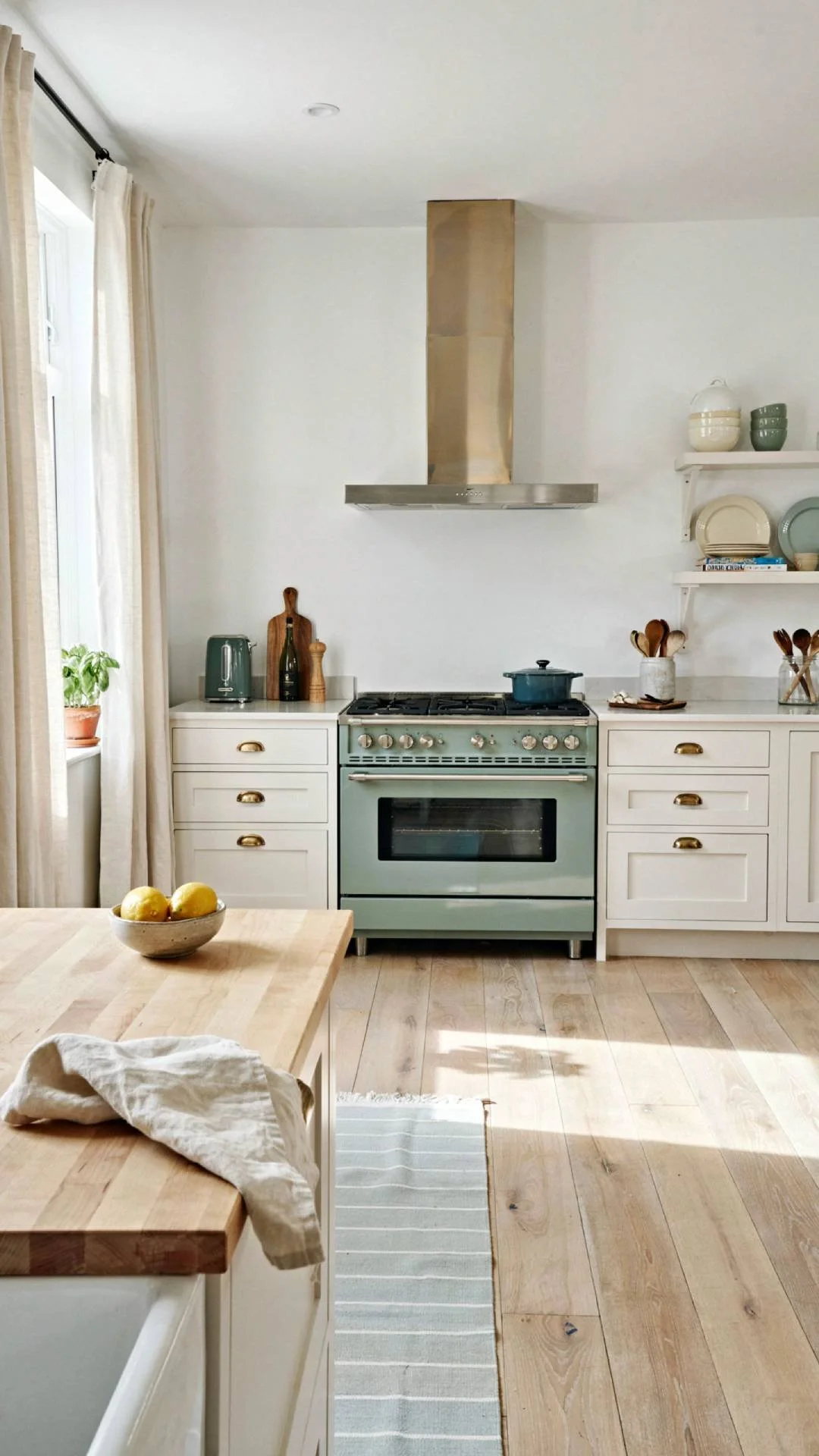
The stove is often the visual anchor of a kitchen simply because of its size and central location, so a vintage look range does more heavy lifting toward the overall feel than almost any other single appliance choice.
How to style it:
Let the range be the star and keep surrounding decor and shelving simple
Choose a soft color like sage or cream instead of stainless to lean further into the vintage look
Add a simple range hood in a matching finish rather than a sleek modern one
What to buy:
A retro style range in a soft color finish
A matching range hood or vent cover
Brass or black control knobs if your model offers finish options
Small space tip: A slide in range in a standard 30 inch width fits most existing cutouts, so you can usually make this swap without any layout changes.
15. Cafe Curtains
Cafe curtains are short curtains that cover just the lower half of a window, a style that gave older kitchens privacy at counter height while still letting light pour in through the top of the window. They're a small detail but an instantly recognizable one.
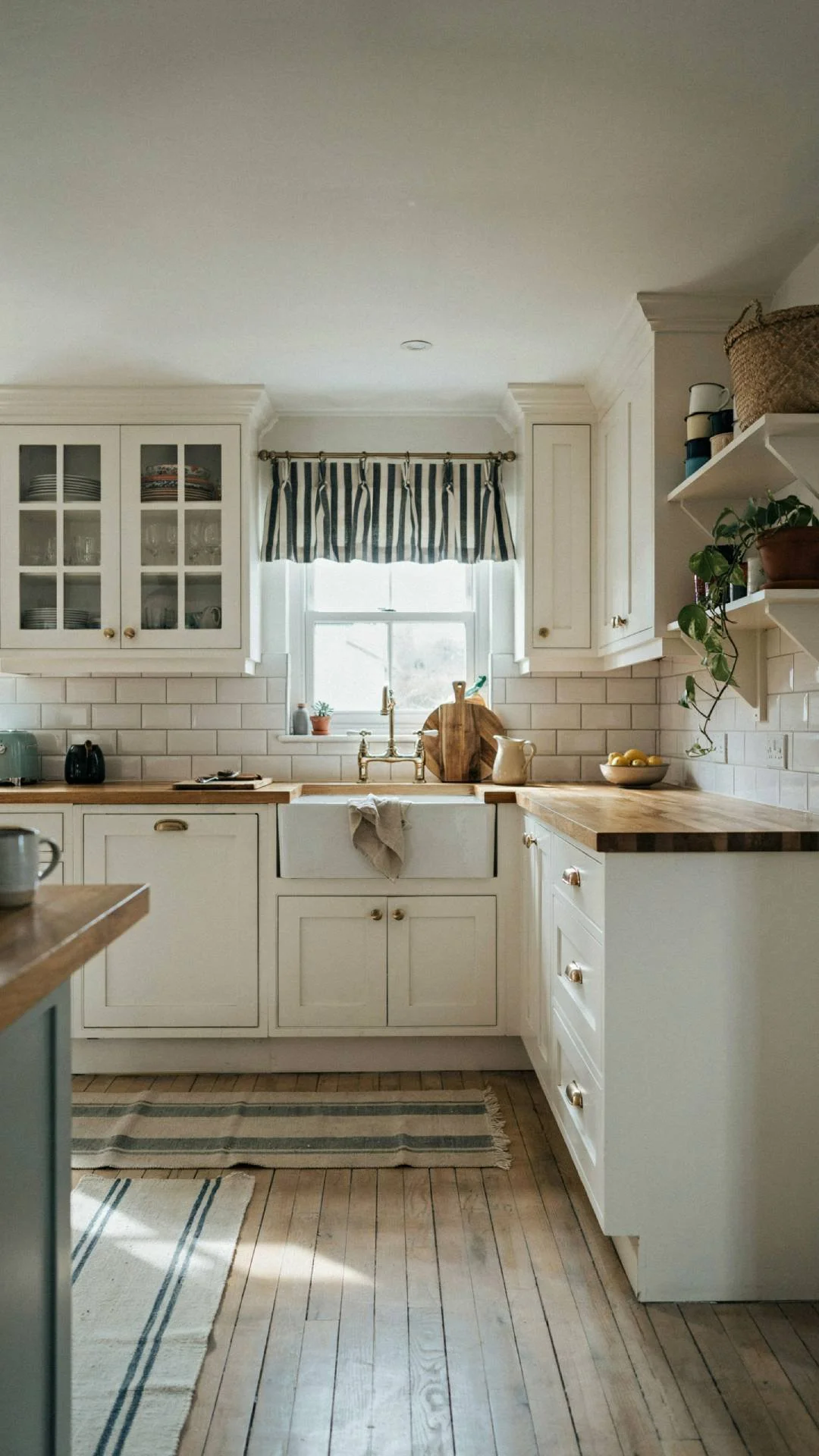
Cafe curtains are an inexpensive detail that reads as old fashioned charm almost immediately, and they solve a real problem, privacy at the sink, without blocking natural light the way a full length curtain would.
How to style it:
Hang on a slim brass rod positioned at the window's midpoint
Choose a simple stripe or gingham pattern rather than anything busy or heavily patterned
Keep the fabric lightweight so it moves easily and doesn't feel heavy against the window
What to buy:
A lightweight cotton or linen cafe curtain in a stripe or gingham print
A slim brass curtain rod sized to your window width
Curtain clips or a simple rod pocket panel depending on your preferred hanging style
Small space tip: They work especially well over a sink window where a full length curtain would get in the way of daily use, making them one of the more practical choices on this list.
Finishing Touches and Character Pieces
16. Painted Cabinetry in a Soft Vintage Hue
This means painting cabinets in a muted, historically inspired color, like dusty blue, sage green, or butter yellow, instead of the stark white or natural wood finishes common in newer builds. These softer tones were far more common in kitchens before white cabinetry became the default choice.
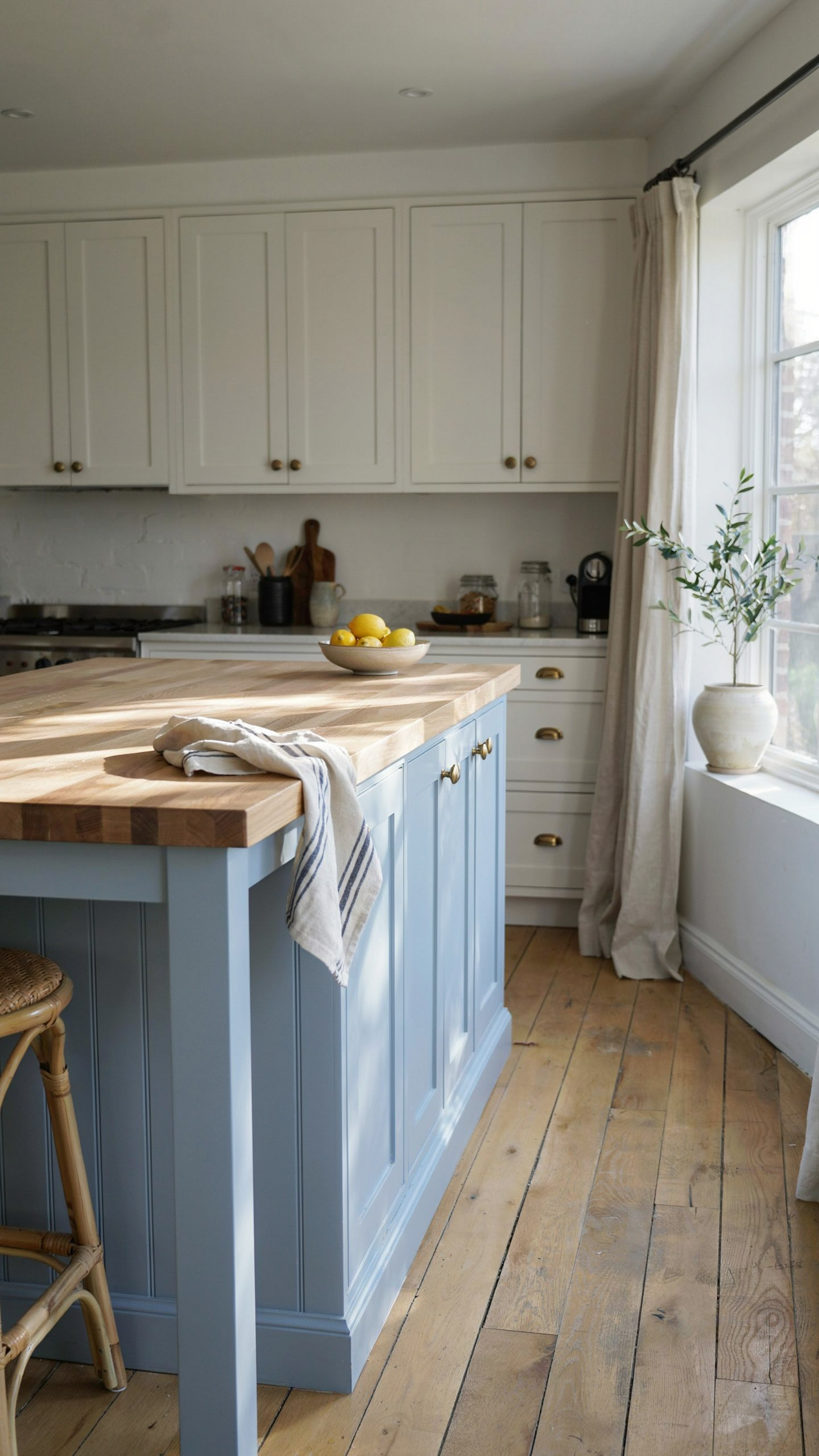
Color is one of the strongest signals separating a vintage inspired kitchen from a plain modern one, and it's a change that affects the entire room rather than a single detail.
If you love the idea of cottage colors but want help striking the right balance for a coastal home, I go deeper into that in my post on blending English cottage style into a coastal kitchen.
How to style it:
Paint just the lower cabinets or the island and keep uppers white to avoid overwhelming the room
Pair the color with brass or black hardware rather than chrome for a more grounded look
Test the color in your actual kitchen lighting before committing, since these muted tones can shift depending on light exposure
What to buy:
Cabinet grade paint in dusty blue, sage green, or soft butter yellow
A bonding primer suited to your existing cabinet material
New hardware in a finish that complements the new color
Small space tip: Painting only the island contains the color to one spot while still making a real impact, which is a good approach if you're not ready to commit to a full cabinet repaint.
17. Wood Plank Ceiling
A wood plank ceiling uses tongue and groove wood boards installed overhead instead of standard drywall, a detail that was common in coastal cottages partly for its look and partly because it was a practical, affordable building material in older seaside homes.
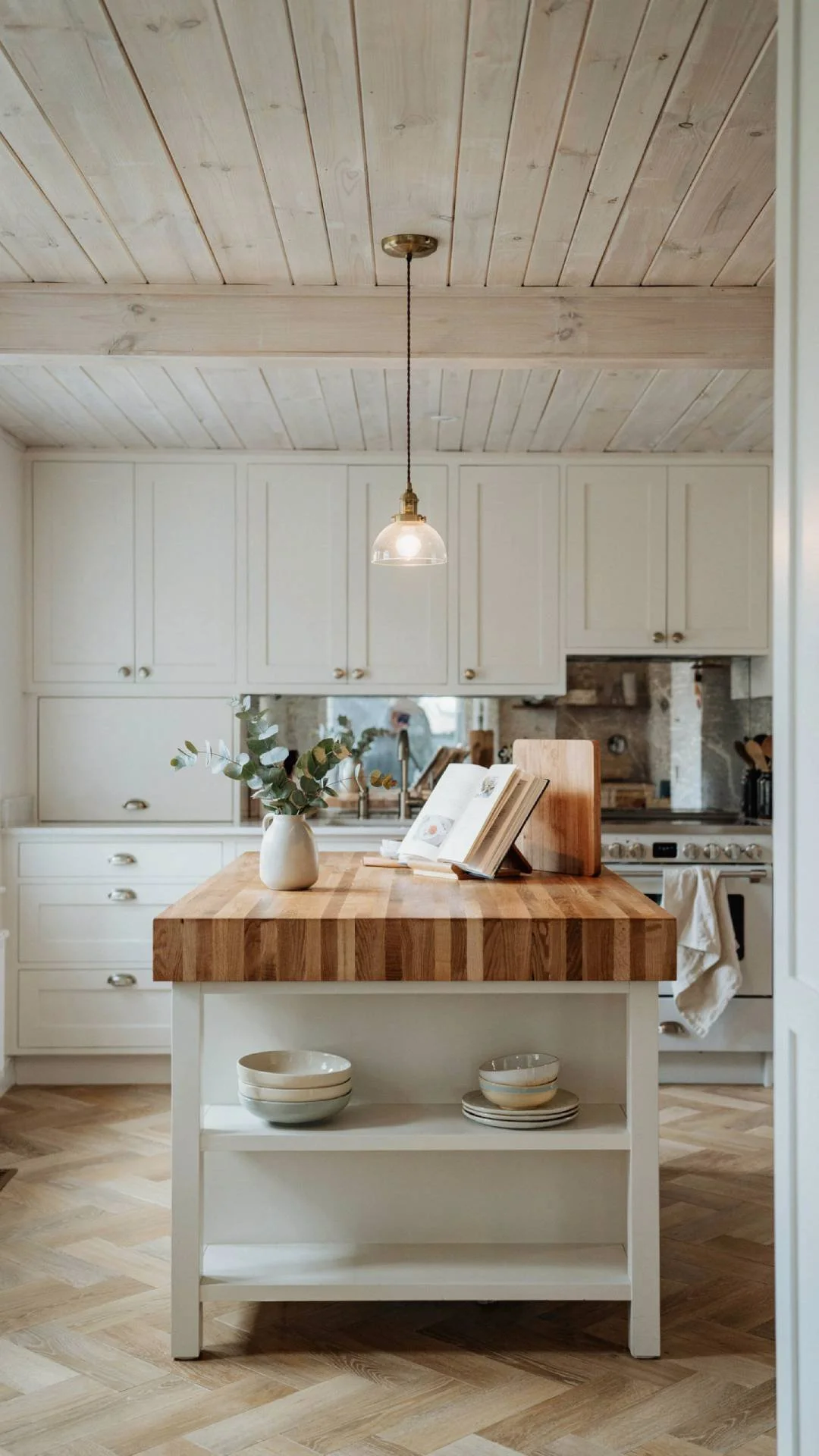
It's an unexpected architectural detail that most modern kitchens simply don't have, and it adds a layer of character that's hard to achieve with paint or hardware alone.
How to style it:
Pair with a simple pendant fixture so the ceiling stays the visual focal point
Leave the wood natural or apply a light whitewash rather than a heavy stain for a coastal feel
Keep the rest of the room relatively simple so the ceiling doesn't compete with too many other bold details
What to buy:
Pine tongue and groove ceiling planks
A whitewash stain or clear sealant depending on your preferred finish
Trim molding to finish the edges where the planks meet the walls
Small space tip: A planked ceiling actually helps a small kitchen feel taller by drawing the eye upward, so it's a detail that works in your favor even in a tighter room.
18. Woven Vintage Rug or Runner
This is a flat weave or braided rug in a faded, worn in pattern, placed in the main work zones like in front of the sink or stove. These rugs were common in older kitchens both for comfort underfoot and to add pattern to an otherwise utilitarian room.
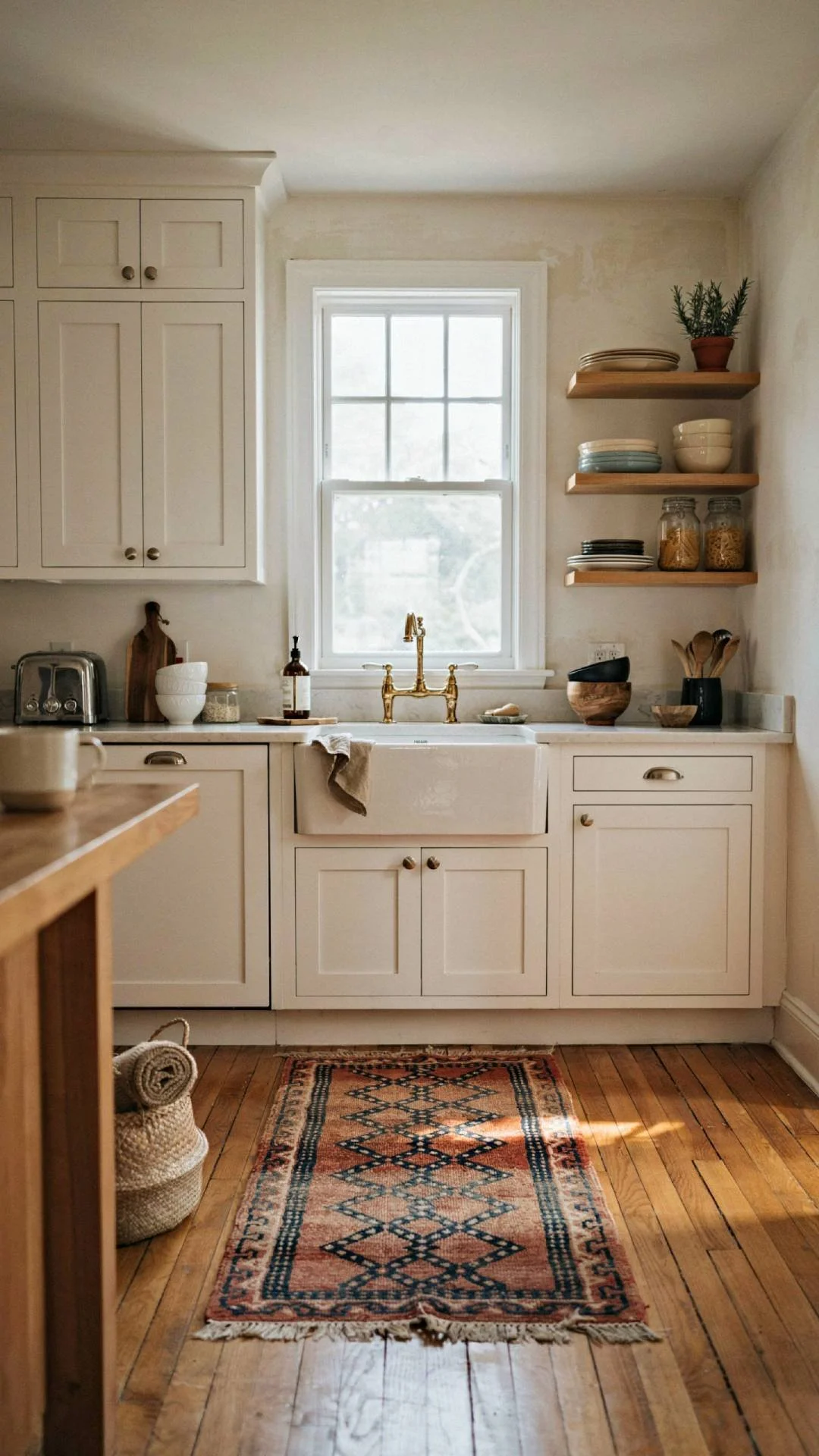
A worn in rug does a lot of work to make a brand new kitchen feel collected and lived in rather than freshly built, and it adds softness and pattern in a room that's often dominated by hard surfaces.
How to style it:
Layer it over hard flooring in the main work zone for softness underfoot
Choose muted, faded tones rather than a bold new looking pattern for an authentic feel
Size it to fit just the work zone rather than covering the entire kitchen floor
What to buy:
A vintage look Turkish or braided runner in muted terracotta or blue tones
A non slip rug pad sized to fit underneath
A machine washable option if it's going in a high traffic spot like in front of the sink
Small space tip: A runner in front of just the sink adds the look without cluttering a tight floor plan, which makes it one of the easiest additions on this list for a smaller kitchen.
19. Antique Table for a Breakfast Nook
This swaps a built in banquette or a matching modern dining set for a vintage or antique style wood table, often paired with mismatched chairs collected over time rather than purchased as a set. It's a piece with real history rather than something manufactured to look aged.
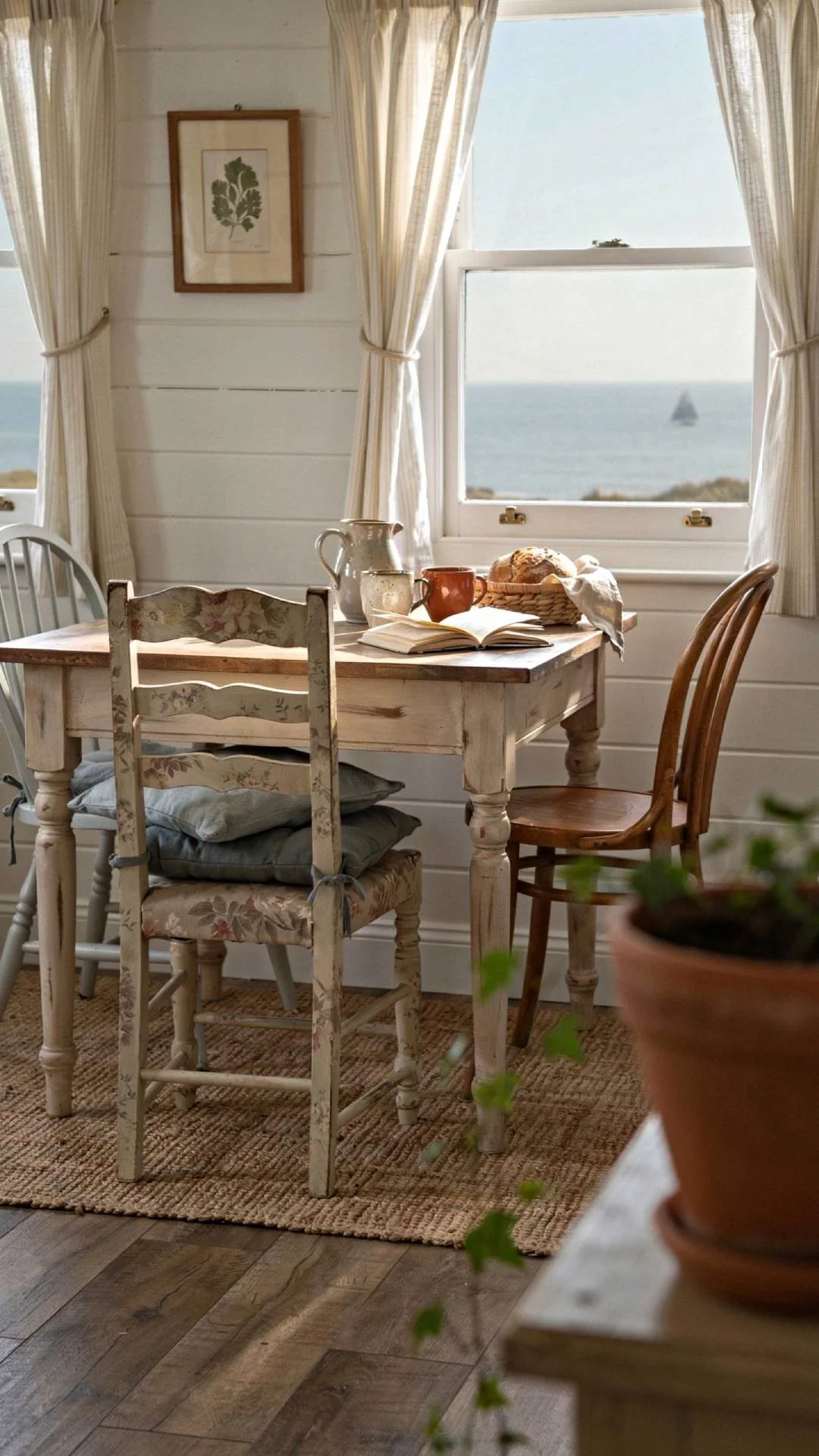
A single antique furniture piece does more to age a room than almost any finish choice you could make, since it brings actual history and imperfection into the space rather than a manufactured approximation of it.
How to style it:
Pair mismatched vintage chairs around it instead of a matching dining set
Add a simple linen runner or a small vase of flowers to soften the tabletop
Let any wear, scratches, or unevenness in the wood show rather than trying to refinish it away
What to buy:
A secondhand farmhouse table or a reproduction turned leg table in a warm wood tone
Two or three mismatched vintage or secondhand chairs
A linen table runner in a soft neutral tone
Small space tip: A drop leaf table is ideal for a nook since it can expand only when needed and fold back down to free up floor space the rest of the time.
20. Vintage Scale or Kitchen Collectibles as Decor
This covers old kitchen tools repurposed purely as decor rather than function, things like a balance scale, enamel measuring cups, or vintage tins found at a flea market or secondhand shop. These pieces were once everyday tools, and displaying them now brings a sense of real history into the room.
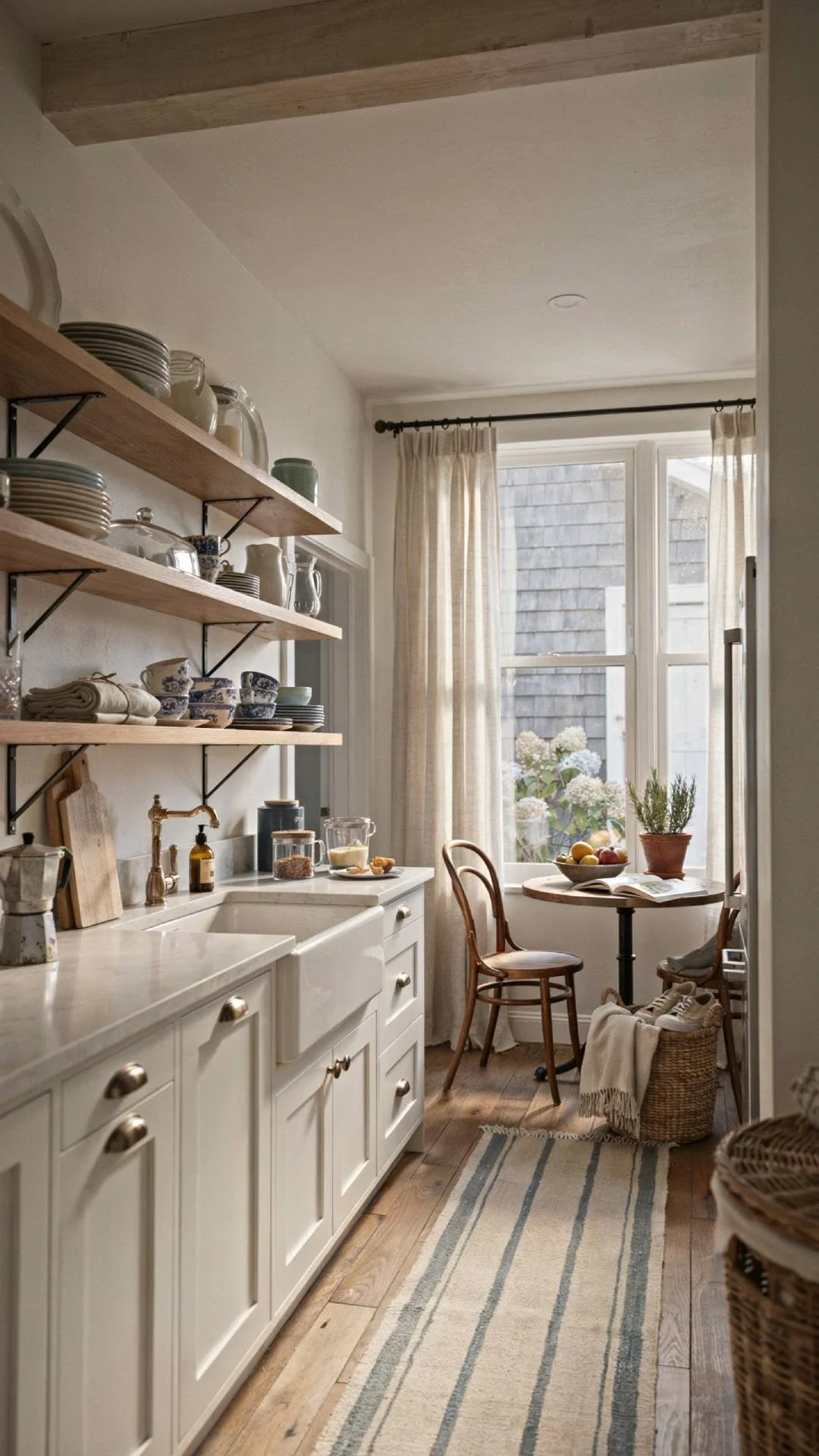
These small personal touches are what make a kitchen feel like it has history, even when it doesn't, and they're often the pieces that make a space feel genuinely yours rather than styled from a catalog.
How to style it:
Group two or three pieces together rather than scattering single items around the room
Mix materials, like metal and ceramic, rather than displaying all one type of object
Rotate pieces occasionally so the display doesn't feel static over time
What to buy:
A secondhand kitchen scale from a flea market or antique shop
A small collection of vintage tins or enamelware pieces
A small wood tray or cutting board to group the collection on
Small space tip: One collectible displayed on open shelving adds character without taking up any counter space, which makes it an easy addition regardless of your kitchen's size.
Get Started This Weekend
You don't need to tackle all 20 of these at once.
Pick one weekend and start with the two changes that make the biggest difference for the least effort: swap your cabinet hardware to unlacquered brass, and add a vintage-style pendant light over your sink or island.
Once those are in, take a look at your open shelving situation, even converting one upper cabinet to open shelves and styling it with a few pieces of ironstone or milk glass will change how the whole room feels.
From there, work outward one detail at a time: a runner, a cafe curtain, a secondhand table for the nook. Difficulty: easy to moderate depending on how far you take it. Budget: $50 to start with hardware and lighting, more if you add furniture or tile.
And, then from here, just keep going little by little. Have fun with the hunt for vintage decor items that would fit your modern home, and maybe even try some DIY projects if the item you find at the antique store isn’t exactly what you’re looking for.
Once your kitchen has that vintage-inspired warmth, carry the same feeling into the rest of your home. My coastal blue bedroom ideas post is a great next room to tackle.
Frequently Asked Questions About Vintage-Inspired Coastal Kitchen Home Decor
Do I need to renovate my whole kitchen to get this look?
No. Hardware, lighting, and a few key pieces like a table or rug can shift the whole feel of a kitchen without any construction.
What's the easiest place to start?
Swap your cabinet hardware to unlacquered brass and add a vintage-style pendant light. Both are weekend-sized projects.
How is this different from a historically accurate vintage kitchen?
This approach borrows vintage details for a modern layout, while a historically accurate kitchen matches a specific decade's materials and layout throughout. If you want that fuller approach, our 1920s to 1940s guide walks through that decade by decade.
What colors work best for a vintage coastal kitchen?
Soft, muted tones read as the most authentic: dusty blue, sage green, butter yellow, and warm cream, paired with brass or black accents.