
20 Dream Vintage Coastal Kitchen Ideas (1920s-1940s Design Guide)
(Updated 7/3/26)
This post may contain affiliate links. If you make a purchase through one of my links, I may receive a small commission at no cost to you.
I have always been drawn to the idea of a kitchen that feels like it has lived a full life. A vintage coastal design gives you that relaxed feeling with the old charm. And when you layer in details from a specific decade, you get a space with real character instead of another look-alike white kitchen.
In this guide I am walking you through 20 vintage coastal kitchen ideas spanning the 1920s, 1930s, and 1940s, plus what made each decade's approach to kitchen design distinct.
Key takeaways:
20 ideas organized by decade, each with a specific way to recreate it in your own kitchen
The 1920s leaned Art Deco and nautical, the 1930s went curved and pastel with Streamline Moderne, and the 1940s mixed wartime practicality with post-war color
Five bonus ideas that work across any of the three eras
A decade-by-decade breakdown if you want to commit fully to one look
Eight practical tips for blending vintage authenticity with a kitchen that still works for modern life
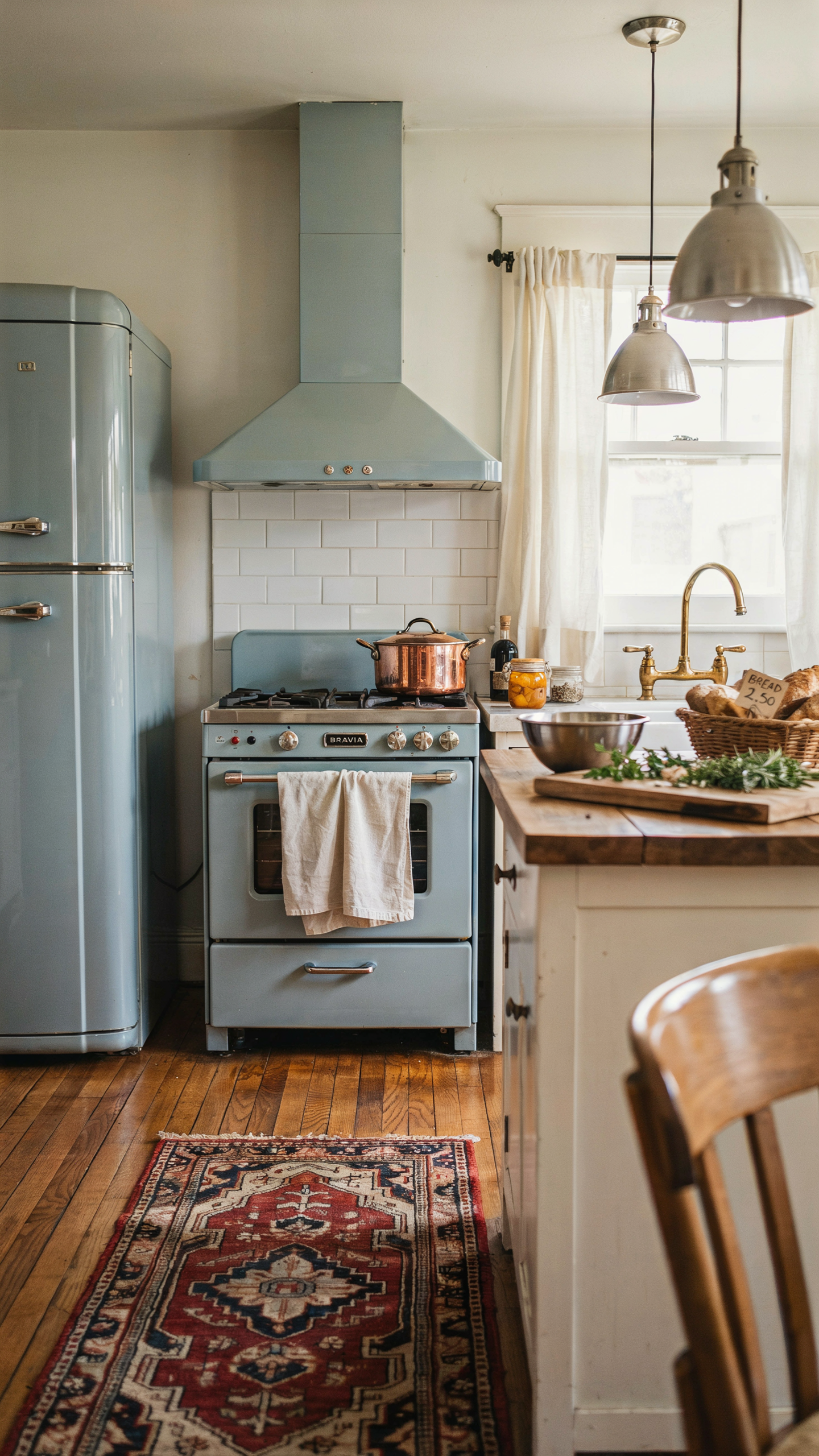
1940s enameled kitchen appliances in blue and white coastal kitchen
A 1940s kitchen would not be complete without those iconic enameled appliances. You will usually see them in white, but red, blue, and green were just as common for the era.
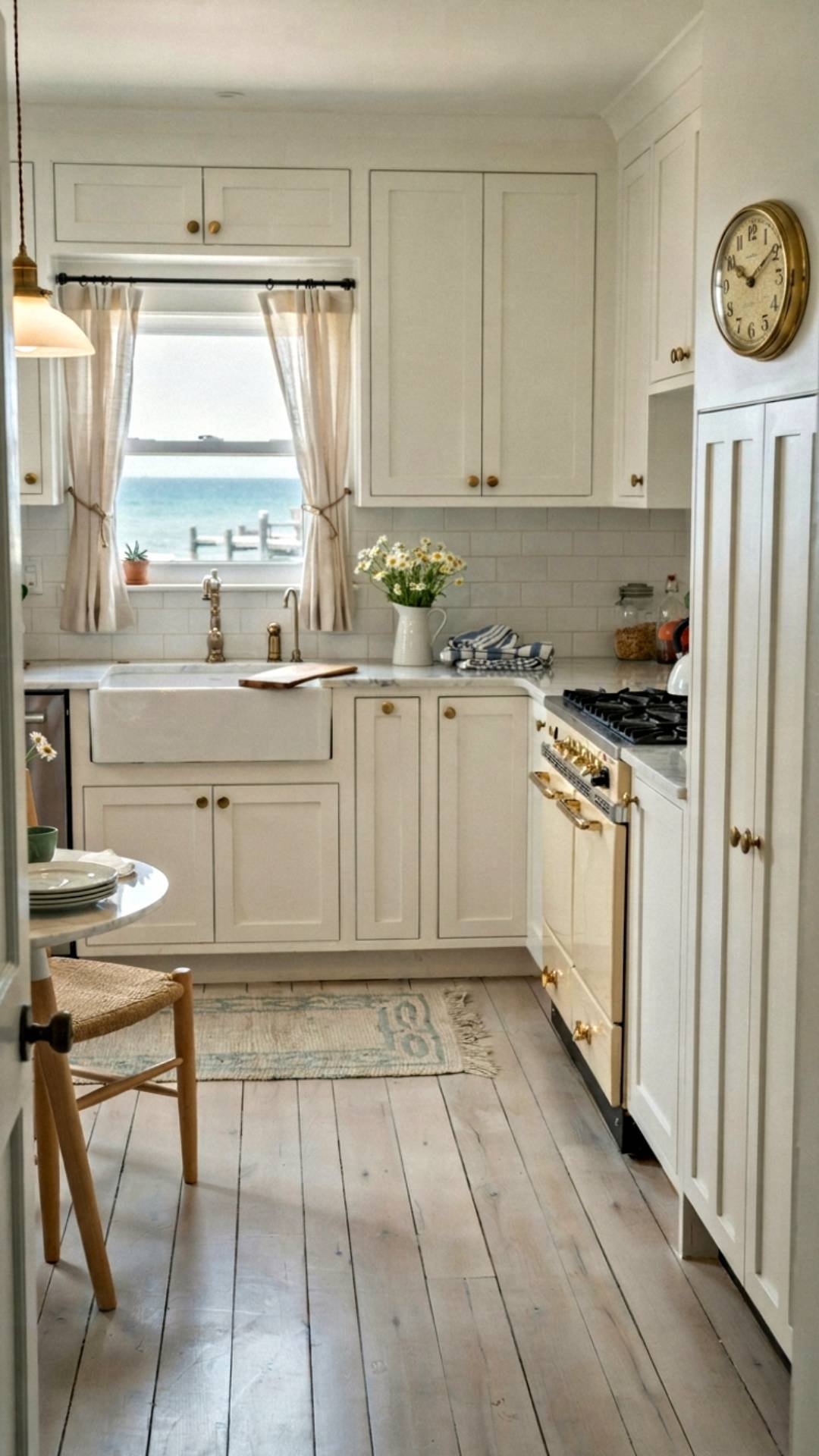
1920s all white coastal kitchen with subway tile and built in cabinets
The "fitted kitchen" concept was actually born in the 1920s, when continuous countertops and built-in cabinets started replacing the freestanding furniture-style kitchens that came before.
The 1920s: Art Deco Meets the Sea
The 1920s was an era of glamour and modernity, with Art Deco showing up everywhere. Coastal kitchens from this decade started embracing efficiency while still leaning into seaside details.
1. Nautical Art Deco Tiles
Difficulty: Easy | Budget: $
Idea: Install Art Deco-inspired tiles with a nautical twist.
Coastal element: Look for tiles featuring stylized waves, seashells, or fish in classic Art Deco colors like deep blue, gold, and white.
How to recreate: Use these as a backsplash or as accent tiles. Reproduction tile lines make this easy, and peel-and-stick options work if you are not ready to commit to a full install.

Art Deco nautical tile backsplash in navy gold and white for 1920s coastal kitchen
2. Porthole Window
Difficulty: Moderate to Renovation | Budget: $$-$$$
Idea: Replace a standard window with a porthole-style window.
Coastal element: This mimics ship design directly, which brings an unmistakable nautical feel into the room.
How to recreate: If structural changes are on the table, a real porthole window makes a statement. If not, a large circular mirror or frame gets you the look without touching the walls.
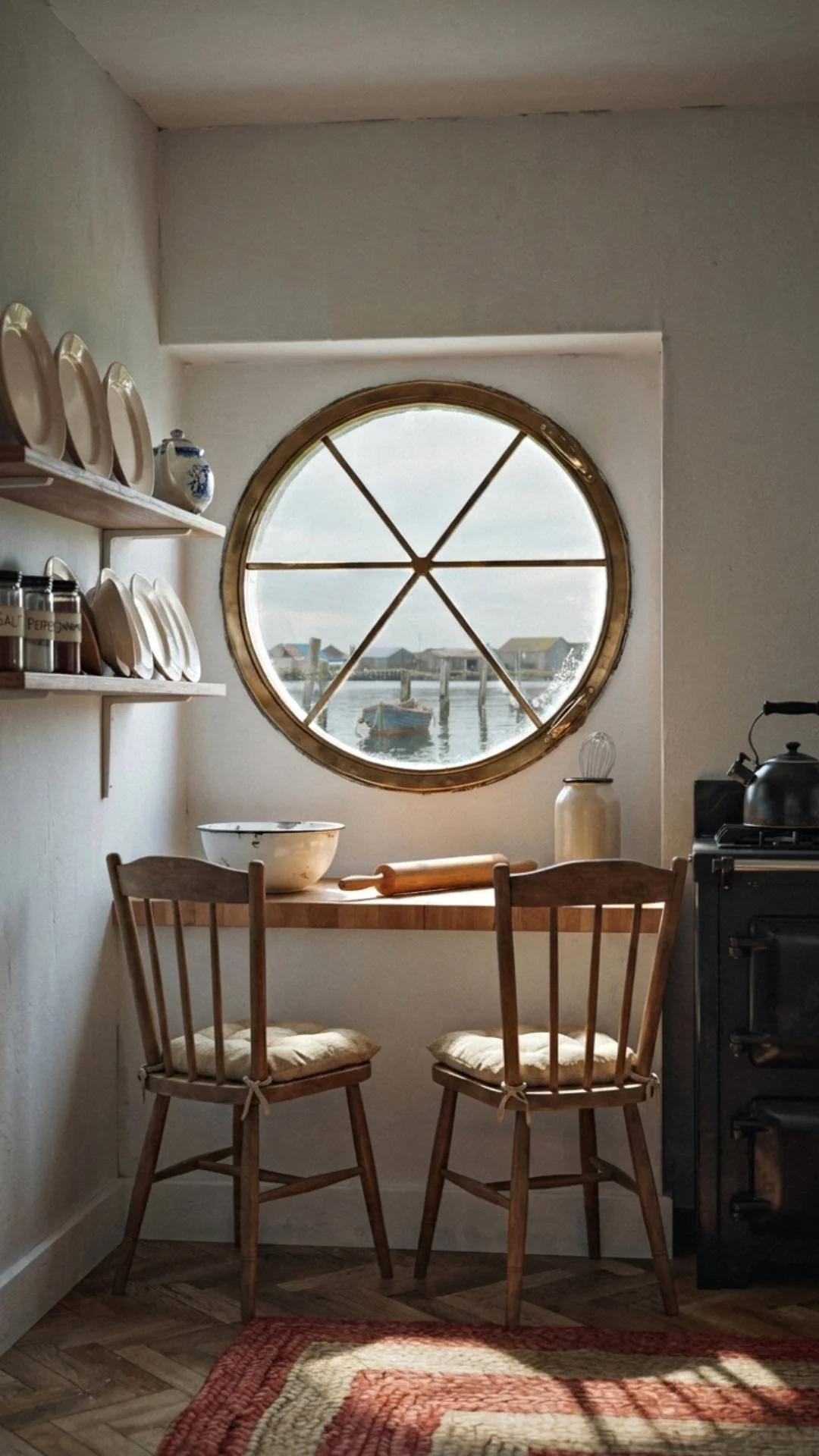
Round porthole style window in 1920s coastal kitchen
3. White and Navy Color Scheme
Difficulty: Easy | Budget: $
Idea: Embrace a classic nautical color palette.
Coastal element: White and navy together reads instantly as sailor uniforms and classic boating style.
How to recreate: Paint your cabinets white and walls navy, or flip it. Brass hardware adds an authentic 1920s finishing touch.
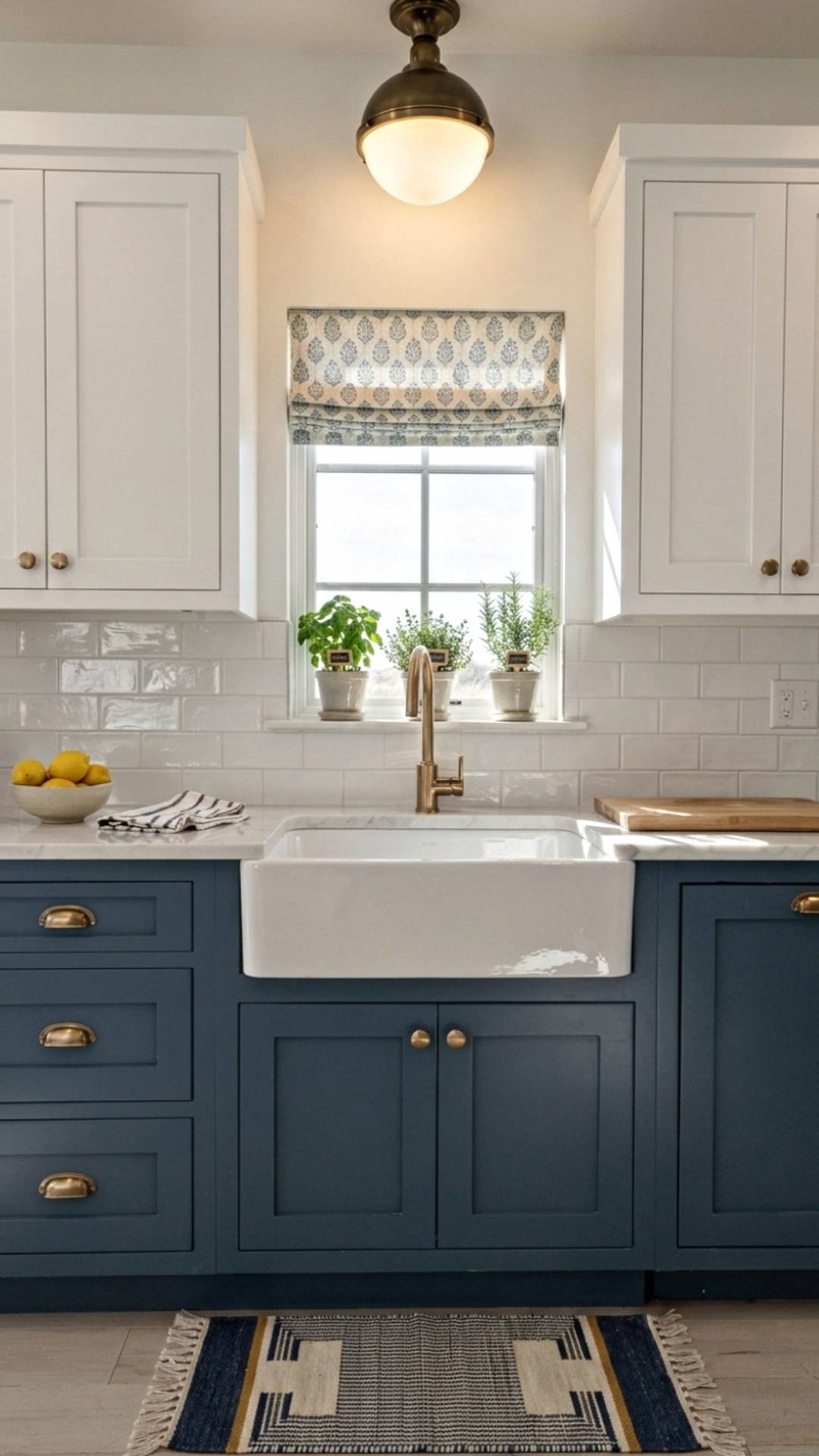
Navy and white coastal kitchen cabinets with brass hardware
4. Beadboard Paneling
Difficulty: Easy | Budget: $
Idea: Install beadboard paneling on walls or cabinet fronts.
Coastal element: Beadboard brings the texture you associate with beach cottages.
How to recreate: Real beadboard is great if you are renovating, but beadboard wallpaper is a renter-friendly shortcut that looks just as good in photos.

White beadboard paneling in vintage coastal kitchen
5. Maritime Lighting
Difficulty: Easy | Budget: $-$$
Idea: Use ship-inspired lighting fixtures.
Coastal element: Brass or copper fixtures that echo ship lanterns tie the whole look together.
How to recreate: Reproduction maritime lighting is widely available, or hunt for authentic vintage ship lights if you want something with real history behind it. I go deeper on lantern and rope-style fixtures in my nautical home decor guide if you want more options.
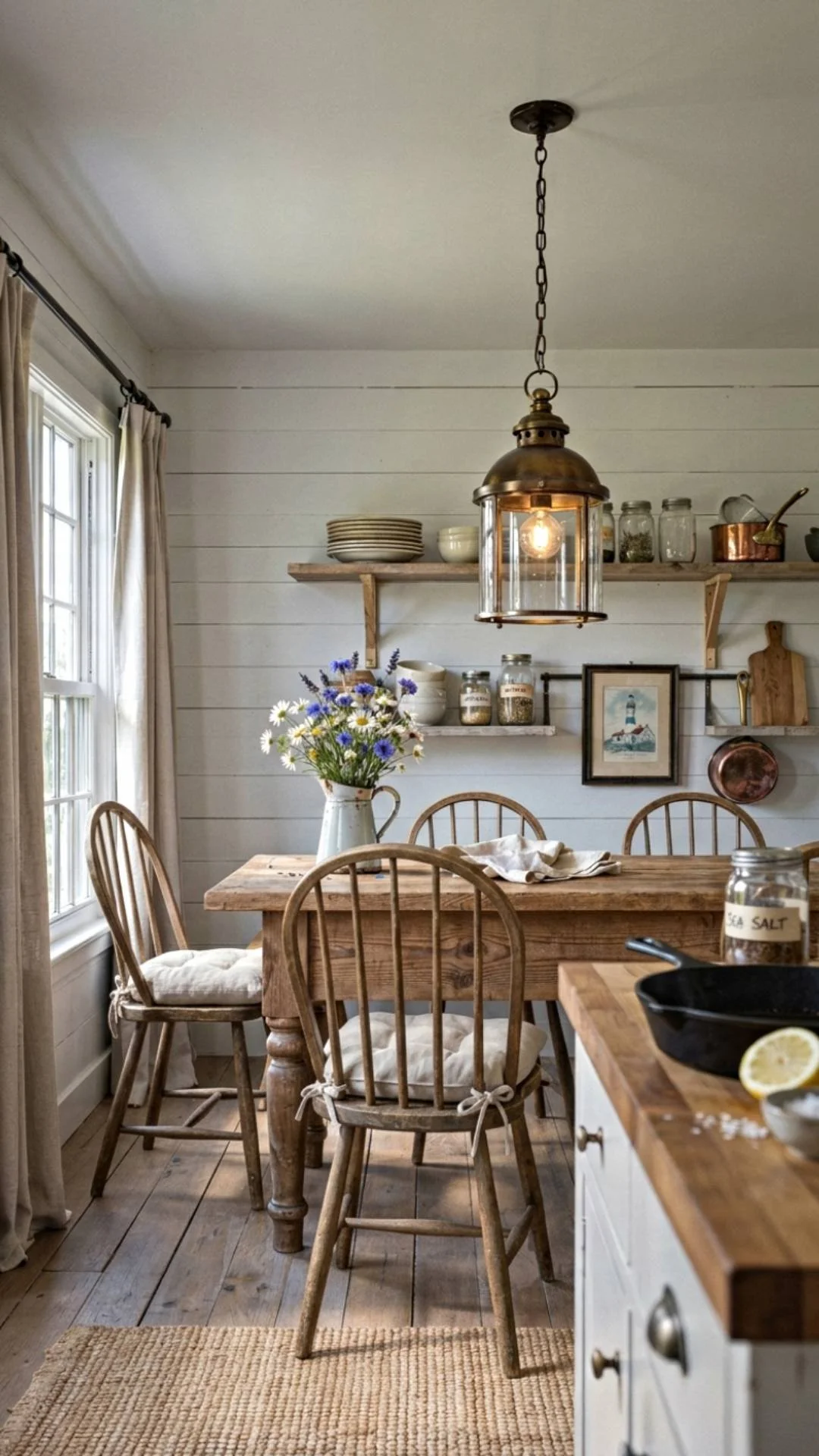
Brass ship lantern style pendant lighting in 1920s coastal kitchen
Key characteristics of 1920s coastal kitchens:
Art Deco influence with geometric patterns
The beginning of built-in cabinetry
A focus on efficiency and cleanliness
Early electric appliances
Bold colors and metallics
The 1930s: Streamline Moderne Sails In
The 1930s brought Streamline Moderne, an offshoot of Art Deco built around curved forms and horizontal lines. In coastal kitchens, that translated into smoother, more fluid shapes that echo ocean waves.
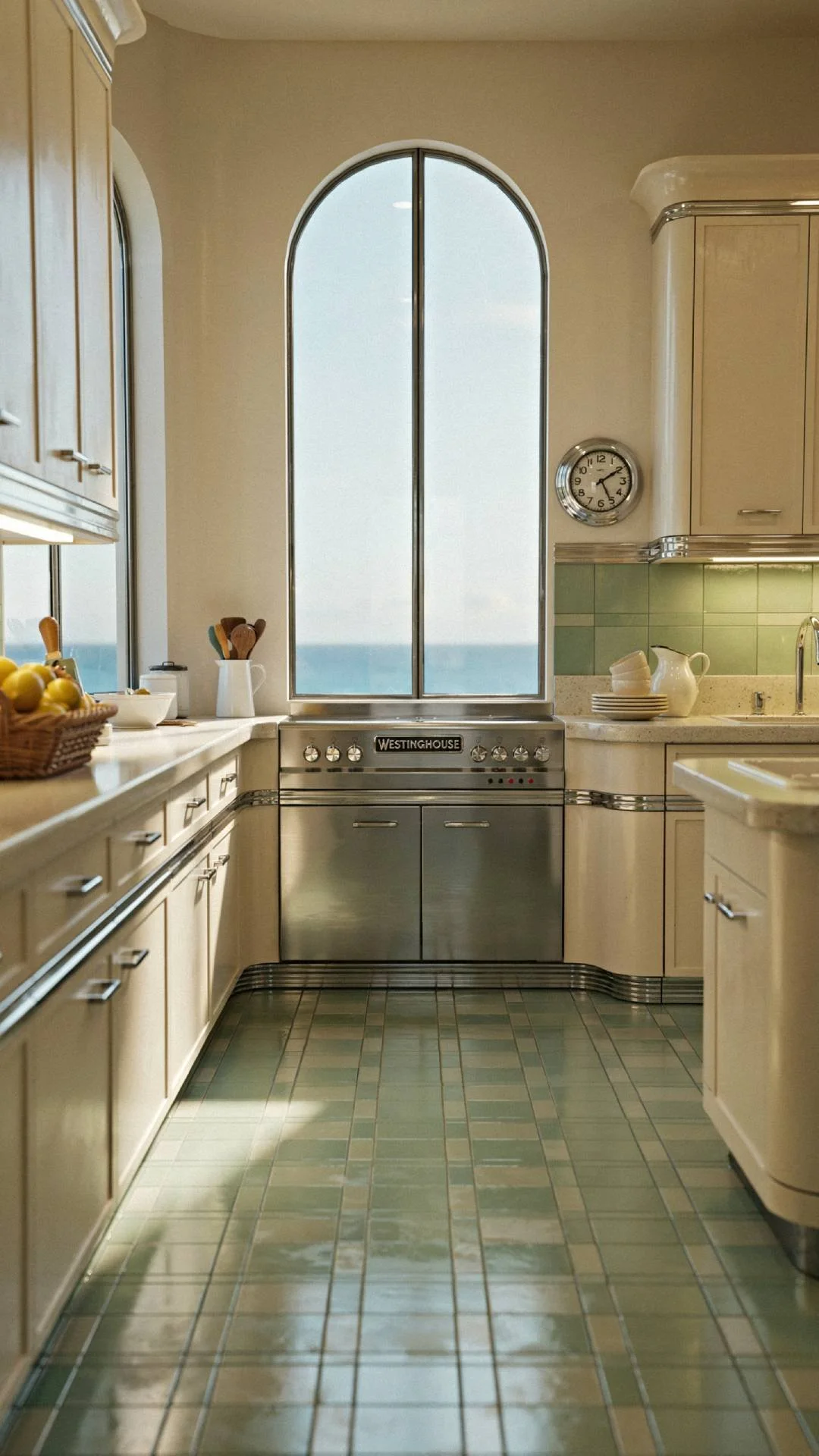
1930s Streamline Moderne coastal kitchen with chrome accents
Chrome use picked up significantly in the 1930s, reflecting the Streamline Moderne influence across furniture and appliances.
6. Curved Countertop Edges
Difficulty: Moderate | Budget: $$
Idea: Install countertops with rounded edges.
Coastal element: The curves echo smooth stones you find scattered on a beach.
How to recreate: If you are replacing countertops anyway, choose a rounded edge profile. On a budget, edge molding can round out an existing countertop without a full replacement.
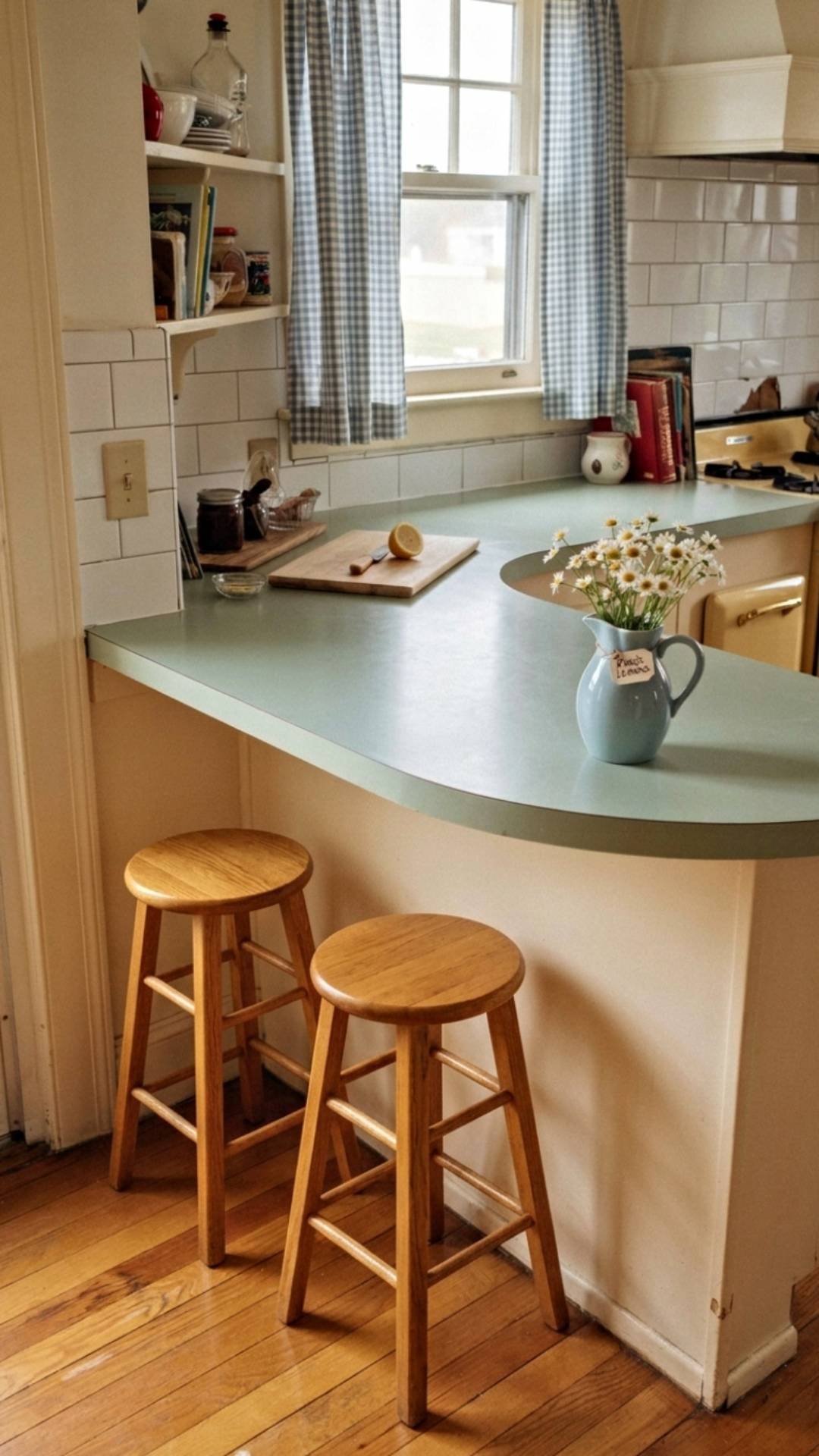
Curved rounded edge countertop in 1930s coastal kitchen
7. Pastel Color Palette
Difficulty: Easy | Budget: $
Idea: Use soft, sea-inspired pastel colors.
Coastal element: Pale blue, soft green, and sandy beige all read as coastal without feeling dated.
How to recreate: Paint walls and cabinets in these tones, and look for vintage or reproduction appliances in complementary pastel shades if you want to go all in. If you want the full palette breakdown, I have a whole green cottage kitchen post with more color direction.
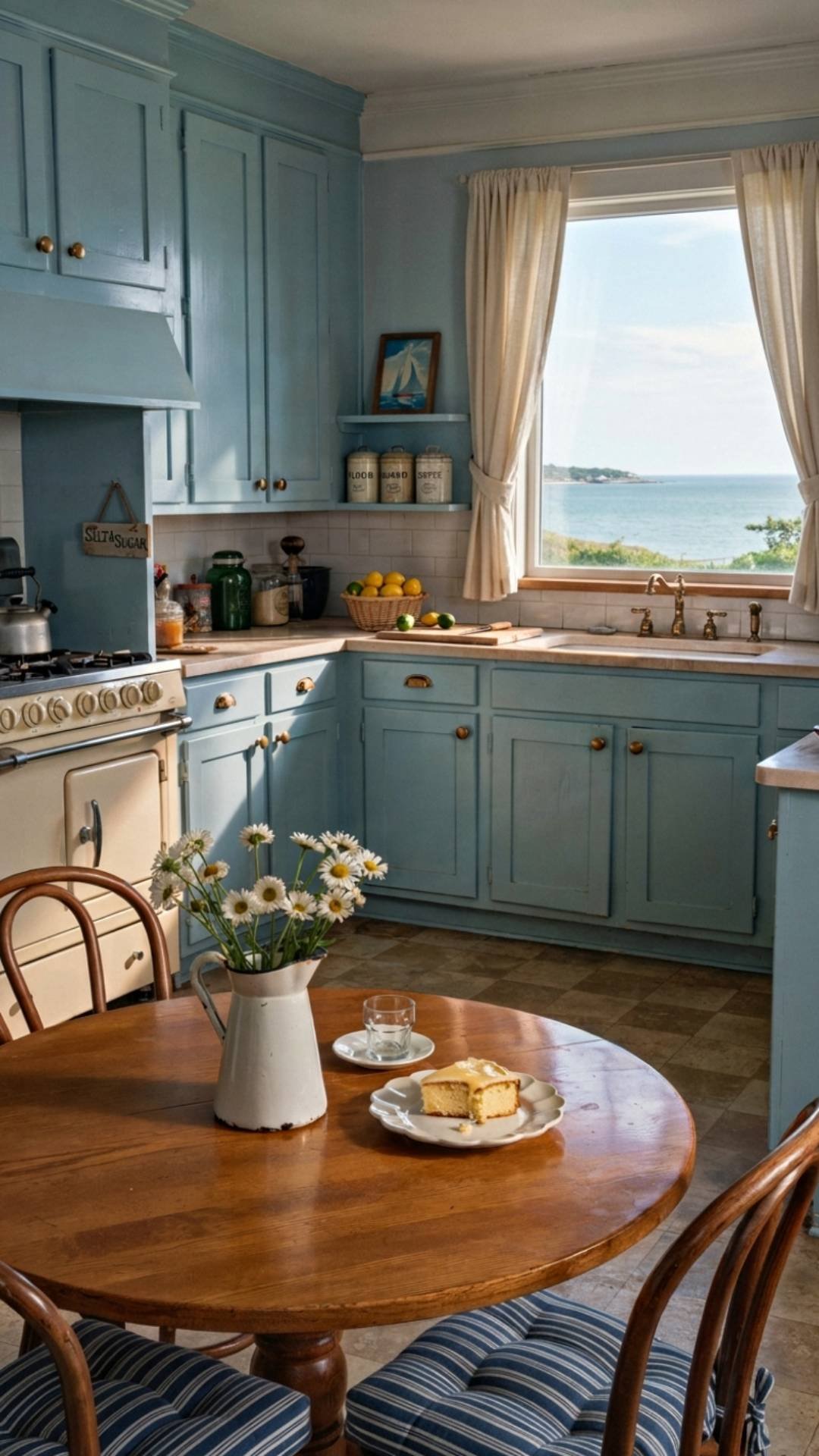
Pastel blue and sandy beige 1930s coastal kitchen
8. Streamlined Cabinet Handles
Difficulty: Easy | Budget: $
Idea: Replace cabinet hardware with streamlined, horizontal pulls.
Coastal element: Horizontal lines echo the line of the horizon over open water.
How to recreate: Look for chrome or brushed nickel pulls with a sleek, elongated shape. This is one of the cheapest updates on this entire list. If hardware and cabinet color changes are your speed, I break down exactly what I did in this vintage cottage kitchen post, including what to prioritize first.
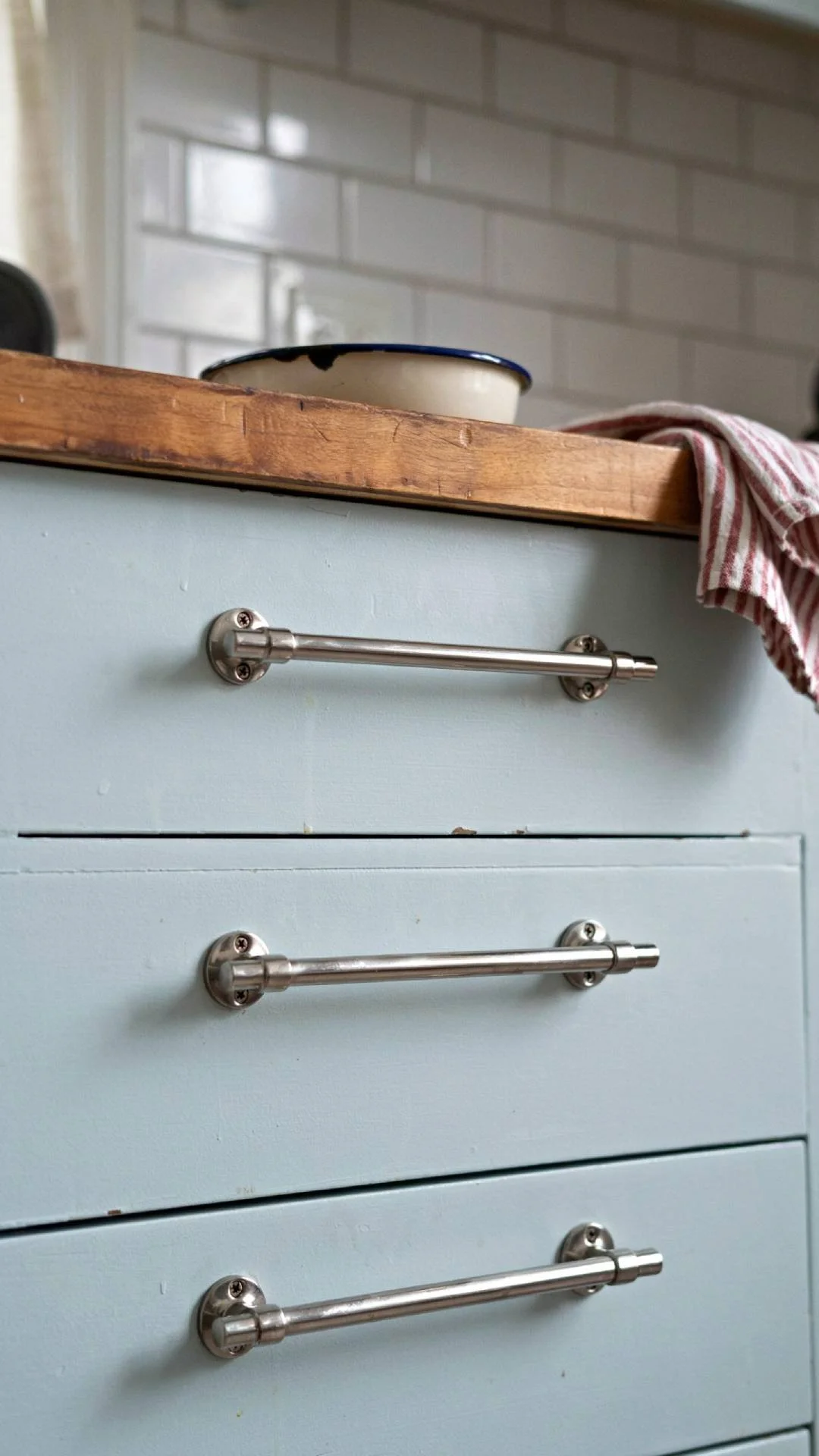
Chrome horizontal cabinet pulls 1930s coastal kitchen
9. Built-in Seating
Difficulty: Renovation | Budget: $$$
Idea: Install a built-in breakfast nook with curved benches.
Coastal element: A cozy curved seating area feels like a booth from an old seaside diner.
How to recreate: If space allows, build a curved booth. If a full build-out is not realistic, a round table with curved-back chairs gets you most of the feeling.
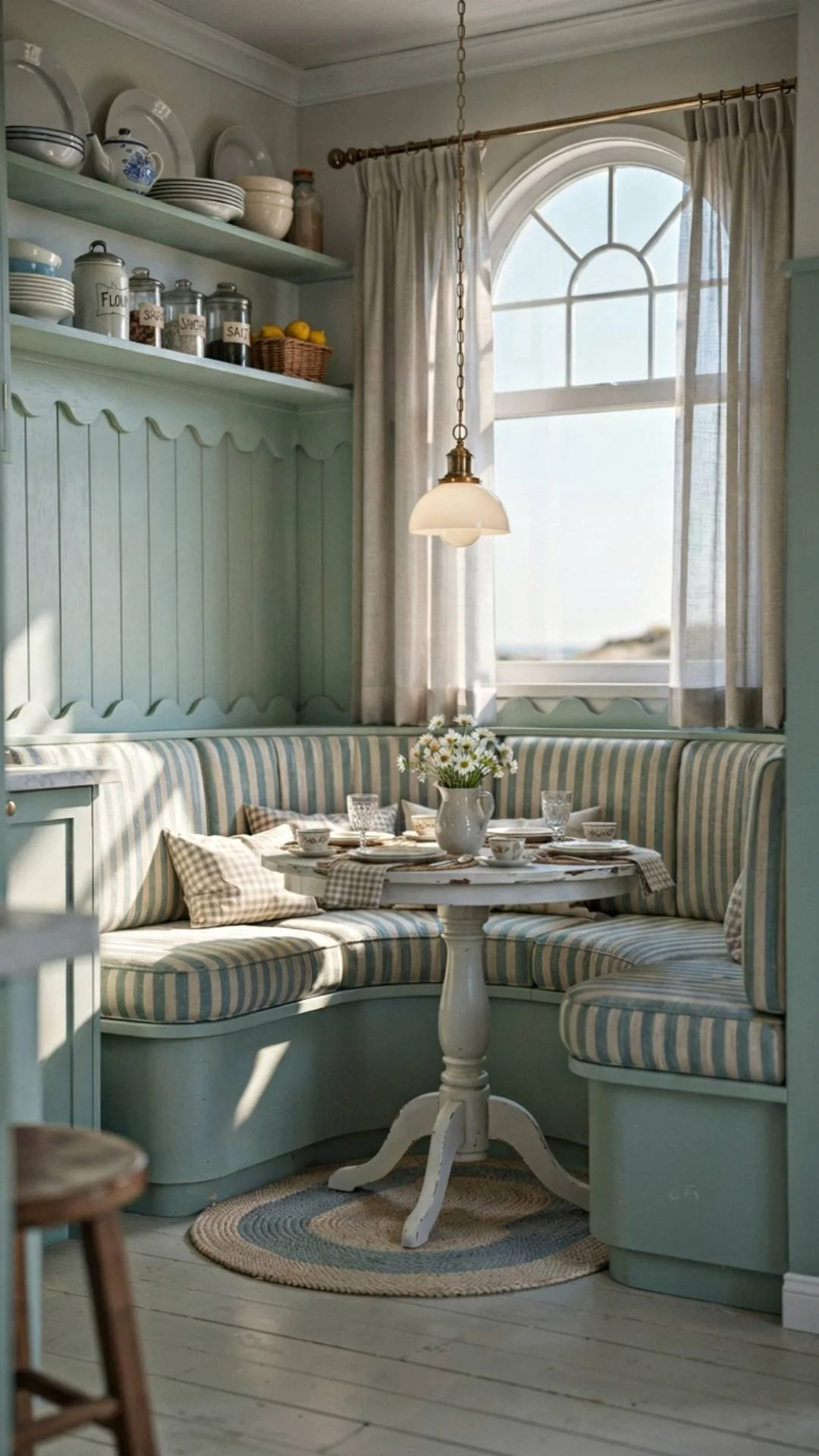
Curved built in breakfast nook seating vintage coastal kitchen
10. Portholes as Cabinet Doors
Difficulty: Moderate | Budget: $$
Idea: Replace some cabinet doors with porthole-style glass fronts.
Coastal element: Another nod to ship design, this time applied to storage.
How to recreate: Custom porthole-style doors are the real deal, but circular decals on existing glass-front cabinets create a similar effect for a fraction of the cost.
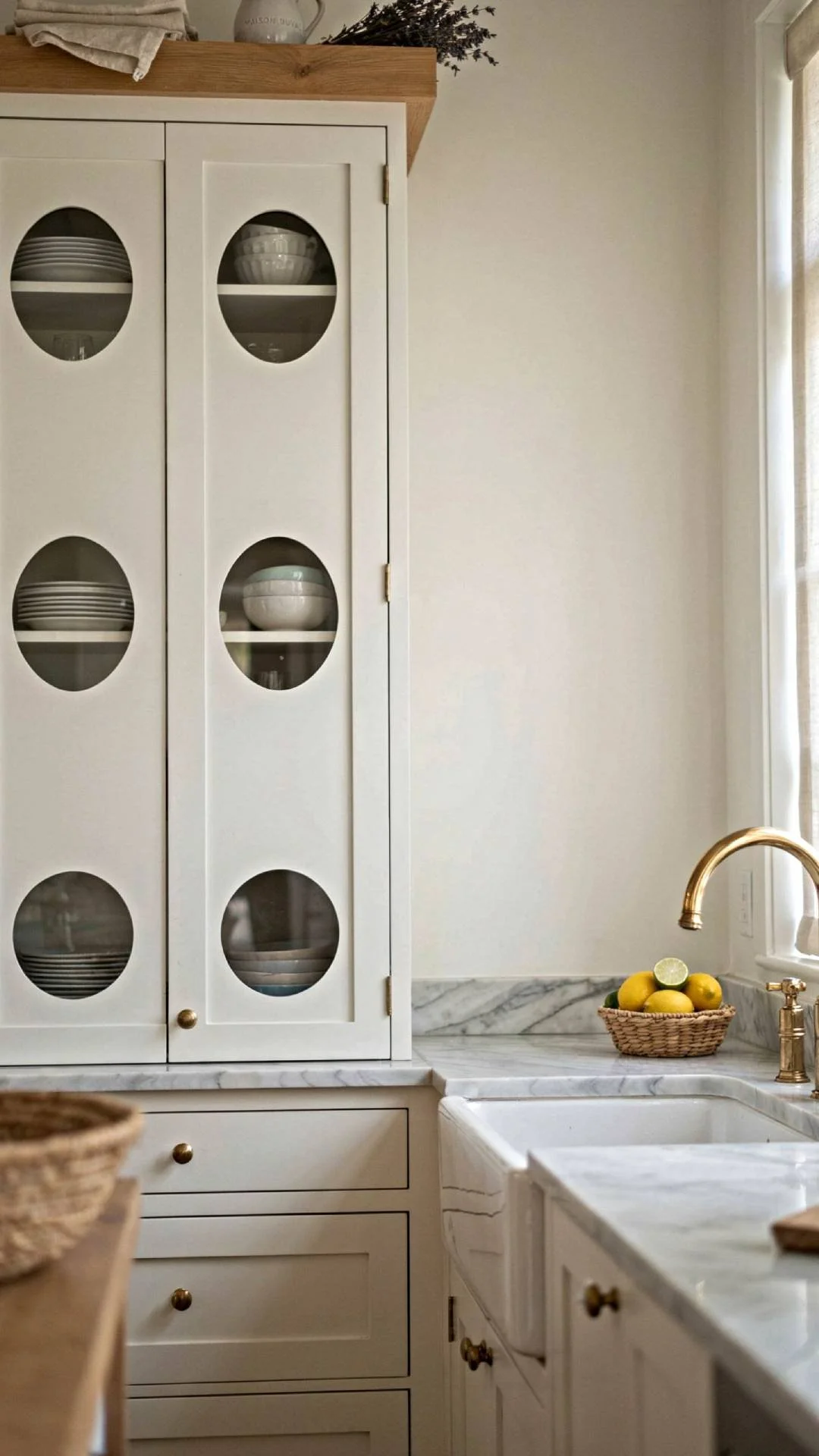
Porthole style glass cabinet doors in coastal kitchen
Key characteristics of 1930s coastal kitchens:
Streamline Moderne influence with curved forms
Softer, more muted color palettes
Continued emphasis on efficiency
A mix of old and new technology due to economic constraints
More chrome and reflective surfaces
The 1940s: Wartime Practicality and Post-War Exuberance
Early 1940s kitchen design was shaped by wartime rationing, which meant practical solutions. Post-war, everything changed. A burst of color and optimism took over, and it translated beautifully into coastal spaces.
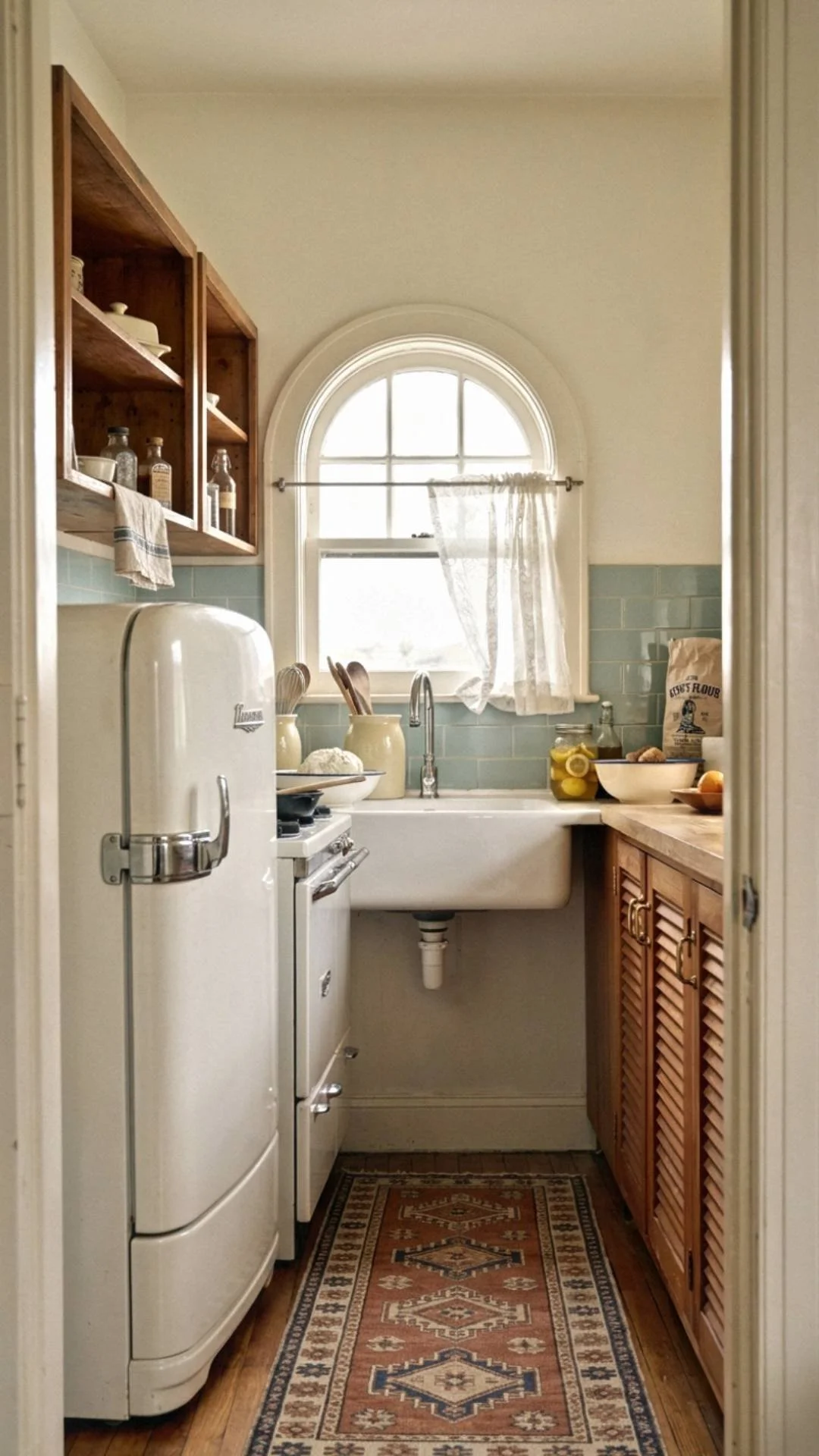
1940s work triangle layout coastal kitchen
The "work triangle" concept, meaning the relationship between your stove, sink, and refrigerator placement, was actually developed in the 1940s and is still the foundation of good kitchen layout today.
11. Red, White, and Blue Color Scheme with a Coastal Twist
Difficulty: Easy | Budget: $
Idea: Use a patriotic color scheme with a seaside interpretation.
Coastal element: Navy for deep sea, white for ocean foam, and red as an accent color through buoys or lobster motifs.
How to recreate: Paint cabinets white, bring in navy through walls or flooring, then add red through small appliances or accessories you can swap out easily.

Red white and blue coastal kitchen color scheme 1940s
12. Linoleum Flooring with Nautical Patterns
Difficulty: Moderate | Budget: $$
Idea: Install linoleum flooring with a seafaring motif.
Coastal element: Anchors, compasses, or stylized waves worked into the flooring pattern.
How to recreate: Vintage-inspired linoleum or vinyl flooring in nautical patterns is out there if you look. Not ready to commit to new flooring? A large nautical area rug does the job temporarily.
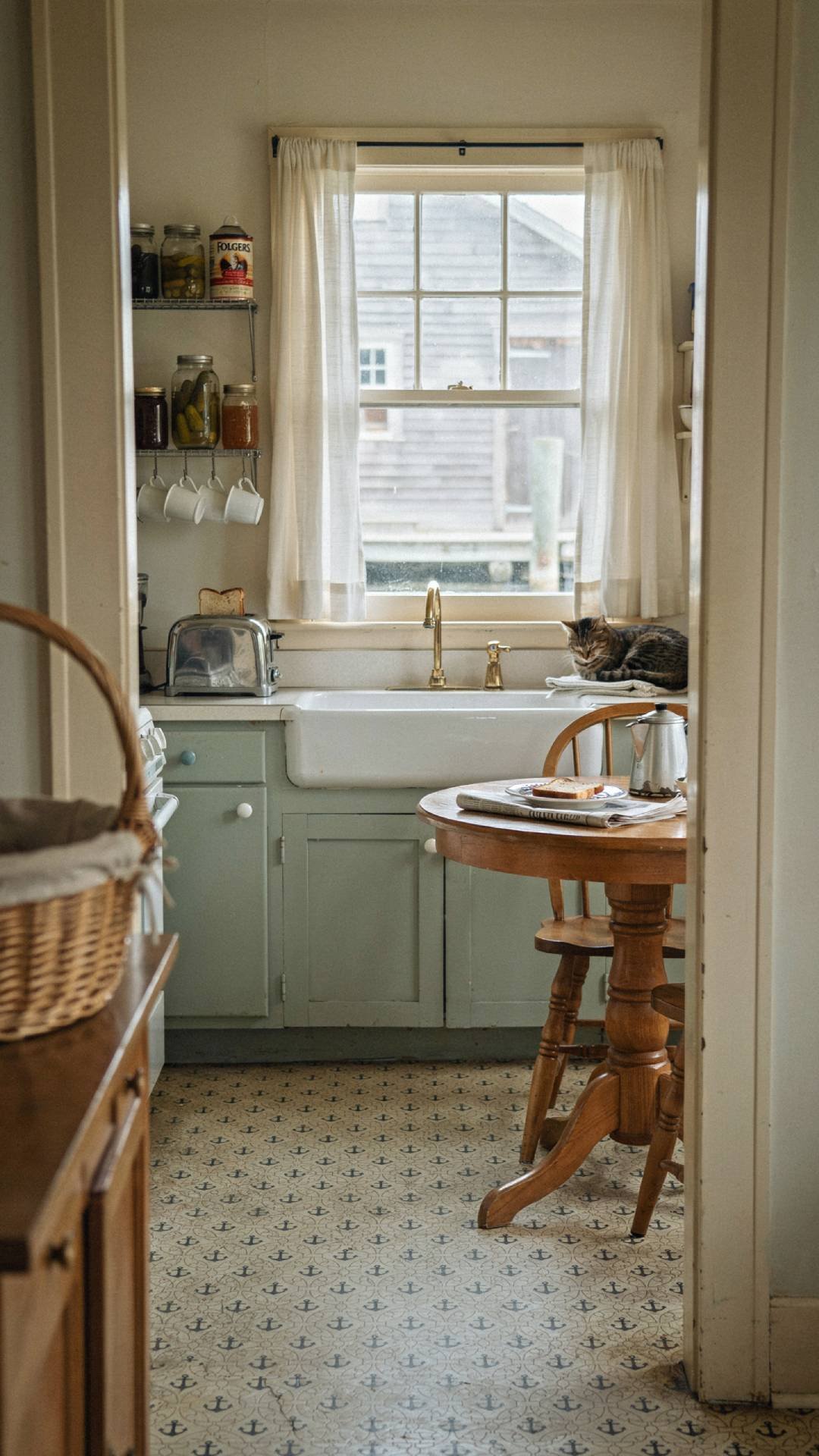
1940s coastal kitchen with a nautical pattern flooring
13. Open Shelving for Shell Display
Difficulty: Easy | Budget: $
Idea: Install open shelving to display coastal collections.
Coastal element: Seashells, beach glass, and other seaside finds get to be the decor instead of hiding in a drawer.
How to recreate: Remove your upper cabinet doors or add floating shelves, then mix your coastal finds in with everyday dishes for something that is decorative and still useful. My English cottage kitchen post has more on styling open shelving so it looks collected instead of cluttered.

Open shelving with seashell and beach glass display in a 1940s coastal kitchen
14. Rope Accents
Difficulty: Easy | Budget: $
Idea: Incorporate rope elements into your kitchen design.
Coastal element: Rope is about as classic nautical as it gets, straight from sailing and fishing traditions.
How to recreate: Use rope for unique drawer pulls, wrap it around a pillar, or hang a rope-framed mirror. I have a full DIY on a rope-wrapped side table in my nautical living room post that translates well to kitchen furniture too.
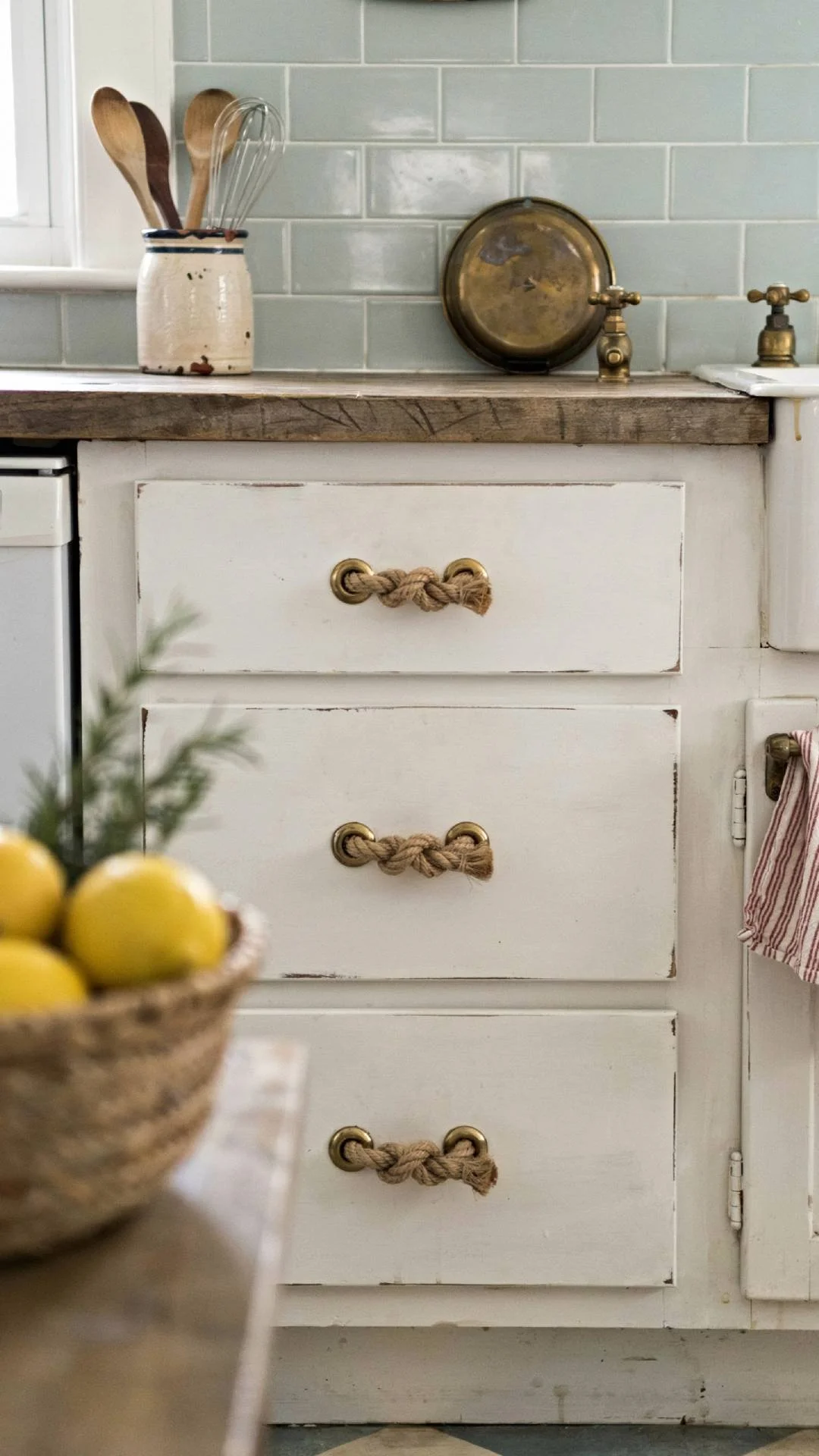
Rope wrapped drawer pulls nautical coastal kitchen accent
15. Vintage Seafood Signs
Difficulty: Easy | Budget: $-$$
Idea: Hang vintage-style seafood advertisement signs.
Coastal element: These signs bring back the feeling of an old seaside fish market or restaurant.
How to recreate: Reproduction vintage signs featuring fish, lobsters, or clams are easy to find online. For something with real age on it, flea markets are worth the hunt.

Vintage seafood advertisement sign coastal kitchen wall decor
Key characteristics of 1940s coastal kitchens:
Early focus on practicality due to wartime rationing
A post-war shift toward color and decorative elements
More durable materials like stainless steel
Growing popularity of built-in appliances
The emergence of the work triangle layout concept
Five More Ideas That Work Across Any Era
Blue might be the most versatile color in kitchen design. It works across nearly every style, from traditional to modern, which is part of why it shows up so often in coastal kitchens no matter the decade.
These five ideas are not tied to one specific decade. Instead, adjust the details based on whichever era you are leaning into.
16. Coastal-Themed Wallpaper
Idea: Use wallpaper with seaside patterns typical of your chosen era.
Coastal element: Patterns featuring seashells, fish, or beach scenes.
How to recreate: For a 1920s look, choose bold, stylized fish or wave patterns. For the 1930s, go softer and more abstract. For the 1940s, look for more realistic depictions of seashells or nautical elements.
17. Vintage Coastal Light Fixtures
Idea: Install light fixtures that combine vintage style with coastal elements.
Coastal element: Fixtures reminiscent of ship lanterns, fishing nets, or lighthouses.
How to recreate: 1920s calls for brass fixtures with nautical motifs. 1930s leans chrome with wave-like shapes. By the 1940s, more whimsical sea life fixtures fit right in.
18. Repurposed Boat Elements
Idea: Incorporate repurposed items from old boats into your kitchen design.
Coastal element: Actual boat parts bring a level of authenticity you cannot fake.
How to recreate: A ship's wheel makes a great pot rack, old portholes work as cabinet doors, and boat cleats double as unusual towel hooks.
19. Vintage Coastal Textiles
Idea: Use textiles with coastal themes popular in your chosen decade.
Coastal element: Fabric with seaside motifs adds a soft, decorative layer.
How to recreate: 1920s textiles tend toward bold, geometric patterns in marine colors. 1930s softens into more illustrative coastal scenes. 1940s brings in novelty prints with fish or seashells.
20. Era-Appropriate Coastal Collections
Idea: Display coastal-themed collections typical of your chosen era.
Coastal element: Collections add a personal, lived-in layer of authentic coastal charm.
How to recreate: 1920s collectors might look for Art Deco-style ships in bottles. 1930s could mean Depression glass in sea-inspired colors. 1940s often means vintage fish-shaped kitchenware or cookie jars.
Design Differences Between the Decades
Now that you have seen all 20 ideas, here is how the three decades actually compare side by side, in case you want to commit fully to one look rather than mixing eras.
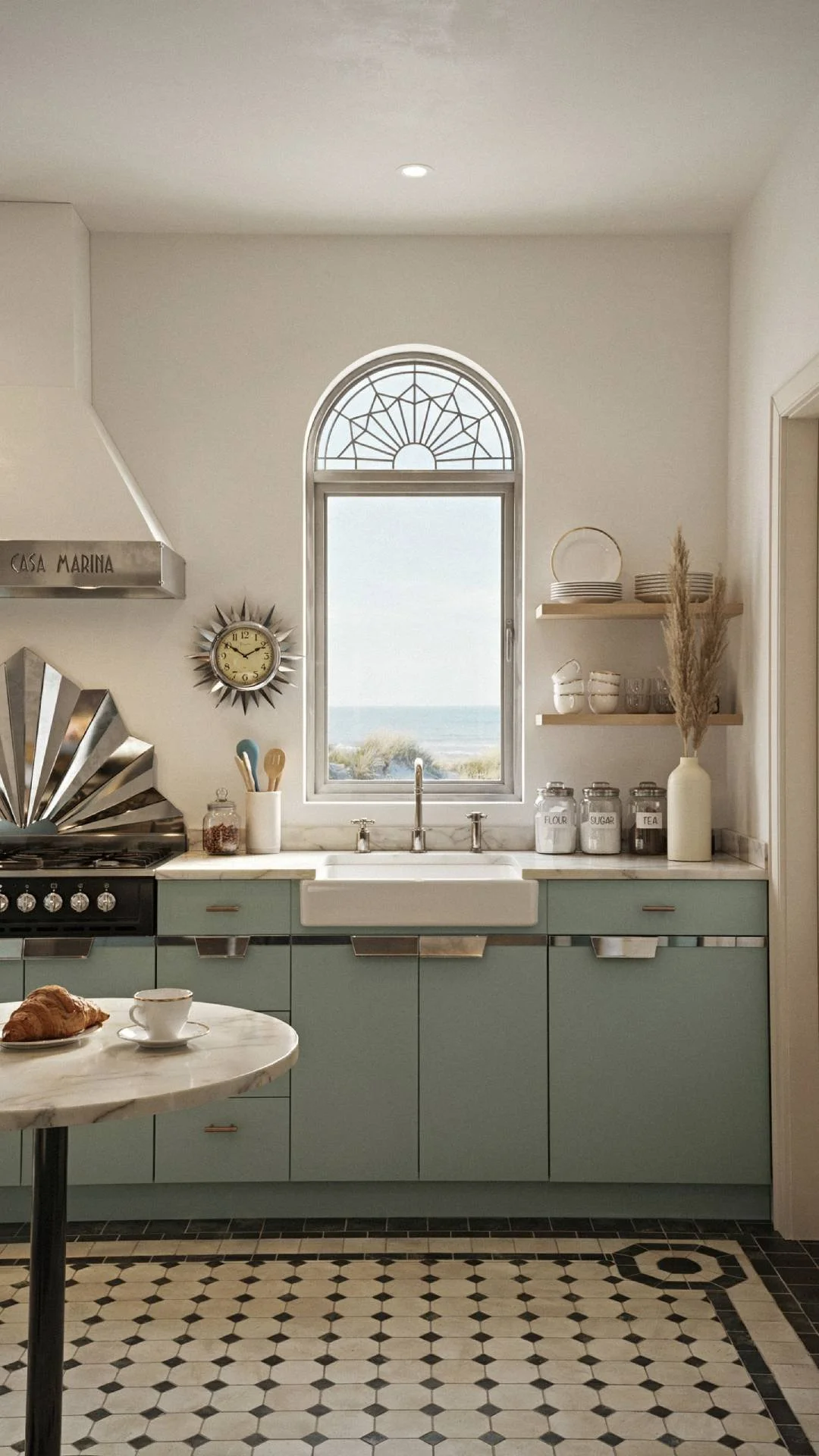
1920s Art Deco coastal kitchen aluminum accents
Aluminum became a trendy material in 1920s home decor, prized at the time for feeling distinctly modern.
1920s Coastal Kitchens
Style: Strong Art Deco influence with bold geometric patterns and sleek lines
Color palette: Contrasting colors like deep blue and white, with gold accents
Materials: New materials like aluminum alongside traditional wood
Coastal elements: Stylized, abstract nautical themes
Layout: The start of the efficiency movement, though built-in cabinetry was still not universal
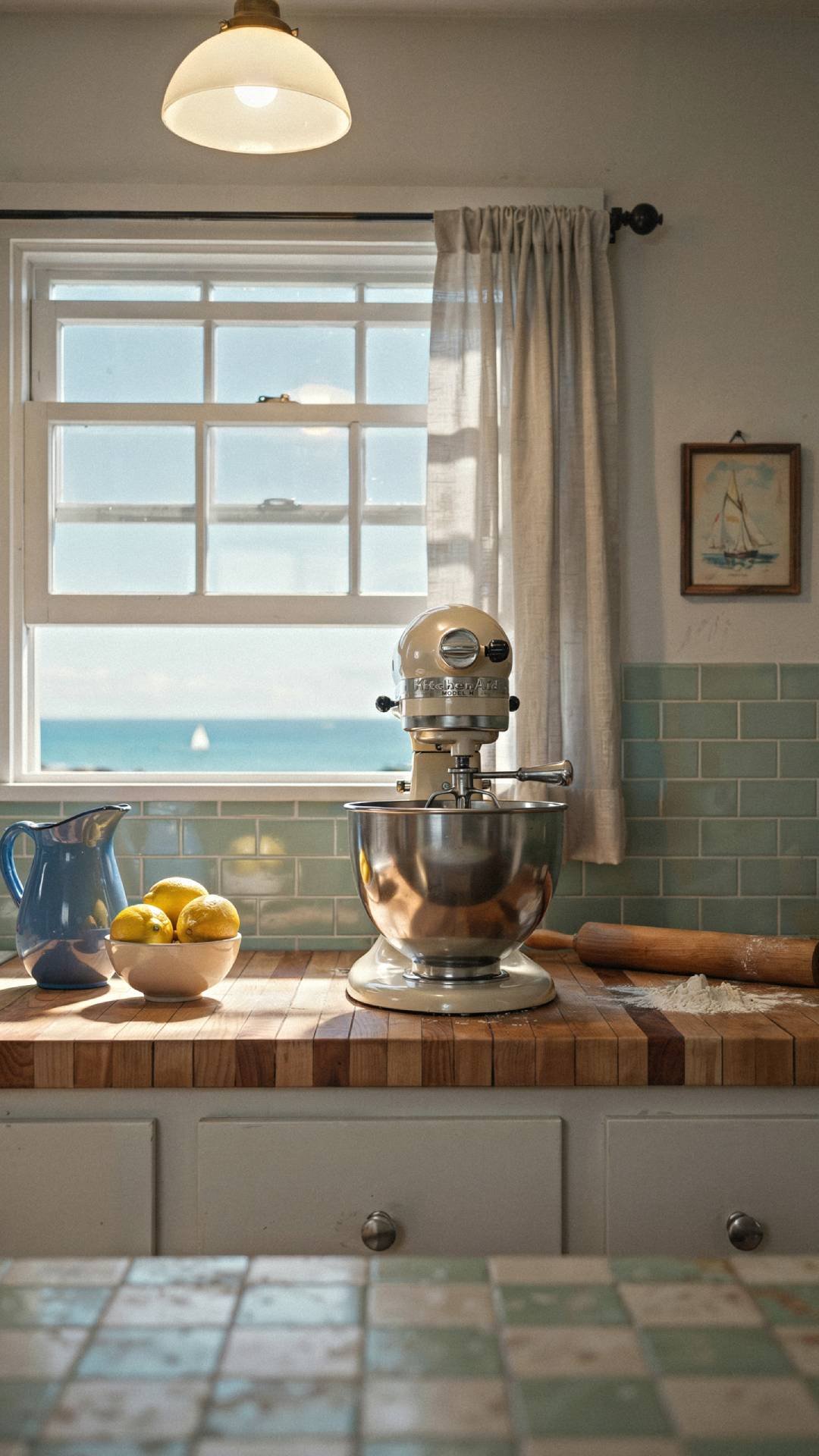
1930s coastal kitchen with KitchenAid mixer chrome details
The first electric mixer for home use, the KitchenAid Model H, hit the market in 1932, right in the middle of this decade's design evolution.
1930s Coastal Kitchens
Style: Streamline Moderne influence with curved forms and horizontal lines
Color palette: Softer, more muted colors inspired by sea and sand
Materials: More chrome and reflective surfaces
Coastal elements: More literal coastal themes, still filtered through a smooth, streamlined aesthetic
Layout: Continued efficiency focus, with more built-in cabinetry becoming standard
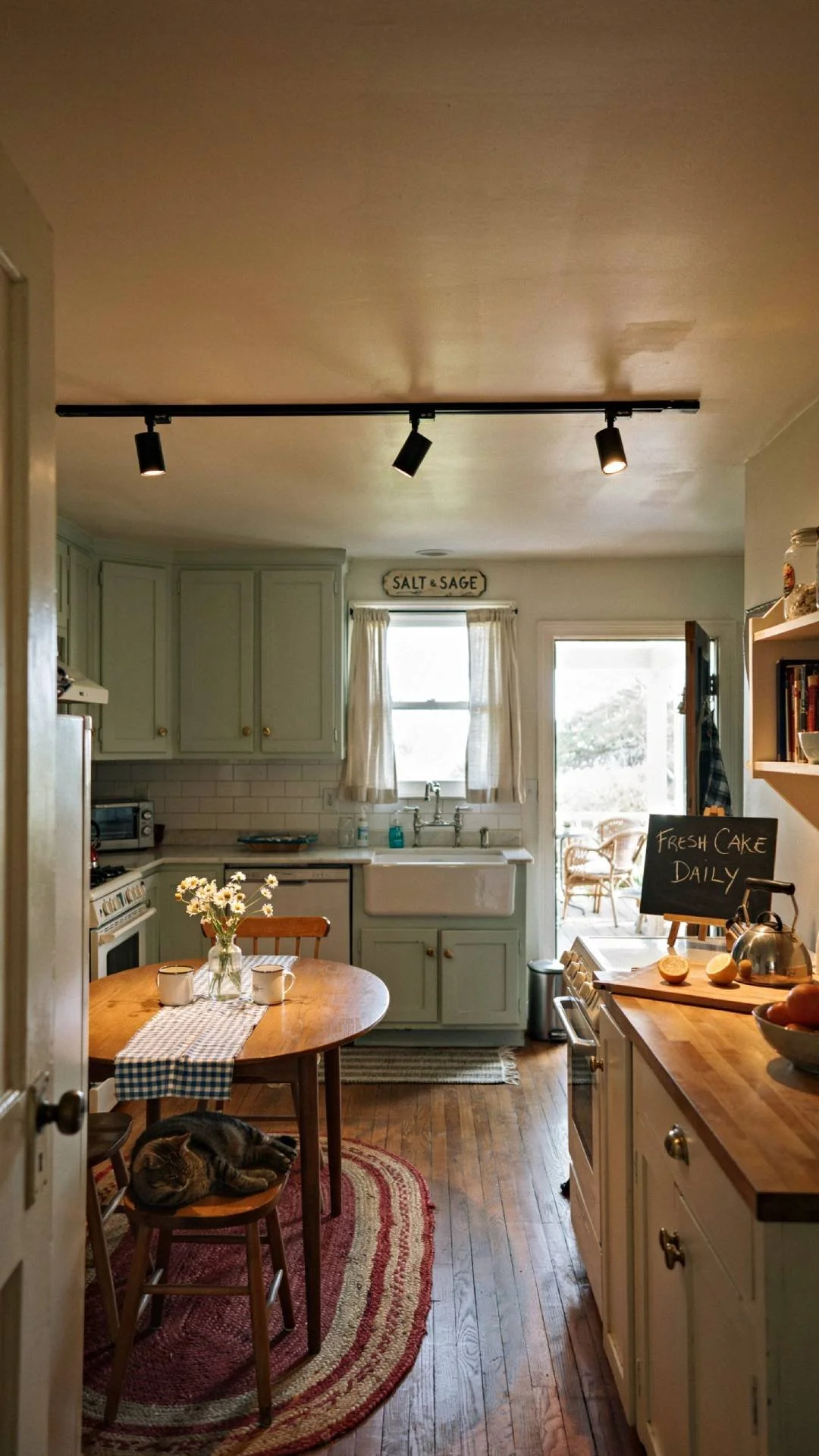
1940s coastal kitchen track lighting practical design
Track lighting was actually invented in the late 1940s, though it would not become genuinely popular until the 1960s and 70s.
1940s Coastal Kitchens
Style: Practical early on due to wartime, then more decorative and colorful post-war
Color palette: Patriotic tones early, brighter and more varied colors after the war
Materials: Durable, easy-to-clean surfaces like linoleum and stainless steel
Coastal elements: More whimsical and varied, often with realistic sea life details
Layout: A refined, efficient kitchen built around the new work triangle concept
Tips for Recreating a Vintage Coastal Kitchen
Coastal blue kitchens picked up steam in the 1920s and 30s as part of a bigger trend toward bringing nature-inspired colors indoors.
Research thoroughly. Vintage magazines, old photographs, and history books will show you the authentic details of coastal kitchens from your chosen era.
Balance vintage and coastal. Make sure both the era and the coastal theme actually show up in your choices, not just one or the other.
Use color strategically. Each decade had its own palette. Getting the colors right does a lot of the work in selling the era.
Incorporate authentic materials. Linoleum for the 1940s, chrome for the 1930s, whatever fits your chosen decade.
Do not overlook small details. Hardware, light switch covers, and small accessories carry more of the authentic feeling than people expect.
Mix old and new. Genuine vintage pieces add real authenticity, but modern reproductions mixed in keep the space functional.
Create vignettes. Group coastal items from your chosen era together so they read as an intentional display, not clutter.
Consider practicality. Vintage kitchens are charming, but your space still needs to function for modern life. Hidden modern appliances go a long way.
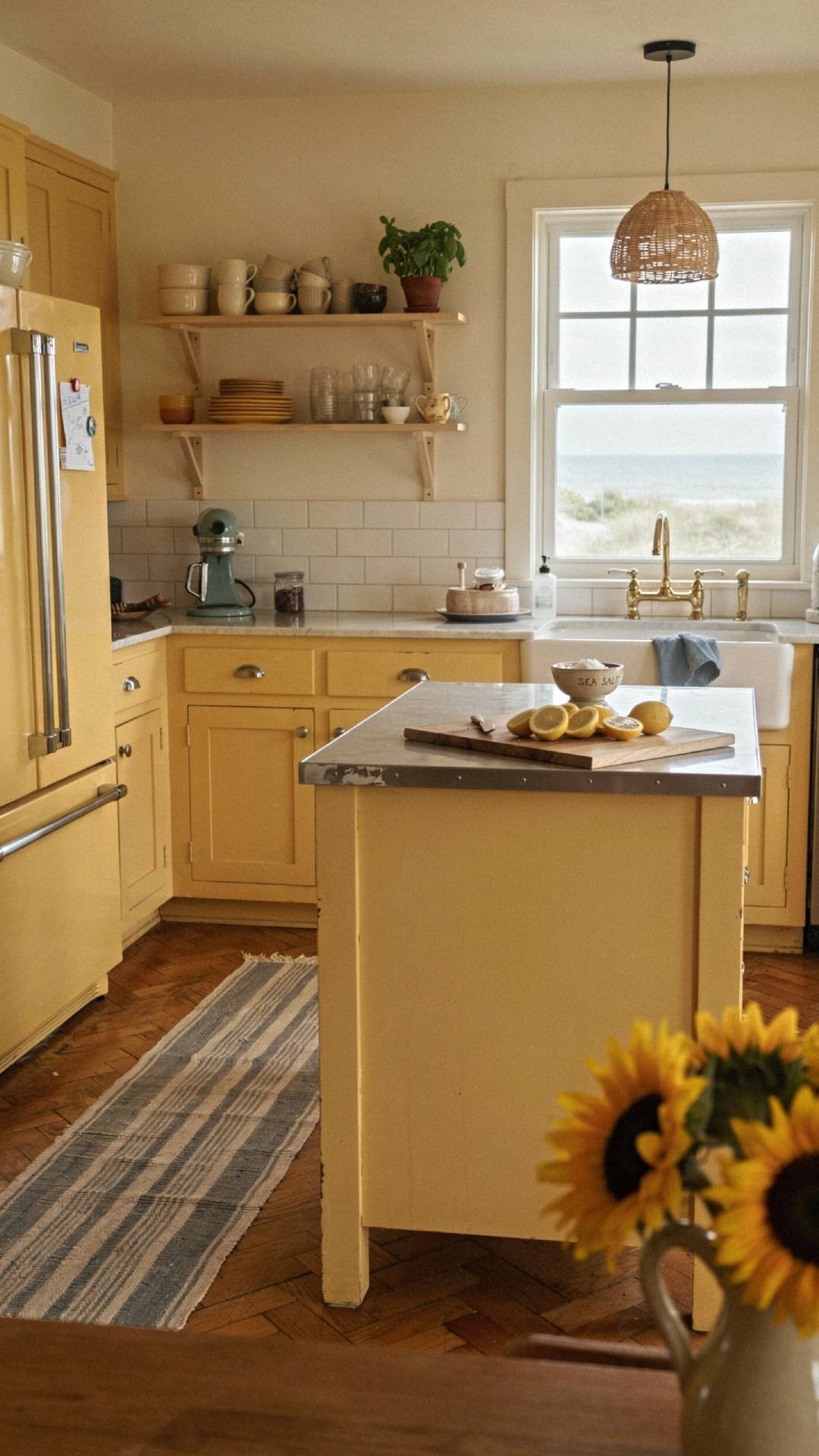
Yellow vintage coastal kitchen 2020s comeback trend
Yellow kitchens have had a few moments: trendy in the 1920s and 30s, back again in the 1950s and 60s, and now making another comeback.
Getting Started: Next Steps To Start Your Vintage Kitchen Project
Creating a vintage coastal kitchen is one of my favorite ways to combine the charm of a bygone era with the relaxed, breezy feeling of seaside living. But 20 ideas is a lot to look at and not know where to actually begin, so let's fix that.
Here's how to get started this weekend:
Pick your decade first. Do not try to blend all three yet. Skim back through the key characteristics for the 1920s, 1930s, and 1940s above and pick whichever one you were already picturing while you read. That choice will make every decision after this one easier.
Start with hardware. Swap your cabinet pulls to match your decade (streamlined chrome for the 1930s, brass nautical pulls for the 1920s, or a simple painted knob for the 1940s). This alone takes an afternoon and instantly shifts the feel of the room.
Add one collection or display moment. Clear a shelf or a corner of counter and style it with 3-5 items tied to your era, whether that is beach glass, a vintage seafood sign, or a small stack of Depression glass. Idea 13 and idea 20 above both walk through this.
Test your color before you commit to paint. Grab a swatch or a sample pot in your decade's palette and live with it on one wall for a few days before painting the whole kitchen. This saves you from a Sunday-afternoon repaint regret.
Save the big stuff for later. Built-in seating, porthole windows, and flooring changes are real renovations. Bookmark those for when you are ready, but do not let them stop you from starting small this weekend.
By Sunday night, you will have a kitchen that already feels more like your chosen decade, without having touched a single wall permanently. From there, you can layer in the bigger changes whenever you are ready. If you want even more inspiration before you start, my budget-friendly vintage coastal kitchen post is a good next stop.
Happy decorating, and I hope your vintage coastal kitchen brings you joy for years to come.
Frequently Asked Questions About Vintage Coastal Kitchens
What decade works best for a coastal kitchen?
There is no single right answer here. The 1930s tends to be the easiest starting point if you want something soft and approachable, since the pastel palette and curved lines read as coastal without much extra work. The 1920s and 1940s take a bit more commitment to pull off convincingly.
Can I mix elements from different decades?
Yes, and honestly most real vintage coastal kitchens end up doing this a little. Just try to keep your color palette consistent across whatever era details you borrow, since that is what ties a mixed look together.
What is the easiest vintage coastal element to start with?
Hardware and lighting. Swapping cabinet pulls or a light fixture is a weekend project with almost no risk, and it is the fastest way to test whether a decade's aesthetic actually works in your space before committing to anything bigger.
Do I need real vintage pieces, or are reproductions okay?
Reproductions are completely fine, and honestly more practical for anything that touches food prep or daily use. Save the hunt for genuine vintage pieces for decorative items like signs, glassware, or lighting where function matters less.