
12 Nautical Home Decor Ideas to Bring That Coastal Feeling Home
(Updated: 7/7/26)
This post may contain affiliate links. If you make a purchase through one of my links, I may receive a small commission at no cost to you.
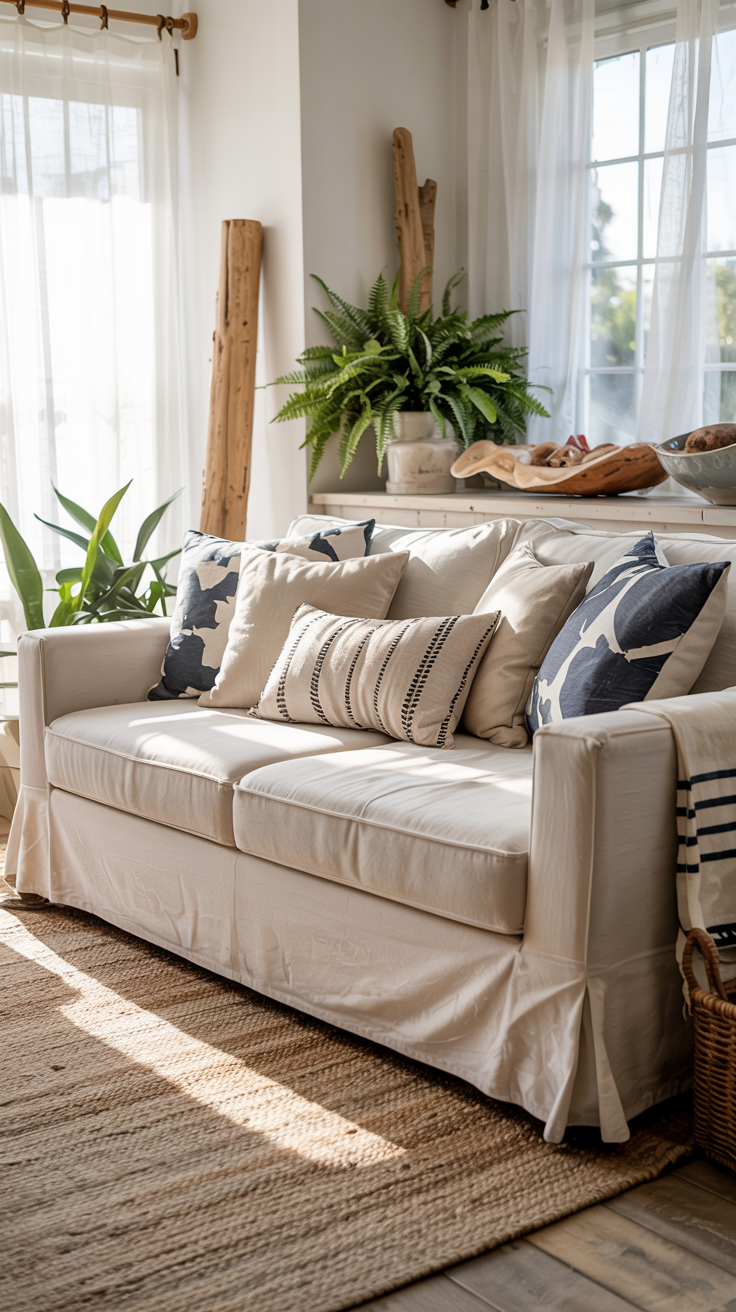
I didn't grow up far from the water, and I think it shows in the way I decorate. There's always been something about the coast, the quality of the light, the worn textures, the way the whole pace of life softens near the shore, that I've wanted to bring inside with me.
Nautical home decor, when it's done right, does exactly that. It's the soft navy stripe that makes a living room feel both pulled-together and completely relaxed. The driftwood on the shelf that catches afternoon light just so. The woven basket that's beautiful and holds all the things. It's a style you actually want to live in, not just pin and move on from.
But it has a bad reputation with interior decorators. We've all seen the anchor-print everything, the fishing net draped across the ceiling, the bathroom that looks like a gift shop two blocks from the pier. That version of nautical decor is everywhere, and it's exactly what we're not doing here.
This post is my roundup of 12 nautical decor ideas I keep coming back to, the ones that feel effortless rather than overdone, and livable rather than themed. I've covered everything from color and texture to furniture, lighting, and the small finishing touches that quietly make a room feel like the coast. Whether you're furnishing a beach house or just chasing that breezy, seaside feeling in your everyday home, there's something here for you.
Key Takeaways
A coastal color palette works best with three elements: a warm neutral as the base, a nautical tone as the accent, and a natural warm finish as the highlight
Texture does more work than color in a nautical space, jute, linen, rattan, and woven materials are your best tools
The most common mistake in nautical decor is going too literal, one or two nods to the sea go much further than anchor prints on every surface
You don't need to redo every room at once, even small swaps in the kitchen or bathroom can shift the whole feeling of a home
Scent and sound are the finishing touches most decor posts skip, and they make more of a difference than you'd expect
1. Start with a Coastal Color Palette in the Living Room
Color is the fastest way to signal a nautical space, and the living room is the best place to commit to it. Most people default to navy and white, which is a solid starting point, but a palette that actually feels coastal needs a third element to keep it from feeling flat. That third piece is usually a warm neutral, think sand, linen, or a soft warm white. It takes the sharpness out of the navy and white combination and makes the whole room feel like it belongs somewhere near the water rather than on a boat.
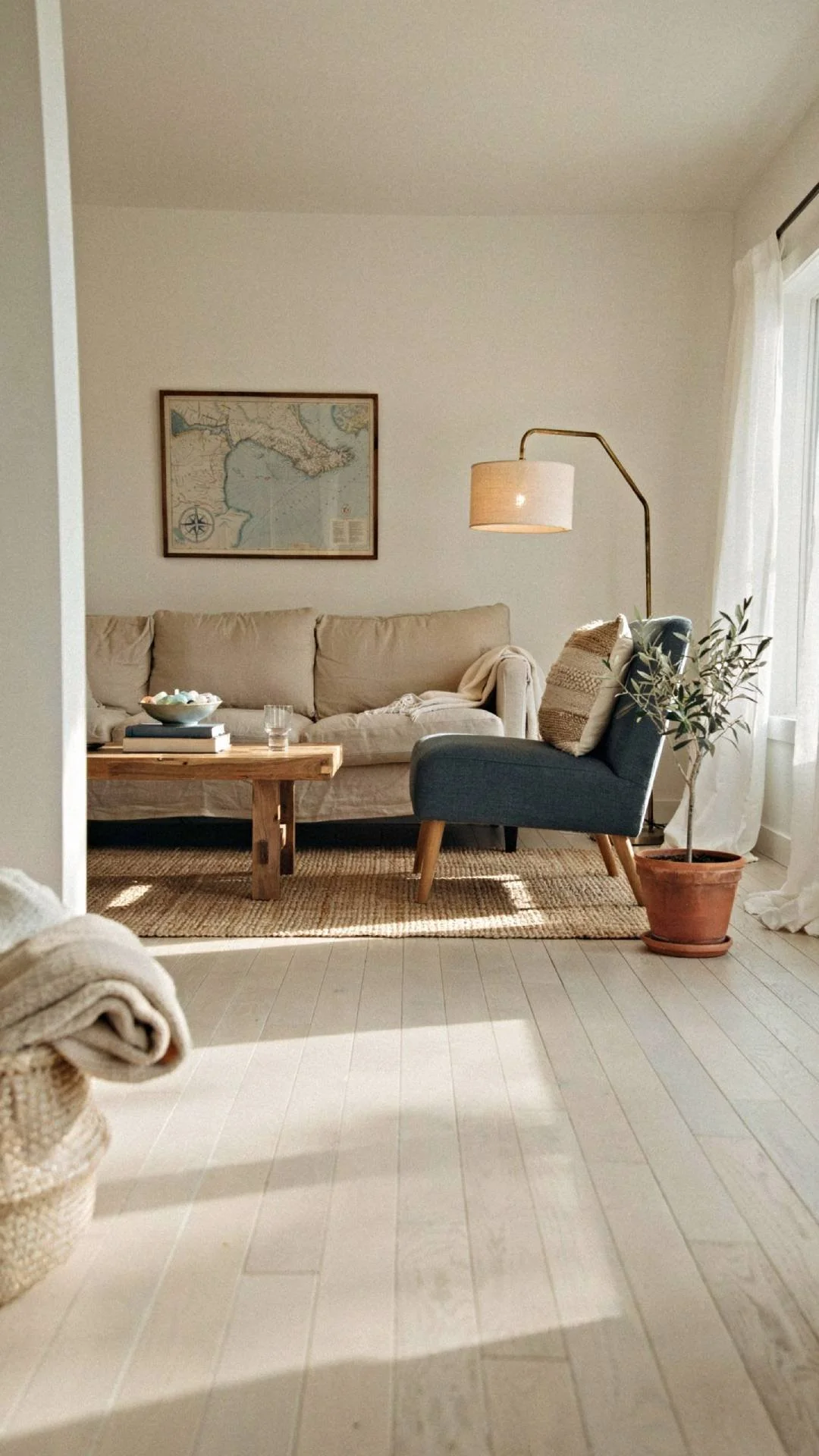
The Coastal Color Formula That Actually Works
Base (warm neutral): Sand, linen, or warm white. This carries the majority of the room and keeps it feeling light and airy.
Accent (nautical tone): Navy, dusty blue, or blue-gray. Use this in smaller doses on pillows, a chair, or artwork rather than large surfaces.
Highlight (natural warmth): Aged brass, terracotta, or soft coral. This is the third element that keeps the palette from feeling flat or cold.
Mistake to Avoid
Going too heavy on the dark tones. Navy is beautiful, but if it's on the walls, the sofa, and the rug, the room starts to feel heavy rather than breezy. Treat navy as an accent rather than a base. Use it in smaller doses, a throw pillow, a side chair, a piece of artwork, and let white and your warm neutral carry the majority of the space.
Pro Tip
If navy feels too bold for your space, soft blue-gray and dusty blue are quieter alternatives that read just as coastal. These tones work especially well in living rooms with limited natural light since they stay airy rather than absorbing it. Pair either with crisp white trim, natural wood tones, and a simple jute or sisal rug and you have a palette that is easy to build on.
What to Shop For
A crisp white or warm linen sofa as your base
One navy or dusty blue accent chair or set of throw pillows
A jute or sisal rug to anchor the room in a natural neutral
Aged brass or matte black hardware and fixtures for warmth
2. Bring in Natural Texture Through Living Room Seating and Rugs
If color sets the tone of a nautical space, texture is what makes it feel real. A living room that's all smooth surfaces and clean lines can look coastal on a mood board but feel cold and flat in person. Natural texture is what gives a room that layered, lived-in quality that makes you actually want to sit down and stay a while. The good news is that it's one of the easiest and most affordable things to add, and a little goes a long way.
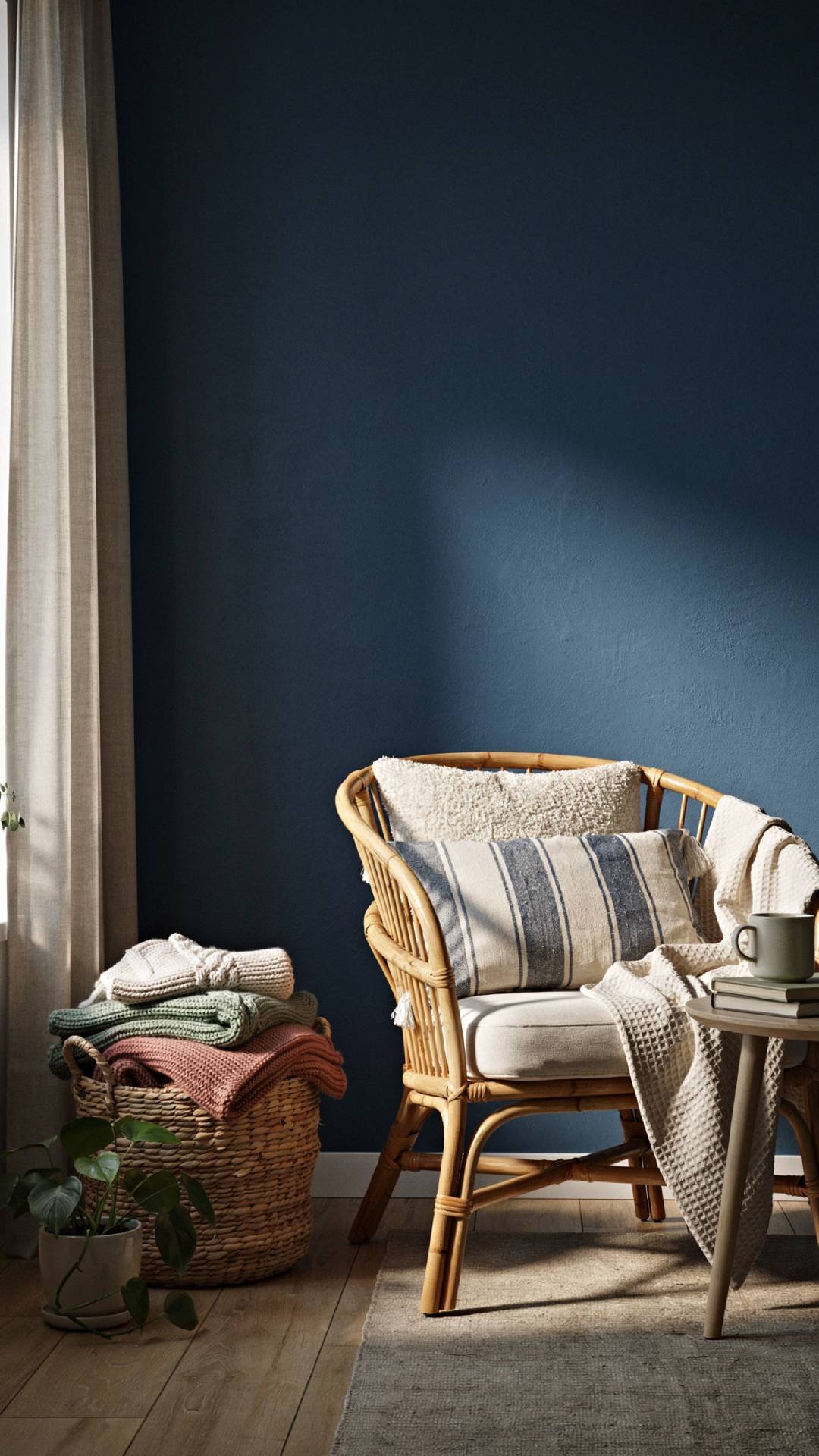
Natural Texture at a Glance
Rug: Jute, sisal, or seagrass in a natural tone. Anchors the whole room and works with almost every coastal palette.
Sofa or chairs: Linen, cotton slipcover, or rattan. The main seating area sets the textural tone for everything else.
Throw pillows: Woven, boucle, or nubby cotton. Layer two to four on the sofa and accent chairs for depth.
Throws and blankets: Waffle knit or chunky cotton draped casually over one arm of the sofa or a chair.
Baskets and storage: Woven seagrass or rattan on shelves or under the coffee table for functional texture.
Mistake to Avoid
Mixing too many competing textures at once. Rattan, jute, linen, wicker, and driftwood can all live in the same room, but they need breathing room. Pick two or three textural materials as your anchors and keep the rest simple. When everything is textured, nothing stands out and the room starts to feel busy rather than coastal.
Pro Tip
A jute or seagrass rug is the single best investment you can make in a coastal living room. It grounds the space in a natural neutral, adds texture underfoot, and works with almost every color palette. If your budget allows for one texture upgrade, start there.
What to Shop For
A jute, sisal, or seagrass area rug in a natural tone
Linen or cotton slipcover sofa in white or warm off-white
Two to four woven or boucle throw pillows in your accent color
A rattan or woven storage basket for blankets or magazines
A waffle knit or chunky cotton throw draped casually over one arm of the sofa
3. Swap Out Your Living Room Lighting for Something with a Nautical Nod
Lighting is the most overlooked element in coastal decor, and it's a shame because it's one of the easiest things to change. You don't need to rewire anything or hire anyone. Swapping a basic overhead fixture for something with a nautical nod, or adding a coastal-inspired floor or table lamp, can shift the entire feeling of a room. The key is keeping it subtle. One statement fixture does more than three competing ones.
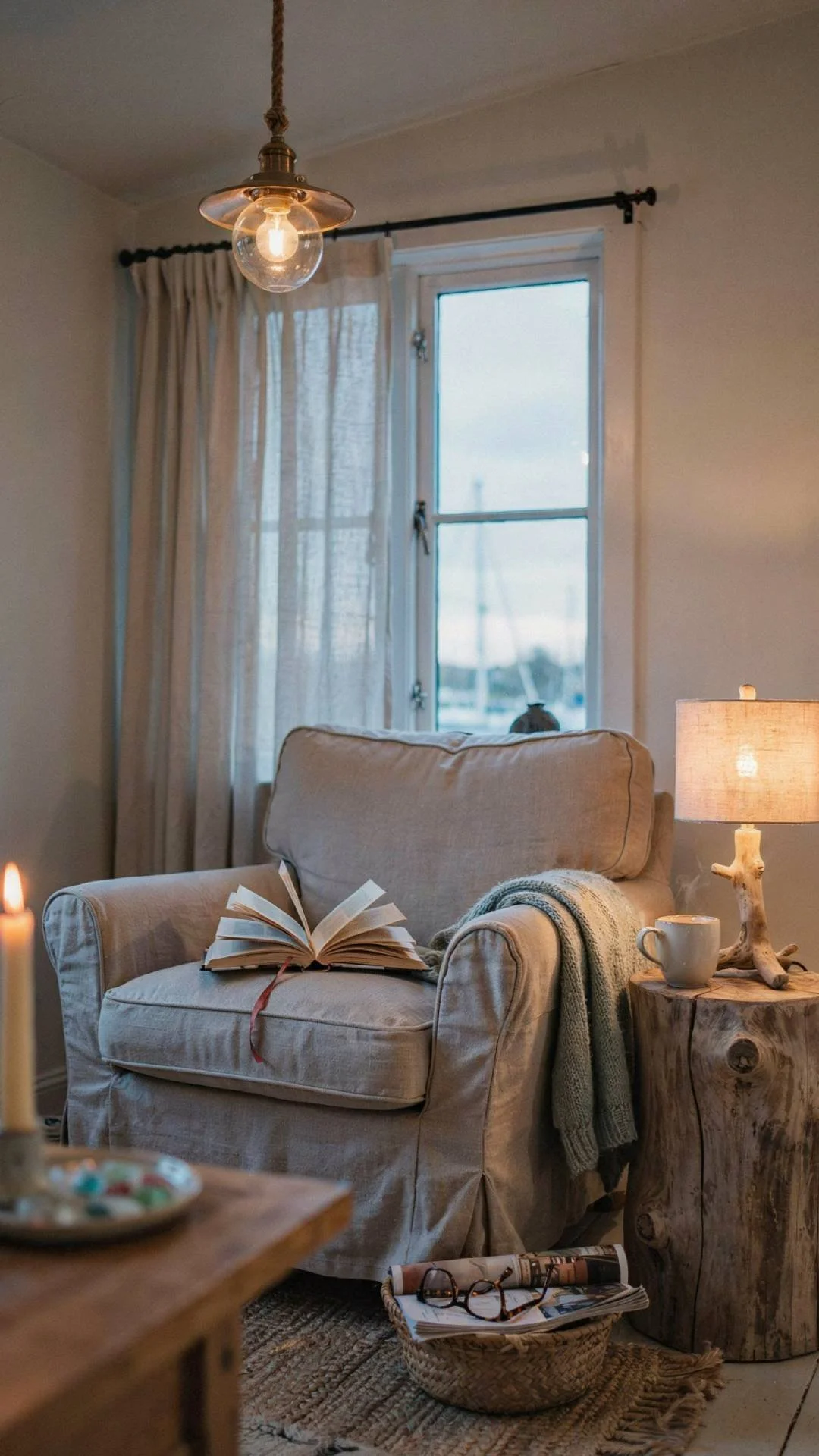
Lighting Fixtures by Style
Rope or woven: Works beautifully as a pendant light or table lamp, ideal above a reading chair or dining table.
Lantern style: A sconce or ceiling mount in a lantern shape suits an entryway or flanks a mirror in the living room.
Driftwood or reclaimed wood: A floor lamp or table lamp base in this material adds warmth to a living room corner or beside the sofa.
Rattan or cane: A pendant or flush mount in rattan works in the living room or bedroom and reads coastal without being literal.
Aged brass or matte black: Either finish works as a subtle nautical touch throughout the home on any fixture type.
Mistake to Avoid
Choosing fixtures that are too on-the-nose. A lamp base shaped like an anchor or a pendant that looks like a buoy can tip the room from coastal into costume. Look for fixtures that use natural materials or warm finishes and let the overall room context do the nautical storytelling.
Pro Tip
Warm bulb temperatures (2700K to 3000K) make a coastal space feel much more inviting than cool white light. The warm glow mimics the quality of late afternoon light near the water and makes every texture in the room look better.
What to Shop For
A rope or rattan pendant for above a reading chair or console table
A lantern-style sconce for the entryway or either side of a mirror
A driftwood or reclaimed wood table lamp base
Warm LED bulbs in the 2700K to 3000K range for every fixture
4. Use the Entryway to Set the Coastal Tone the Moment You Walk In
The entryway is small but it does a big job. It's the first thing you see when you walk in and the last thing you see when you leave, which makes it one of the highest-impact spaces in the house relative to its size. A few well-chosen pieces can set the entire coastal tone of your home before anyone even reaches the living room.
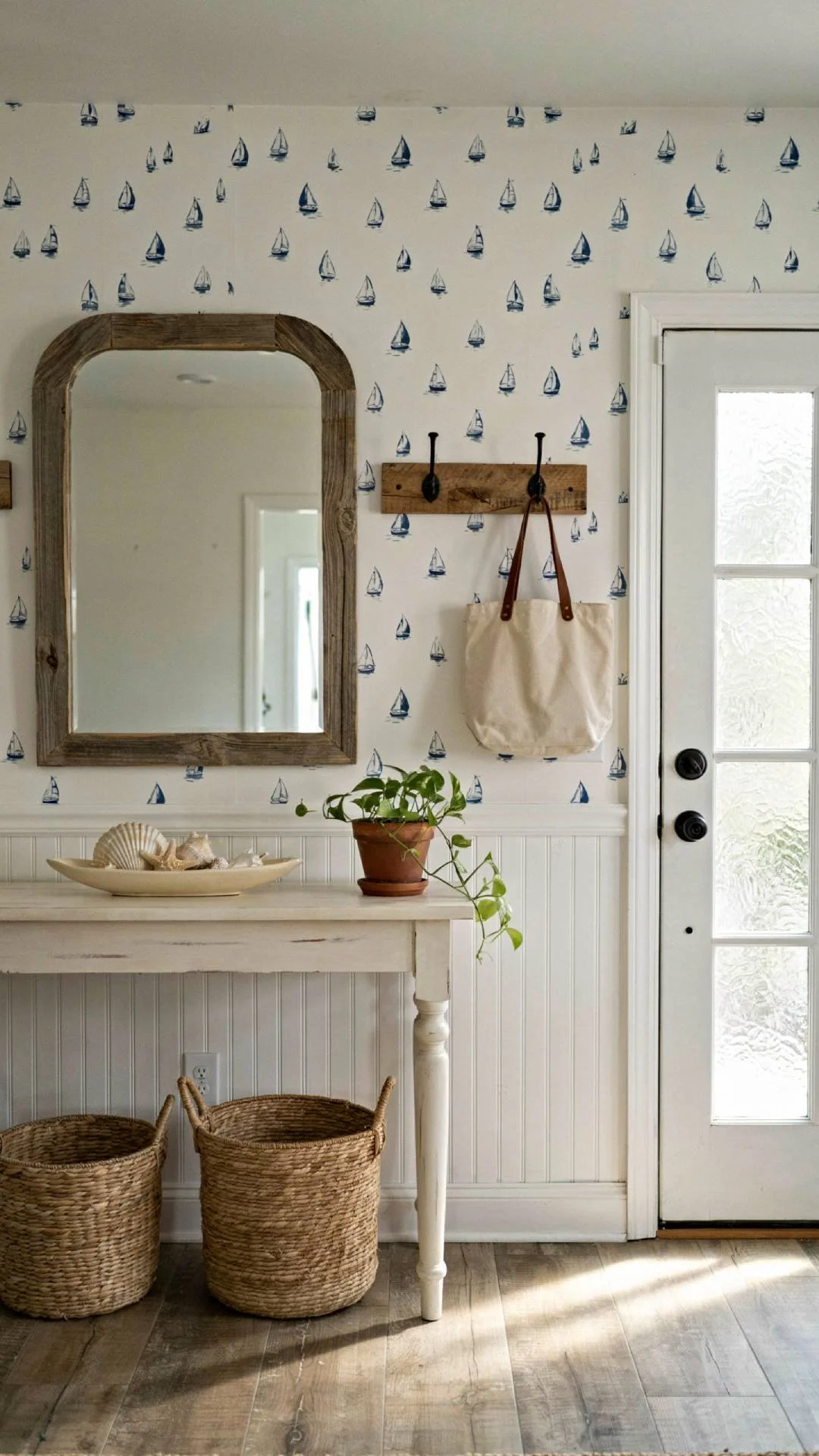
What to Include in a Coastal Entryway
A weathered wood or whitewashed console table as the anchor piece
A woven or driftwood-framed mirror above the console
A hook rail in reclaimed wood, rope, or matte black for bags and keys
A woven basket or two underneath for shoes, umbrellas, or extra throws
One small natural element on the console, a small plant, a bowl of shells, or a simple candle
Mistake to Avoid
Overcrowding a small space with too many coastal pieces. An entryway that has a ship's wheel, a rope mirror, anchor hooks, and a seashell tray all at once feels like a display rather than a home. Pick one or two statement pieces and keep everything else simple and functional.
Pro Tip
If your entryway has no natural light, a mirror is your best friend. A large woven or driftwood-framed mirror bounces light around the space and makes it feel bigger and brighter without adding any visual clutter.
What to Shop For
A whitewashed or weathered wood console table
A woven or driftwood mirror in a medium to large size
A reclaimed wood or rope hook rail
One or two seagrass or woven baskets for storage underneath
5. Add Maritime Wall Decor That Feels Collected, Not Themed
Wall decor is where nautical style most often goes wrong. It's easy to buy a set of three matching anchor prints, hang them in a row, and call it done. But that approach always reads as themed rather than personal, and there's a big difference between the two. A wall that looks collected over time, with pieces that have different origins, scales, and textures, is far more interesting and far more coastal than anything that comes as a matching set.
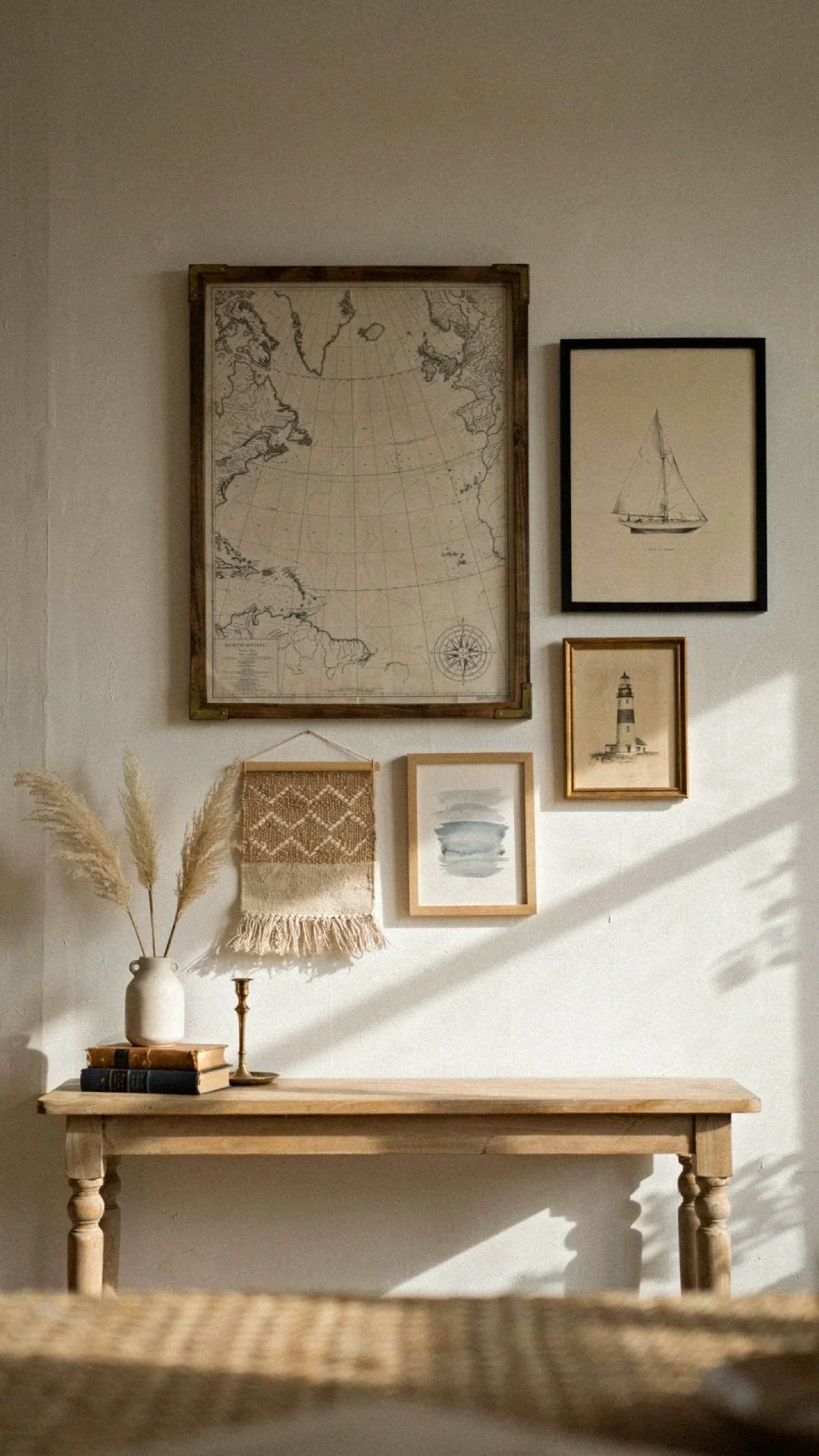
Curated vs. Themed: What to Aim For
Art selection: Aim for a mix of a vintage map, simple coastal line art, and one natural element rather than a matching anchor print set.
Frames: Vary the sizes, materials, and finishes rather than hanging identical frames in a row.
Tone: Choose simple, understated coastal art with a quiet nod to the sea rather than novelty nautical signs.
Sourcing: Add pieces gradually from different sources rather than buying everything at once.
Color: Keep tones neutral with one or two organic pops rather than a single forced color scheme throughout.
Mistake to Avoid
Filling every wall in a room with coastal art. Pick one wall to be your focal point and keep the others simple. A single well-styled gallery wall reads as intentional. Nautical art on every surface reads as overwhelming.
Pro Tip
Vintage maritime maps are one of the best pieces you can add to a coastal wall. They feel personal and collected, they work in almost any color palette, and they're widely available as affordable prints. Look for ones that feature coastlines or waterways that are meaningful to you specifically.
What to Shop For
A vintage or antique-style maritime map print in a simple frame
One or two pieces of simple coastal line art in a minimal style
A driftwood or reclaimed wood frame as a textural element
A small woven wall hanging or macrame piece for softness and dimension
6. Bring the Coastal Feeling into the Kitchen with Small Details
You don't need to renovate your kitchen to make it feel coastal. In fact, some of the most effective nautical kitchens are completely unchanged structurally. It's all in the details, and the details in a kitchen are small enough that you can swap them in and out seasonally without committing to anything permanent. Focus on what sits on your counters, what hangs on your walls, and what lines your open shelves.
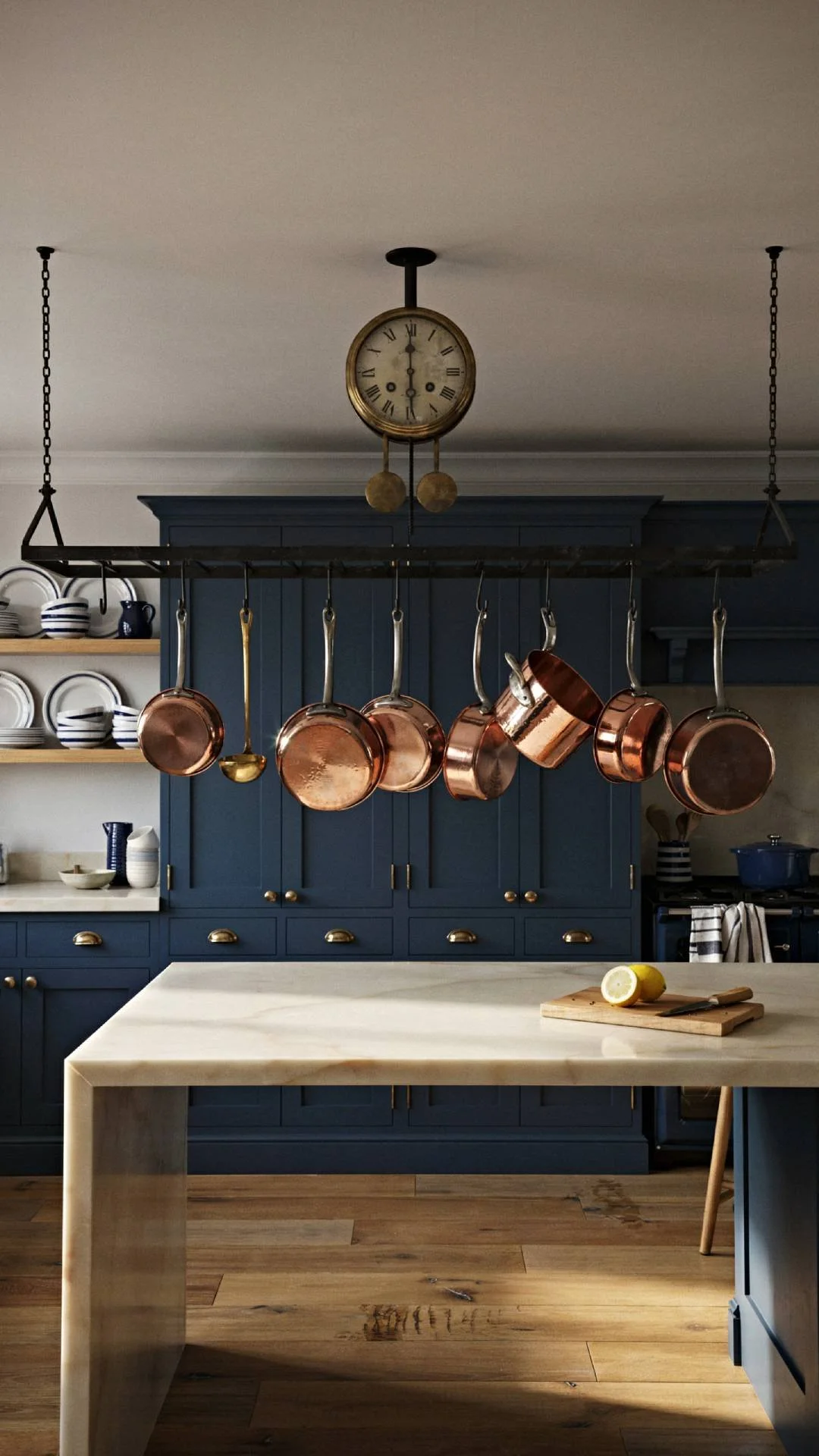
Easy Coastal Kitchen Swaps
Replace generic dish towels with linen or cotton ones in simple stripes or natural tones
Swap out a fruit bowl or catch-all for a woven seagrass basket
Add a small potted herb or trailing plant to a windowsill or open shelf
Style open shelves with white or sea glass-toned dishware mixed with a few natural elements like a wooden bowl or a simple vase
Use a simple ceramic or stoneware canister set in white, cream, or muted blue instead of plastic or mismatched containers
Mistake to Avoid
Coastal kitchen decor that competes with your existing cabinetry or countertop color. If your kitchen already has warm wood tones, lean into them with natural textures like rattan and linen rather than fighting them with stark navy and white. Work with what you have.
Pro Tip
Sea glass-toned dishware is one of the easiest ways to add a coastal feel to a kitchen without changing a single fixture. Soft greens, aquas, and misty blues displayed on open shelves or through glass cabinet doors do a lot of quiet work.
What to Shop For
Striped linen or cotton dish towels in neutral or coastal tones
A ceramic or stoneware canister set in white or muted blue
Sea glass-toned dishware for open shelf display
A small woven basket for the counter or a shelf
A simple herb planter for the windowsill
7. Style Your Dining Area Like a Seaside Table
Nautical dining doesn't need to be formal or fussy. The best coastal dining spaces feel like a relaxed summer dinner party that somehow looks effortless. Think mismatched chairs in complementary tones, a simple centerpiece that doesn't block conversation, and a table setting that feels casual enough to actually eat at. The goal is a space that makes people want to sit down and stay long after the meal is over.
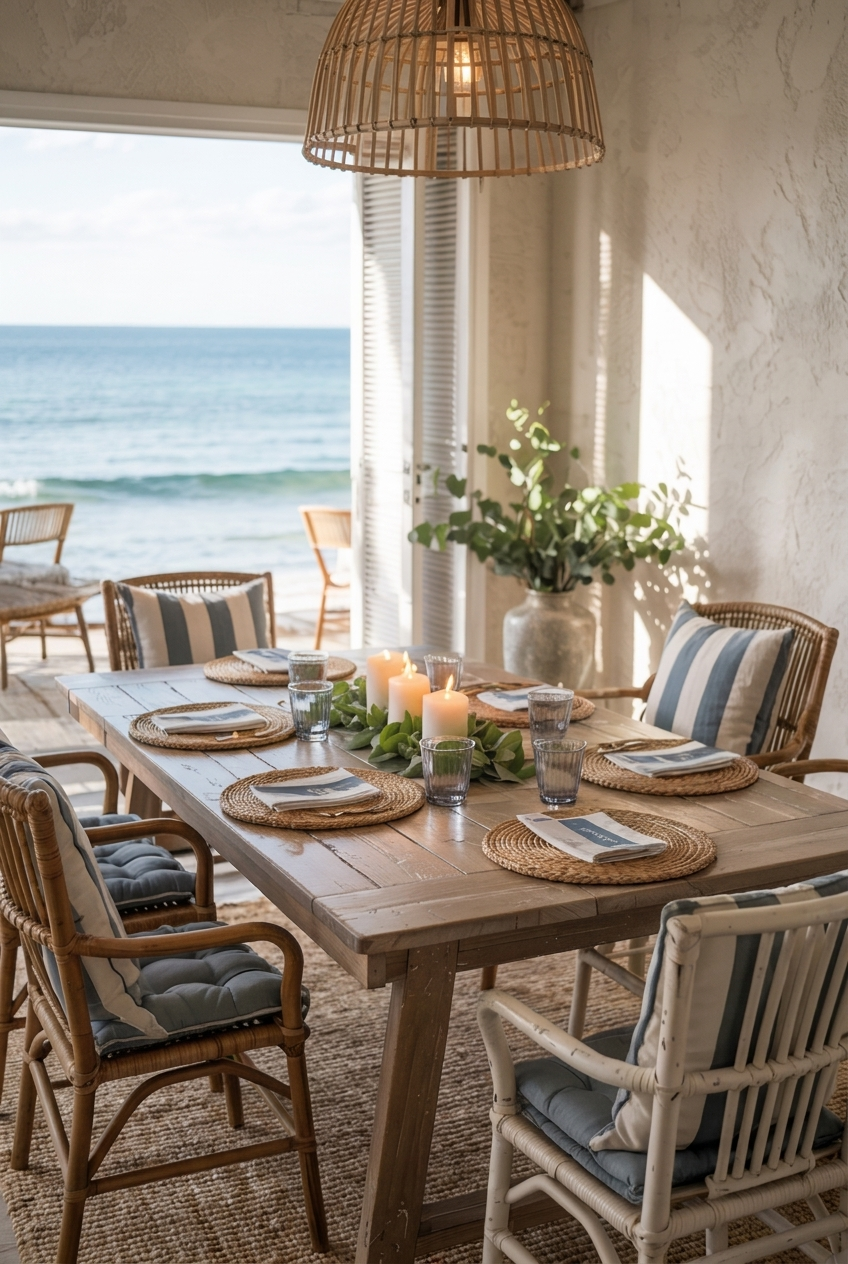
Coastal Dining Table Elements
Chairs: Rattan, whitewashed wood, or mixed tones. Avoid perfectly matched sets in dark finishes.
Table: Weathered wood, whitewashed, or light oak. Heavy dark wood or overly formal styles pull the room away from coastal.
Placemats: Woven seagrass or natural fiber. Skip the plastic or very formal fabric options.
Centerpiece: A low bowl with shells, greenery, or candles. Tall arrangements that block eye contact at the table don't work here.
Lighting: A pendant or chandelier in rattan or rope above the table. Avoid harsh overhead fluorescent or overly formal crystal.
Mistake to Avoid
Over-styling the centerpiece. A tall, elaborate centerpiece on a dining table looks beautiful in a photo and terrible at an actual dinner. Keep it low and simple. A shallow wooden bowl with a few shells, some greenery, and a candle or two is all you need.
Pro Tip
Mismatched chairs are one of the easiest ways to make a dining space feel curated and coastal rather than straight out of a furniture catalog. Try two rattan chairs at the heads of the table with simple wooden or upholstered chairs along the sides. The mix adds personality without looking accidental.
What to Shop For
Woven seagrass or natural fiber placemats
A shallow wooden or ceramic bowl for the centerpiece
Rattan or whitewashed wood dining chairs
A rope or rattan pendant light for above the table
Simple white or linen napkins
8. Make the Primary Bedroom Feel Like a Coastal Retreat
The primary bedroom is where the nautical aesthetic should be at its most calm and restrained. This isn't the room for bold stripes or statement anchor art. It's the room where the coastal feeling comes through in softness, texture, and a palette that makes you feel like you're somewhere quiet and near the water. Think less "beach house showroom" and more "the most peaceful room you've ever slept in."
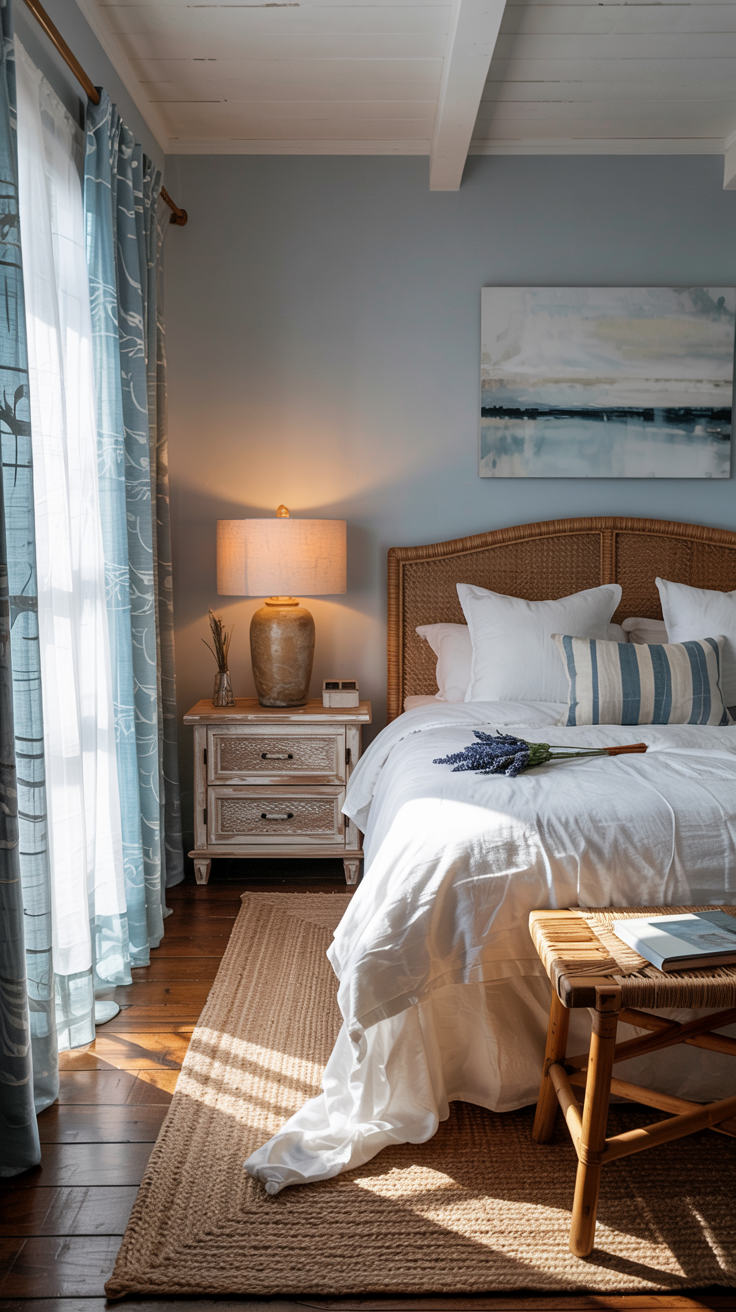
Primary Bedroom Coastal Layers
Bedding: A linen duvet in white or soft blue. Soft, breathable, and unfussy is the goal.
Bed frame: Weathered wood, whitewashed, or rattan. Natural and relaxed rather than formal or heavy.
Nightstands: Light wood, whitewashed, or woven. Simple and uncluttered so the room stays calm.
Window treatments: Sheer linen or light cotton that lets in as much natural light as possible.
Rug: Jute, sisal, or soft cotton in a neutral tone. Grounding without being heavy.
Lighting: Warm bedside lamps with natural bases in wood, ceramic, or woven materials.
Mistake to Avoid
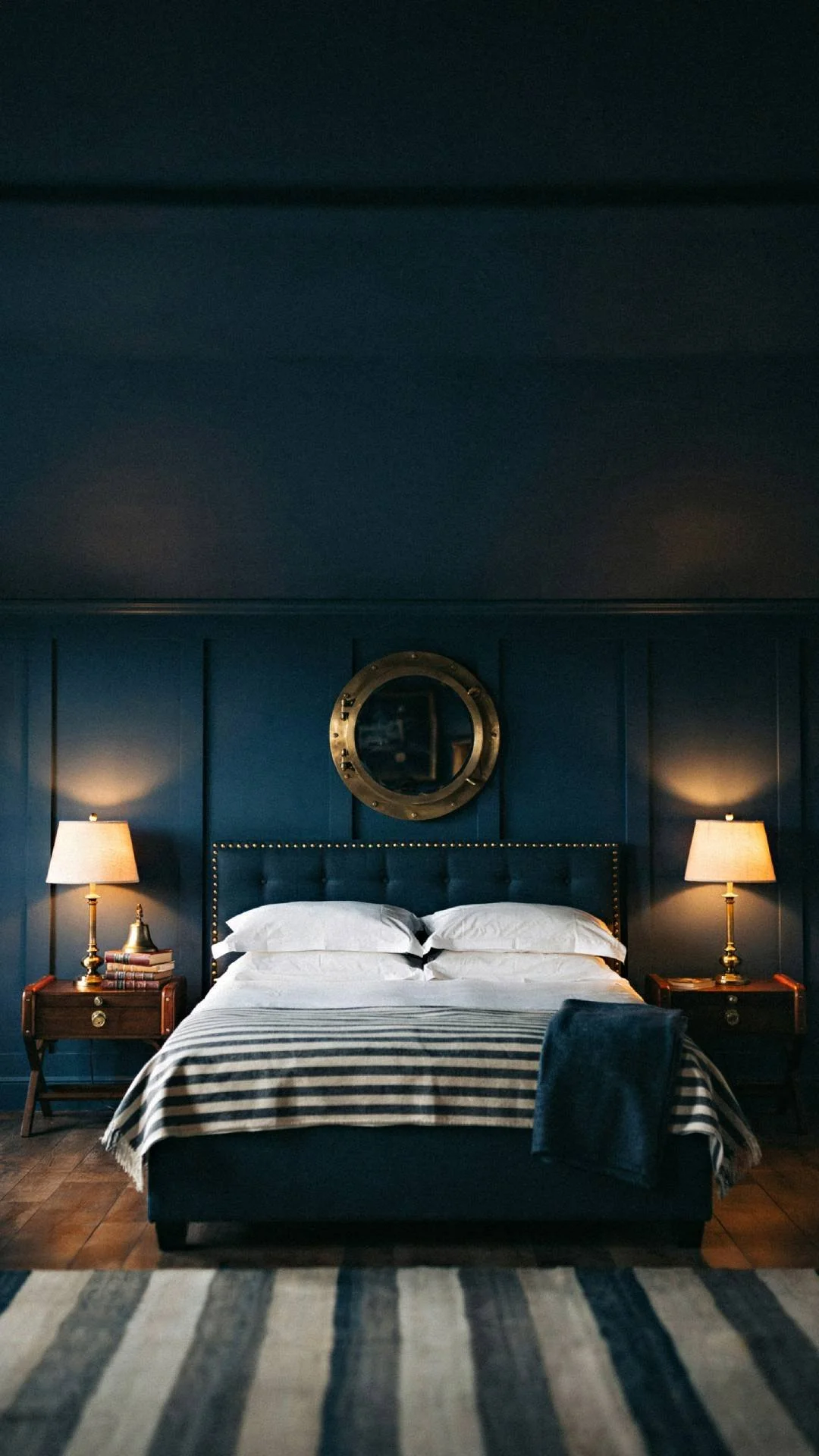
Too much navy in the bedroom. What feels crisp and coastal in a living room can feel heavy and hard to sleep in when it's in a bedroom. Stick to softer tones here, dusty blue, pale aqua, warm white, and save the deeper tones for accents only. It takes a certain type of room layout and lighting to pull of a dark, moody navy bedroom.
Pro Tip
Linen bedding is worth the investment in a coastal bedroom. It wrinkles beautifully, gets softer with every wash, and has that effortlessly relaxed look that no other fabric quite replicates. White or warm oat linen reads as coastal in almost any bedroom without trying too hard.
What to Shop For
Linen duvet cover and shams in white, oat, or soft blue
A weathered wood or rattan bed frame or headboard
Sheer linen window panels that let in as much light as possible
A jute or cotton area rug in a natural neutral
Warm bedside lamps with a wood, ceramic, or woven base
9. Add Coastal Charm to a Guest Room Without Overdoing It
The guest room is a great place to be a little bolder with your nautical decor choices. Because it's not a space you live in every day, you can commit to a stronger look without it feeling like too much. It's also a room where a clear, cohesive theme actually works in your favor since guests appreciate a space that feels intentional and complete.
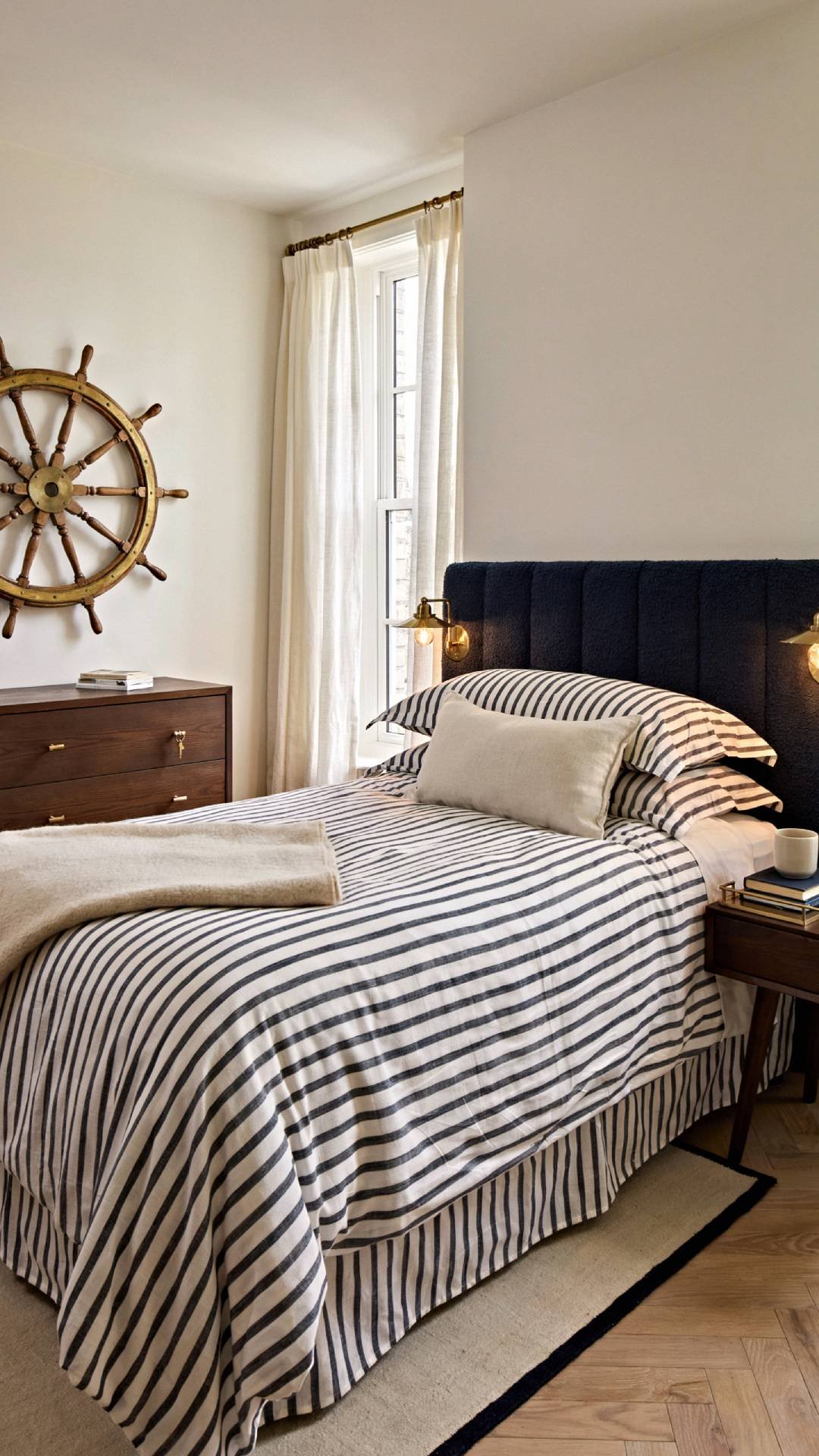
Guest Room Coastal Ideas
Use a rattan or woven headboard as the focal point of the room
Try a simple stripe on an accent wall in soft navy or dusty blue
Layer the bed with white linen and one or two coastal-toned throw pillows
Add a small gallery wall with two or three pieces of simple coastal art
Include a woven basket or tray on the dresser for guest essentials
Keep a small potted plant or succulent on the nightstand for a fresh, natural touch
Mistake to Avoid
Treating the guest room like a storage room for every nautical piece that didn't fit elsewhere in the house. A guest room that has the overflow anchor prints, the spare rope mirror, and the leftover shell collection all in one place feels like a nautical clearance sale. Edit it down to a few intentional pieces.
Pro Tip
A rattan headboard is one of the most versatile pieces you can put in a guest room. It reads as coastal without being literal about it, works with almost any bedding color, and adds texture to a space that might otherwise feel plain.
What to Shop For
A rattan or woven headboard in a natural tone
White linen bedding with one or two coastal-toned accent pillows
Two or three simple coastal art prints for a small gallery wall
A woven basket or tray for the dresser top
A small succulent or low-maintenance plant for the nightstand
10. Turn the Bathroom into a Quiet Seaside Moment
The bathroom is where nautical decor most often tips into cliche territory, and it's usually because the approach is too literal. Seashell soap dishes, fishing net shower curtains, and anchor bath mats are everywhere, and they tend to make a bathroom feel dated rather than coastal. The good news is that the most effective nautical bathrooms are also the simplest ones. Clean, minimal, and anchored by one or two natural elements is all it takes.
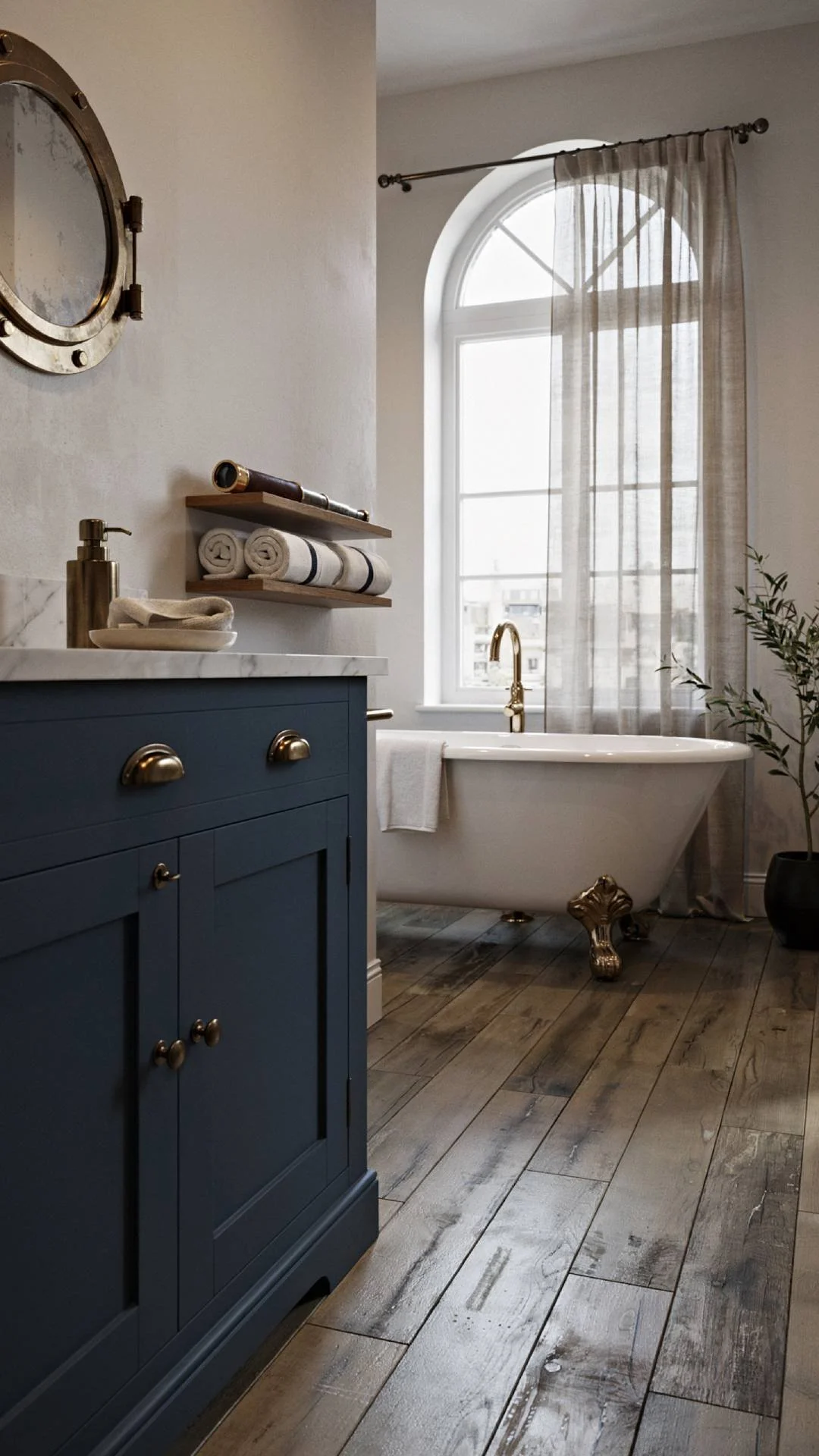
Coastal Bathroom: Do vs. Avoid
Towels: Do use white fluffy towels in a natural fiber. Avoid novelty towels with nautical prints.
Vanity organization: Do use a wooden tray or board to organize the vanity. Avoid seashell soap dishes and anchor accessories.
Greenery: Do add one small plant or a simple vase with greenery. Avoid a fishing net or overly themed shower curtain.
Storage: Do use a simple glass vessel for cotton balls or Q-tips. Avoid plastic nautical-themed storage containers.
Decor: Do keep a woven basket for extra towels or toiletries. Avoid too many competing decorative elements.
Lighting: Do use soft, warm bulbs. Avoid harsh cool white light.
Mistake to Avoid
Buying a matching nautical bathroom set. The soap dispenser, toothbrush holder, and cotton ball jar that all match in the same anchor or lighthouse print will date your bathroom faster than almost anything else. Stick to simple, material-led choices instead.
Pro Tip
A single wooden bath tray across the tub or on the vanity countertop does more for a coastal bathroom than almost any decorative piece. It organizes the space, adds a natural texture, and elevates even the most basic bathroom without requiring any renovation.
What to Shop For
White or natural linen bath towels and a hand towel
A teak or light wood bath tray for the tub or vanity
A simple glass or ceramic vessel for countertop storage
A small trailing plant like pothos or an air plant that tolerates humidity
A simple white or linen shower curtain with minimal detail
11. Bring Coastal Greenery into Any Room
Plants are one of the most underused tools in coastal decor. They add life, soften hard edges, and bring a freshness to a space that no decor piece can replicate. In a nautical home, greenery also breaks up the tendency toward a palette that can skew cool and keeps rooms from feeling too styled or stiff. The right plant in the right spot makes everything around it look better.
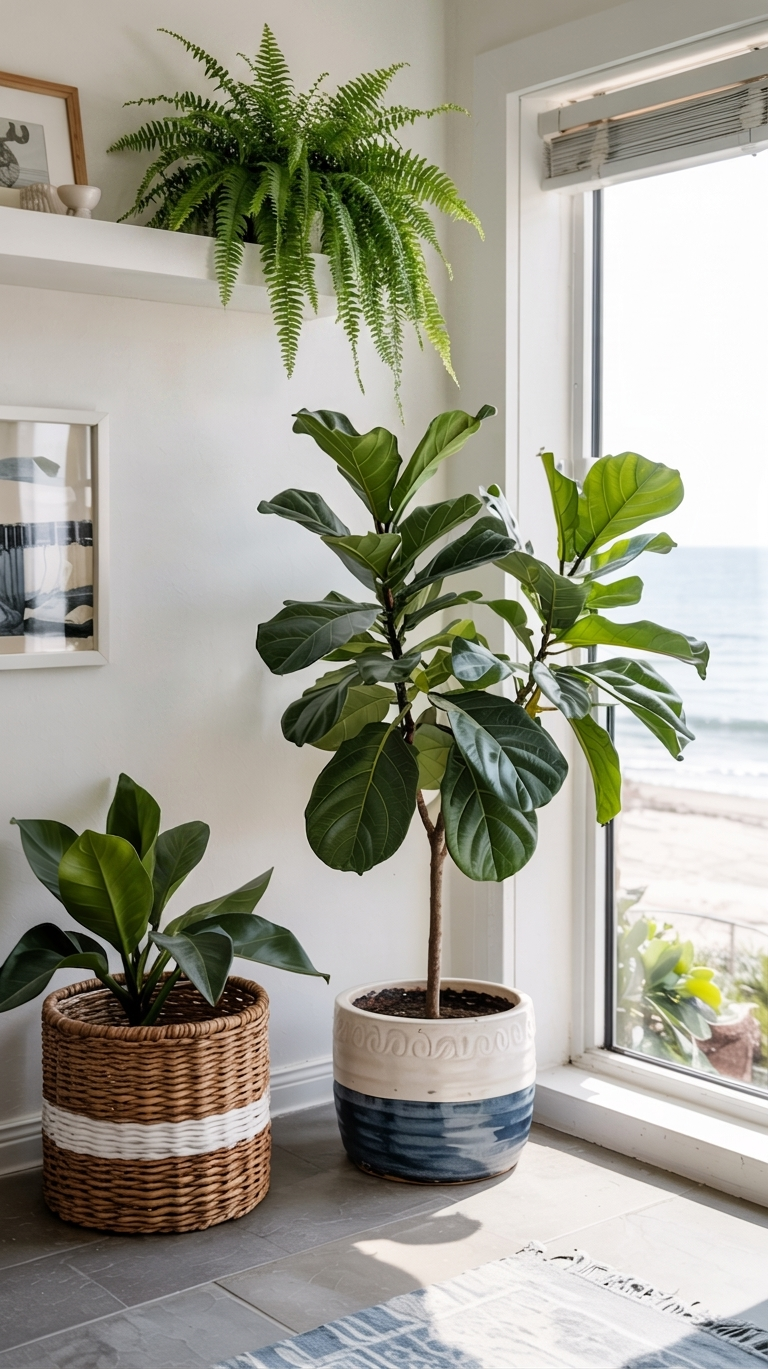
Coastal Greenery by Room
Fiddle leaf fig: Tall and sculptural, fills vertical space beautifully. Best in a living room or bedroom corner.
Trailing pothos: Cascades beautifully and is very easy to keep alive. Works on shelves, in the bathroom, or the kitchen.
Bird of paradise: Bold and tropical without being fussy. A great statement plant for the living room or entryway.
Succulents: Low maintenance and work in small spaces. Ideal for the bathroom, kitchen windowsill, or nightstand.
Air plants: No soil needed and a very coastal feel. Display in a shell or on a piece of driftwood in the bathroom.
Simple herb garden: Practical and fresh. Perfect for the kitchen windowsill.
Mistake to Avoid
Putting plants in decorative pots that fight the coastal palette. A brightly colored or heavily patterned pot can pull focus away from the plant and clash with the rest of the room. Stick to terracotta, white ceramic, concrete, or woven basket planters to keep things cohesive.
Pro Tip
If you're not confident with keeping plants alive, start with a trailing pothos. It's nearly indestructible, grows quickly, looks beautiful cascading from a shelf, and genuinely thrives in the kind of bright, airy spaces that coastal decor favors.
What to Shop For
A large fiddle leaf fig or bird of paradise for a living room corner
A trailing pothos for a shelf or bathroom
Simple white ceramic, terracotta, or woven basket planters
A set of small succulents for a windowsill or nightstand
An air plant displayed in a small shell or piece of driftwood
12. Layer in Scent and Sound to Complete the Coastal Atmosphere
Most decor posts stop at what you can see, but a space that genuinely feels coastal engages more than just your eyes. Scent and sound are the finishing touches that take a well-decorated room and make it feel like somewhere you actually want to be. They're subtle, they're easy to add, and they make a bigger difference than most people expect.
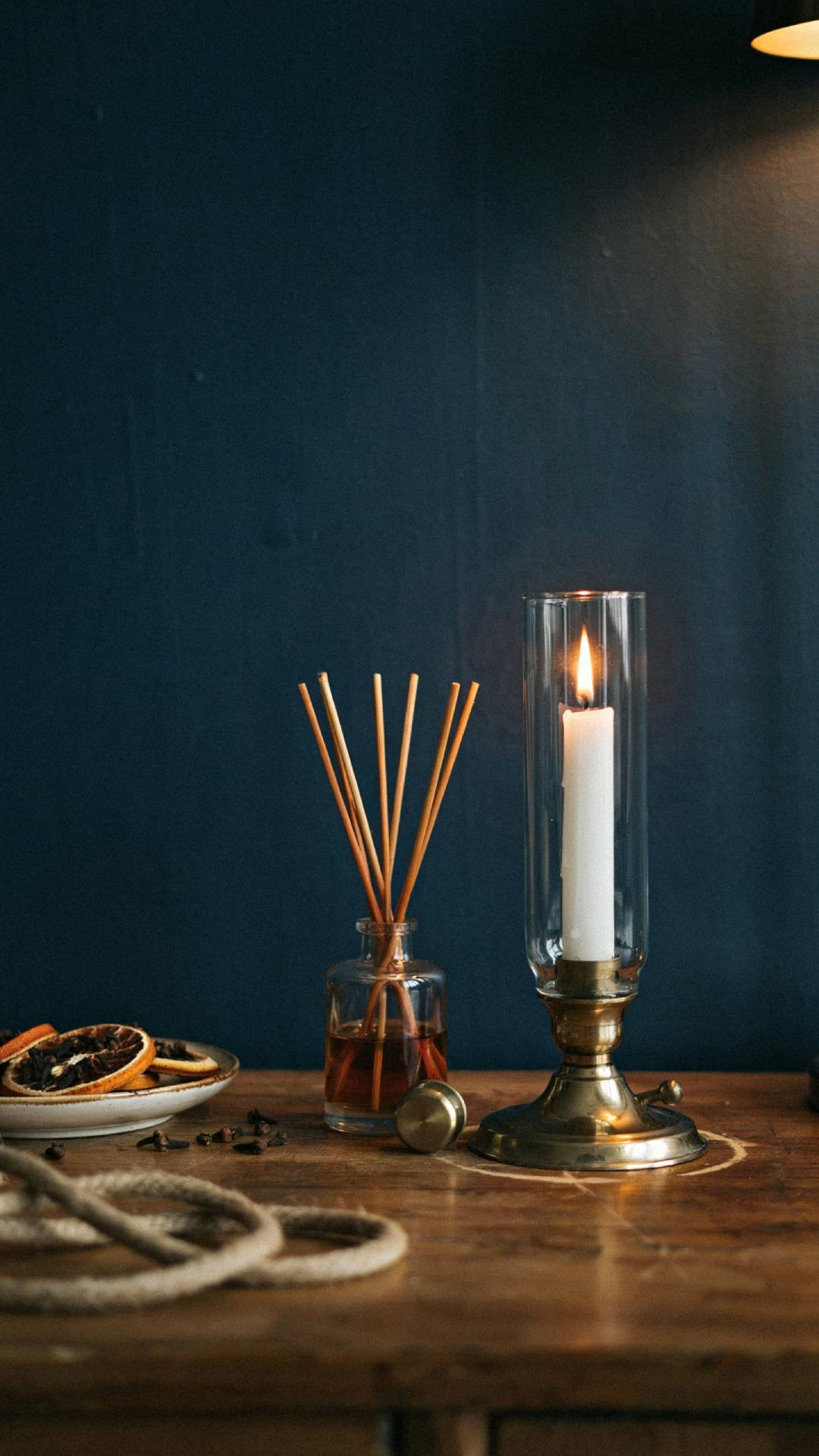
Coastal Scent Notes to Look For
Ocean and water: Sea salt, ocean mist, and driftwood are the most authentically coastal. Avoid anything too synthetic or sharp.
Botanical and fresh: Eucalyptus, white tea, and light citrus keep things clean and airy. Avoid heavy florals or overly sweet scents.
Warm and grounding: Sandalwood, warm woods, and light amber add depth without heaviness. Avoid heavy musk or very dark, smoky notes.
Mistake to Avoid
Overpowering a small space with too strong a scent. A reed diffuser in a small bathroom or bedroom should be subtle, something you notice when you first walk in rather than something that hits you from the hallway. Start with fewer reeds in a diffuser and add more if needed.
Pro Tip
For sound, a simple ambient playlist or a small white noise machine set to ocean waves can do a surprising amount of work in a coastal space. It's especially effective in a bedroom or bathroom where you want the most immersive, relaxing feel. There are several free options on Spotify and YouTube that work beautifully.
What to Shop For
A sea salt or driftwood scented candle for the living room or entryway
A reed diffuser in a clean, ocean-inspired scent for the bedroom or bathroom
A small essential oil diffuser with eucalyptus or white tea oil
A white noise machine or a small Bluetooth speaker for ambient coastal sounds
Ready to Bring Nautical Home Decor into Your Space?
Now that you have a room by room roadmap, the easiest way to get started is to pick just one space and one change. Swap out your living room rug for a jute or seagrass option. Add a wooden bath tray to your bathroom vanity. Style one open shelf in the kitchen with sea glass-toned dishware. Small moves add up fast, and once one room starts to feel coastal, the rest tends to follow naturally.
Here is a simple action plan to get moving:
This week: Choose one room to focus on first and identify one swap you can make right now with what you already have
This month: Shop for one or two anchor pieces in that room, a rug, a piece of art, or a lighting fixture
Over time: Layer in texture, greenery, and scent as you go, there is no rush and the best coastal spaces are built slowly
Save this post so you can come back to it room by room as you work through your home. And if you are already decorating a coastal space, I would love to see it. Drop a comment below with where you are starting, or tag me on Pinterest so I can follow along.
Frequently Asked Questions About Nautical Home Decor
What is the difference between nautical decor and coastal decor? Nautical decor draws more directly from maritime life, think ropes, anchors, navy and white, and references to boats and the sea. Coastal decor is a broader category that includes nautical but also pulls in beachy, relaxed, and nature-inspired elements like driftwood, organic textures, and soft sandy palettes. Nautical is a subset of coastal, and the two overlap a lot. The best spaces tend to borrow from both without leaning too hard into either.
How do I make my home look coastal without it looking cheap or overdone? The key is restraint and material quality. Avoid novelty pieces like anchor-printed accessories or matching themed sets, and instead invest in a few well-made natural materials like a good jute rug, linen bedding, or a rattan chair. Let the materials do the coastal storytelling rather than the motifs. One or two genuine nautical nods in a room go much further than a room full of them.
What colors work best for nautical home decor? Navy, white, and a warm neutral like sand or linen is the classic starting point. From there you can layer in dusty blue, soft blue-gray, aged brass, and touches of terracotta or coral. The goal is a palette that feels light and airy, so treat the darker tones as accents rather than base colors.
Can I do nautical decor in a small space like an apartment? Absolutely. Nautical decor actually works very well in smaller spaces because its core elements, light colors, natural textures, and minimal clutter, all make rooms feel bigger and airier. Focus on a light color palette, one or two statement pieces, and functional natural texture like a jute rug or woven baskets. Avoid going too dark or too heavy on accessories and the space will feel coastal without feeling crowded.
What is the easiest way to add a nautical touch to a room I already have? Start with textiles. Swapping out throw pillows, a rug, or a throw blanket for something in a natural material or a coastal tone is the lowest commitment change you can make and it has a surprisingly big impact. A jute rug or a set of linen or woven throw pillows can shift the feeling of an entire room without changing a single piece of furniture.
How do I style open shelves with a coastal feel? Mix practical and decorative pieces in a natural, collected way. A few pieces of sea glass-toned dishware, a small plant, a simple vase, a woven basket, and one or two natural elements like a piece of driftwood or a small shell are all you need. Keep some breathing room between items and avoid lining things up too perfectly. Shelves that look slightly casual and lived-in always read more coastal than ones that look staged.
What plants work best in a nautical or coastal home? Trailing pothos, fiddle leaf figs, birds of paradise, succulents, and air plants all complement a coastal palette beautifully. The most important thing is choosing simple, natural planters in terracotta, white ceramic, concrete, or woven baskets rather than brightly colored or heavily patterned pots that compete with the rest of the room.
Do I need to live near the beach to pull off nautical decor? Not at all. Nautical and coastal decor is about a feeling, not a location. Some of the most beautifully styled coastal homes are landlocked. The style translates anywhere because it's built on universal elements like natural light, organic textures, and a calm, uncluttered palette that make any space feel more relaxed and livable.